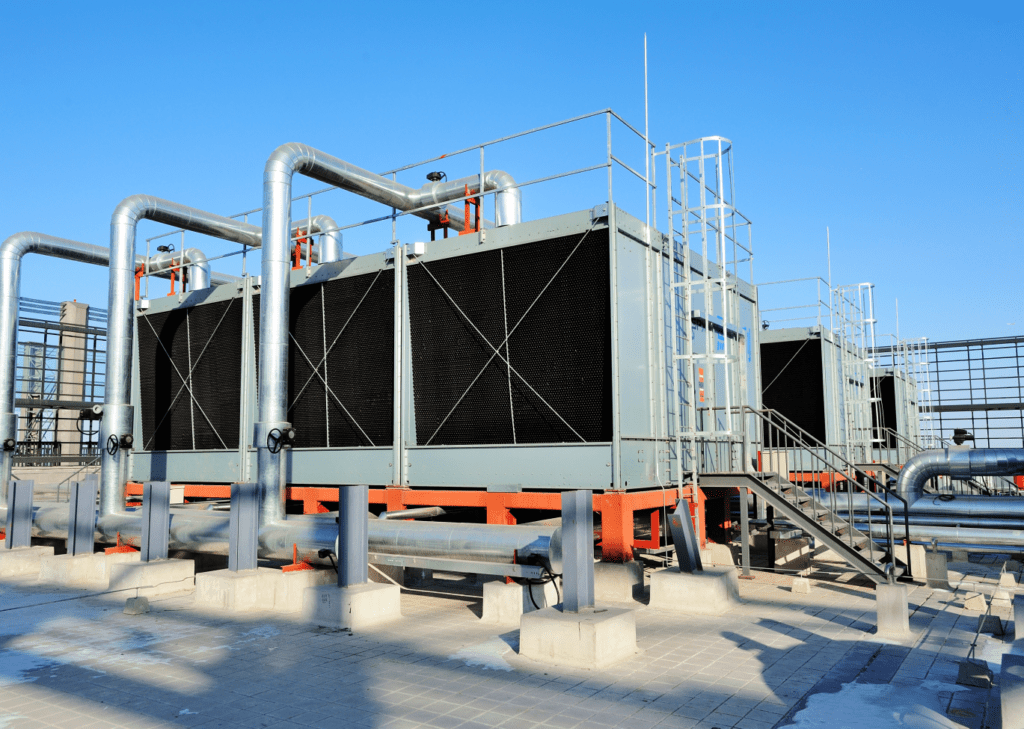
If cooling towers had a rulebook for staying safe, compliant, and outbreak-free, the Water Management Plan (WMP) would be it.
Legionella doesn’t usually show up because someone made one big mistake. It shows up because of a handful of small, preventable gaps—missed monitoring, unclear responsibilities, inconsistent treatment, or “we’ve always done it this way” thinking. A solid Water Management Plan closes those gaps before they turn into a real problem.
At ChemREADY, Water Management Plans are one of the most important tools we use to help facilities stay ahead of Legionella risk—especially when cooling towers are involved.
What Is a Water Management Plan, Really?
A Water Management Plan is a written, site-specific roadmap for how your cooling tower system is operated, monitored, and maintained to control Legionella growth.
It answers questions like:
- Where could Legionella grow in your system?
- Who is responsible for monitoring and maintenance?
- What parameters are being checked, and how often?
- What happens if something goes out of spec?
Instead of relying on memory, tribal knowledge, or assumptions, a WMP puts everything in one place—clearly documented and consistently followed.
Why Cooling Towers Need Special Attention
Cooling towers are one of the highest-risk building systems for Legionella amplification and transmission. Warm water, air exposure, biofilm formation, and complex piping create ideal conditions if controls aren’t tight.
A Water Management Plan for a cooling tower isn’t just a nice extra—it’s the difference between proactive risk control and reactive emergency response after a positive test or, worse, an outbreak
When something goes wrong, investigators don’t just ask if you treated the tower. They ask how you managed risk—and that’s where the WMP becomes critical.