Reading Time | 8 Minutes
NJ S2188 Legionella compliance is now a legal obligation for virtually every hotel, multifamily building with six or more floors, and senior housing community in New Jersey. The deadline to have a written Legionella Water Management Plan developed is September 10, 2026. Full implementation — monitoring, testing, staff training, and documentation — must be operational by December 10, 2026. Penalties for non-compliance begin at $2,000 per violation and reach $10,000 where serious injury or death is linked to non-compliance.
New Jersey Senate Bill S2188 was signed into law on September 12, 2024. Early coverage focused on hospitals and nursing homes, which already had CMS and Joint Commission mandates in place. The law reaches much further. Hotel operators and multifamily property managers are the category most likely to be behind — and the category facing the most overlooked operational risk.
NJ S2188 is a New Jersey state law, signed September 12, 2024, that requires covered buildings to develop and implement ASHRAE Standard 188-compliant Legionella Water Management Plans (WMPs). The law covers any facility with aerosol-releasing water systems — including hotels, multifamily residential buildings with centralized hot water, senior housing communities, and healthcare facilities — and establishes mandatory testing, documentation, and public notice requirements enforceable by the New Jersey Department of Health.
Most hotel and multifamily operators assume they know. The law has two tiers — device-only coverage and full plumbing network coverage — and which one applies to your building changes everything about what your program needs to include.
Hotels and multifamily buildings create Legionella risk conditions as a structural result of how they operate — not through negligence. Variable occupancy, aging plumbing infrastructure, and the presence of multiple aerosol-releasing amenity systems combine to produce exactly the environment Legionella bacteria require to proliferate. Healthcare facilities have not been inherently safer; they have simply been required to manage this risk for years. S2188 closes the regulatory gap for hospitality and residential properties.
A hotel at 60% weekend occupancy and 20% mid-week creates stagnant water conditions in supply lines serving vacant rooms. Legionella grows rapidly in water that sits between 77°F and 113°F (25°C–45°C) — temperatures common in distribution lines not actively circulating. Dead legs form, biofilm builds, and thermal control becomes inconsistent. This is the nature of the hospitality business, and it requires active management rather than passive infrastructure.
Legionella spreads through aerosolized water droplets. When a guest enters a room vacant for four days and activates the shower, they inhale whatever has accumulated in that supply line. The CDC identifies hotels as a consistent source of confirmed Legionnaires’ disease cases nationally. A flushing protocol for intermittently occupied rooms is not optional in a compliant program — it is a documented control measure.
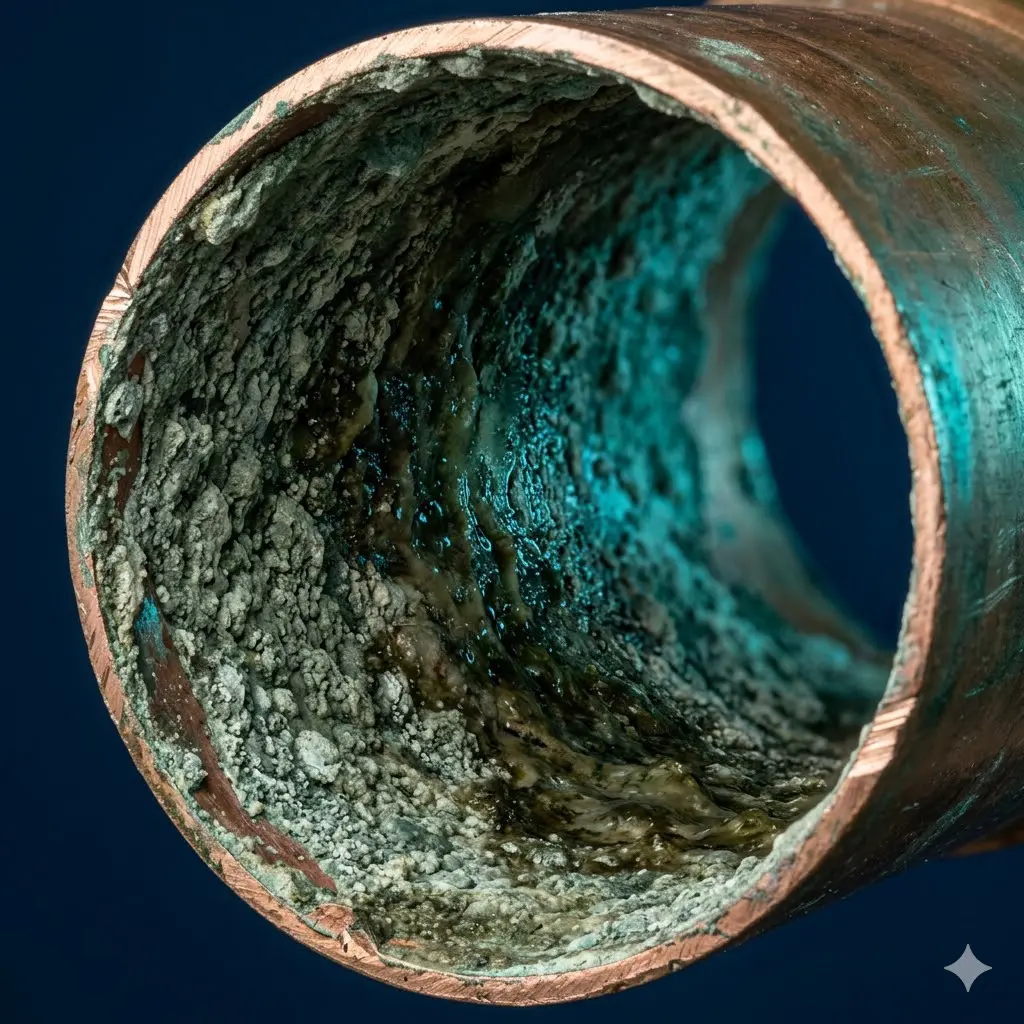
Many New Jersey hotels and apartment buildings were constructed between the 1970s and 1990s. Their hot water distribution systems were not designed with Legionella prevention in mind. Temperature stratification in undersized recirculation loops, scale accumulation in older pipe materials, and inadequate hot water delivery to upper floors all create conditions that favor bacterial harboring. Buildings with any of these characteristics carry elevated baseline risk.
Full-service hotels operate more than plumbing. Pools, hot tubs, lobby fountains, decorative misters, and ice machines are each potential Legionella amplification sites. S2188 covers any building with an aerosol-releasing water device — even if the building would not otherwise meet the size threshold for full plumbing coverage. Each amenity system requires its own control limits, biocide program, and testing protocol.
Adults over 50, smokers, and immunocompromised individuals face a case fatality rate from Legionnaires’ disease of 10–15% (CDC). Independent senior housing communities — apartment-style properties for adults 55+ — have historically operated with minimal water safety oversight. S2188 names senior housing as a covered facility type, applying the September 2026 deadline to communities that have never been subject to Legionella regulation before.
NJ S2188 establishes a three-tier penalty structure enforced by the New Jersey Department of Health. First violations carry fines up to $2,000. Subsequent violations reach $5,000. Where non-compliance is linked to a serious injury or death, penalties reach $10,000 per violation — separate from civil liability, which creates exposure to wrongful death and personal injury litigation with no cap.
| Facility Type | Coverage Scope | Status |
|---|---|---|
| Hotels and motels | All water systems, including full plumbing network | Required |
| Residential buildings, 6+ floors with centralized hot water | All water systems, including full plumbing network | Required |
| Senior housing communities | All water systems, including full plumbing network | Required |
| Buildings with cooling towers, spas, fountains, or misters | Aerosol-releasing devices (may be device-scope only) | Required |
| Hospitals and specialty care facilities | All water systems | Required |
| Nursing homes and assisted living | All water systems | Required |
| Residential buildings under 6 floors, no aerosol devices | Not currently covered — verify with NJDOH guidance | Review Needed |
COMPLIANCE EXPOSURE ALERT
The $10,000 per-violation figure applies to each separate instance — not each outbreak. A facility with multiple non-compliant units, missing test records, and no posted public notice could face stacked violations. The civil liability exposure from a Legionnaires’ disease case linked to documented non-compliance has no statutory ceiling.
Missing records, no posted public notice, out-of-range test results — each one is a separate violation under S2188. Most facilities don’t find out until enforcement does. The Water Confidence Assessment shows you where you stand before that conversation happens.
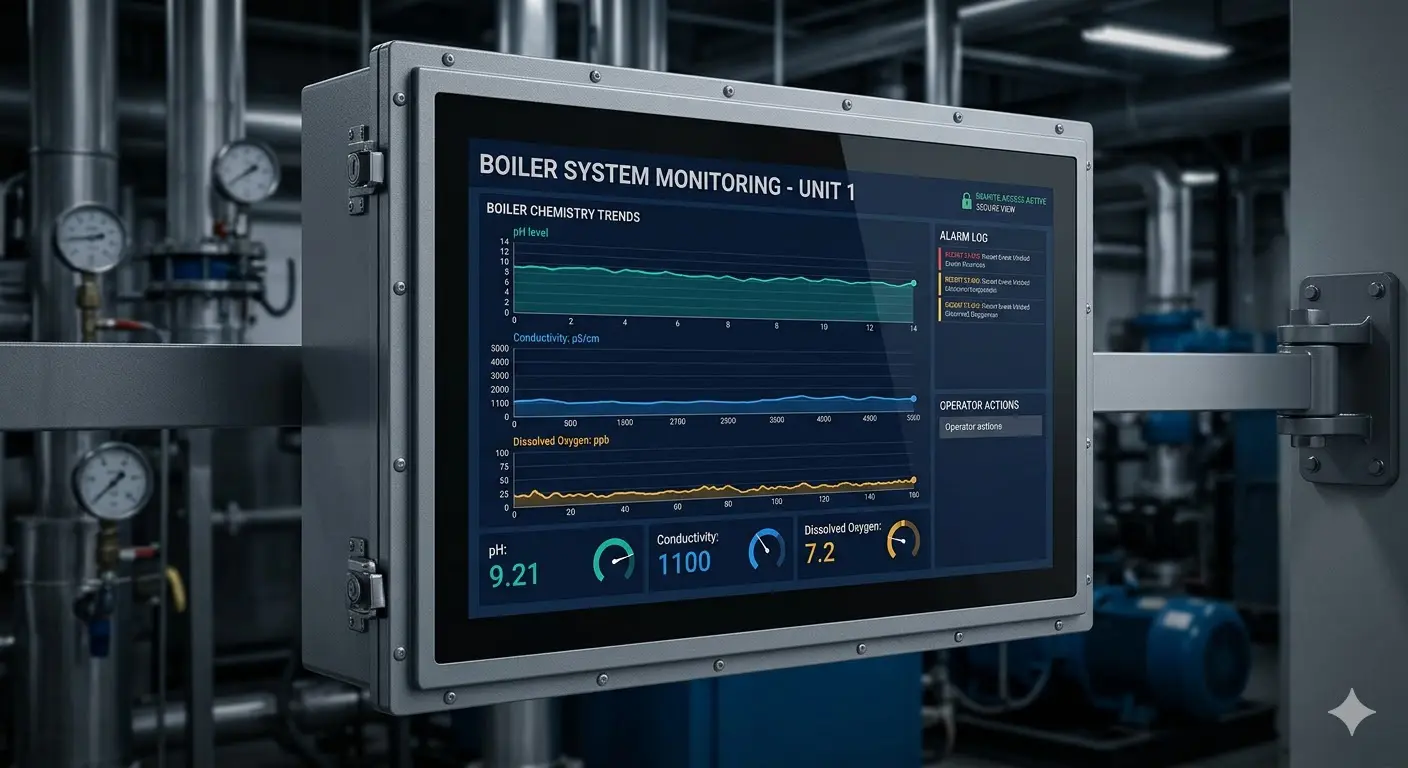
A practical buyer's guide for evaluating boiler water treatment programs — covering chemistry, service levels, and total cost of ownership before you sign anything.
Fill out the form for instant access.
The S2188 compliance timeline runs through December 2026, with two hard deadlines that define the program development and implementation phases.
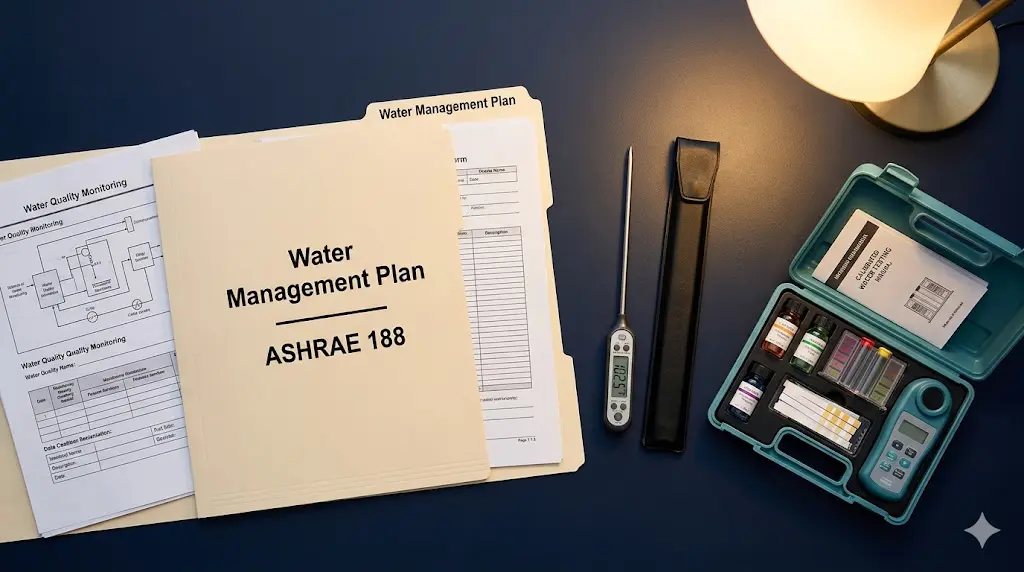
A Legionella Water Management Plan under NJ S2188 is not a filed document — it is an active program aligned with ASHRAE Standard 188-2018, with ongoing monitoring, documented corrective actions, certified laboratory testing, and trained personnel who execute the plan in real time. For a mid-size New Jersey hotel, a compliant program requires all of the following:
| Violation Type | Maximum Fine | Notes |
|---|---|---|
| First violation | $2,000 | Applies from September 10, 2026 |
| Subsequent violations | $5,000 | Each separate instance of non-compliance |
| Non-compliance linked to injury or death | $10,000 per violation | Plus separate civil liability — no statutory cap |
| Failure to maintain required records | Subject to penalty | 5-year record retention required under S2188 |
Common Mistake: Many facilities perform a single bottom blowdown the day before shutdown and consider the job done. One blowdown does not clear accumulated sludge. It takes multiple cycles — each pulling fresh material to the drain point — to meaningfully reduce what remains in the system at layup.
Most programs in NJ hotels and apartment buildings predate the law. They weren’t built to ASHRAE 188 standards, don’t include five-year record retention, and don’t have the posted public notice S2188 requires. A Free Water Analysis shows you exactly what you have — and what’s missing.
Yes — NJ S2188 explicitly names senior housing as a covered facility type, applying the same September 2026 deadlines as hotels and hospitals. Independent senior housing communities, apartment-style properties for adults 55 and over, have historically operated with minimal water safety oversight. Unlike assisted living or memory care facilities already navigating Joint Commission requirements, these communities have been largely unregulated on Legionella. That changes with S2188. The population in these buildings — predominantly adults over 65 — faces the highest risk of serious illness from Legionnaires’ disease, with case fatality rates that exceed the general population by a factor of three to five.
NJ S2188 is part of a national pattern. Ohio enacted comparable Legionella Water Management Plan requirements ahead of New Jersey. The CDC has documented a tenfold increase in reported Legionnaires’ disease cases since 2000. State legislatures are responding to that trend, and the regulatory requirements applicable to buildings that are not hospitals will continue to expand.
Facilities that build compliant programs now develop something more durable than regulatory compliance: they build the documentation infrastructure that absorbs future regulatory updates more easily, because the core program is already operational. The operational cost of building the program now is substantially lower than the cost of building it after an enforcement action or a confirmed case.
ChemREADY builds ASHRAE 188-compliant Legionella Water Management Plans for hotels, multifamily buildings, and senior housing across New Jersey — from initial risk assessment through testing programs, staff documentation, and ongoing compliance support.