Industrial Boiler Treatment: Top Chemicals & Best Practices
December 13, 2023
Nick Piskura
Reading Time | 5 Minutes
In many industrial settings, boilers serve as the backbone of production, delivering steam or hot water for a range of processes. Yet, the presence of water impurities—from hardness to dissolved gases—can cause scaling, corrosion, and sludge buildup that reduce efficiency and drive up operating costs. By selecting the right boiler treatment chemicals and adhering to best practices, you can maximize performance while preventing costly downtime.
The Impact of Water Impurities
Industrial water contains a variety of minerals, gases, and suspended solids. Some pose serious threats to boiler integrity and efficiency:
Hardness (Calcium & Magnesium Ions):
Cause scale, insulating heat transfer surfaces and lowering efficiency.
Purpose: Elevate pH to reduce corrosion risk and improve scale prevention.
Common Examples: Sodium hydroxide, ammonia.
Corrosion Inhibitors
Purpose: Create a protective film on metal surfaces to minimize corrosion from oxygen or other aggressive ions.
Common Examples: Film-forming amines, phosphates.
Anti-Scale Agents
Purpose: Bind to hardness ions or alter their crystal structure to prevent scale deposition.
Common Examples: Chelating agents, polyphosphates.
Oxygen Scavengers
Purpose: Remove dissolved oxygen—a major cause of corrosion—from feedwater.
Common Examples: Hydrazine, sulfite-based compounds.
Sludge Inhibitors & Dispersants
Purpose: Prevent sludge formation and coagulation, ensuring smooth flow and minimal buildup of solids.
Common Examples: Polyacrylates, lignosulfonates.
Buyer's GuideBoilersFree Download
Don't let scale and corrosion take your boiler system offline.
A practical buyer's guide for evaluating boiler water treatment programs — covering chemistry, service levels, and total cost of ownership before you sign anything.
Get Instant Access — Free Download
Don't let scale and corrosion take your boiler system offline.
Fill out the form for instant access.
Choosing the Right Chemical Program
Boiler treatment isn’t a one-size-fits-all approach; multiple variables guide your selection:
Boiler Type & Operating Conditions: Steam pressure, temperature, and feedwater composition will influence chemical needs.
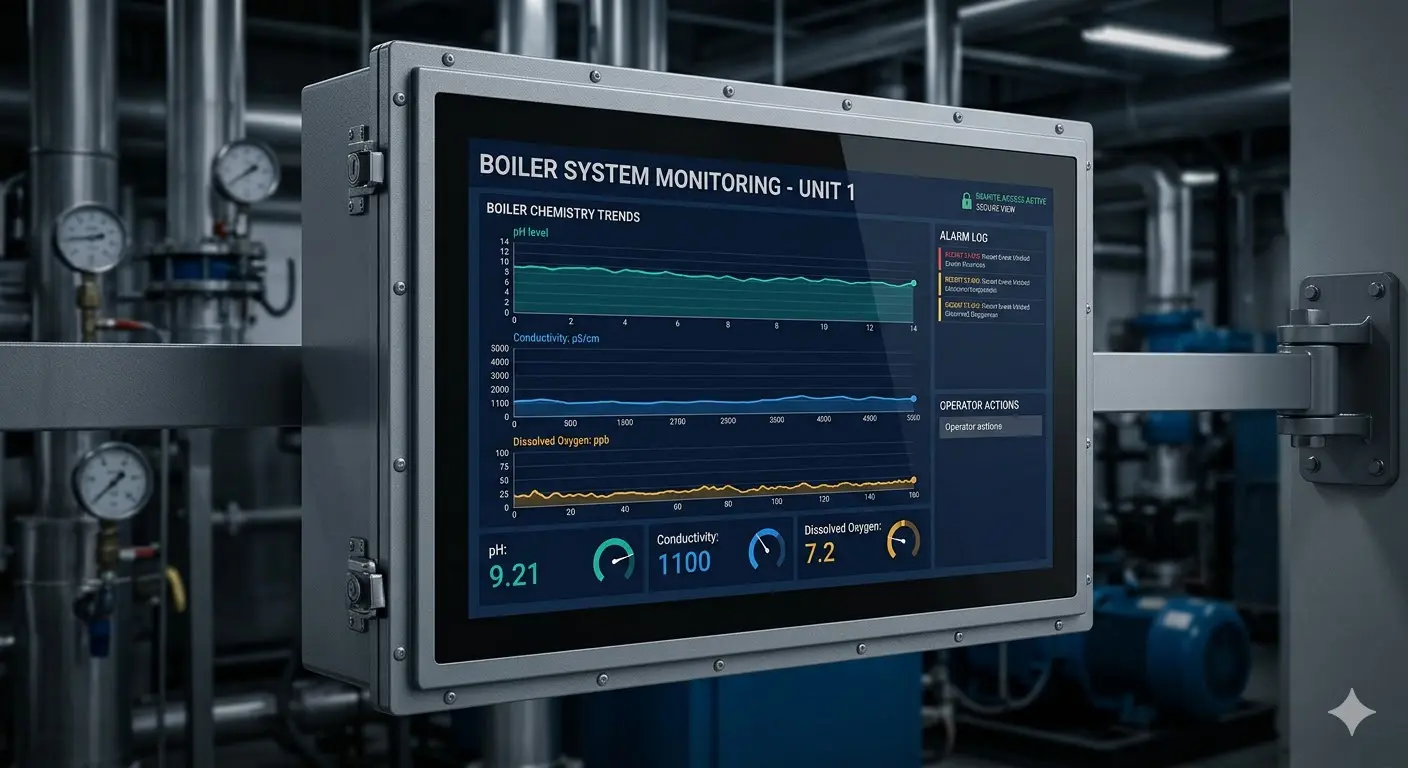
Feedwater Analysis: Evaluate parameters like hardness, conductivity, alkalinity, and dissolved oxygen to pinpoint issues.
Regulatory & Environmental Constraints: Some chemicals may be restricted due to discharge or environmental impact.
Best Practices for Effective Boiler Treatment
Regular Water Testing
Monitor pH, conductivity, hardness, and other critical metrics to fine-tune chemical dosages.
Catch abnormalities early to prevent scale or corrosion from worsening.
Blowdown & Sludge Removal
Periodically discharge water containing concentrated solids to keep impurities from accumulating.
Proper blowdown intervals help maintain stable water chemistry.
Scheduled Cleaning & Inspections
Remove any deposits on surfaces and assess mechanical integrity.
Early detection of worn or corroded components helps avoid sudden failures.
Professional Guidance
Partner with a qualified water treatment expert to customize a plan for your unique system.
Leverage their knowledge of advanced chemicals, local regulations, and cutting-edge technologies.
Lower Operating Costs with a Smarter Boiler Treatment Program
Optimize chemical dosing, improve heat transfer, and extend equipment life with a customized plan.
Optimized Efficiency: Clean heat transfer surfaces and balanced chemistry reduce energy consumption.
Extended Equipment Lifespan: Less corrosion and scale translate to fewer repairs and replacements.
Consistent Performance: A stable boiler system supports uninterrupted production, lowering the risk of costly downtime.
Regulatory Compliance: Meeting industry and environmental guidelines helps avoid fines or legal challenges.
Additional Resources
ASME Boiler and Pressure Vessel Code
American Water Works Association (AWWA)
National Association of Boiler Inspectors and Repairers (NABIR)
An industrial boiler demands more than just routine checks; it requires a strategic combination of the right chemicals, ongoing monitoring, and preventative maintenance. By understanding the specific challenges posed by water impurities and tailoring your treatment approach accordingly, you’ll ensure higher efficiency, reduced operational costs, and a longer lifespan for your critical steam-generation infrastructure.
Build a Boiler Treatment Program That Works for Your System
From feedwater analysis to chemical selection and monitoring, ChemREADY delivers total boiler protection.