Every hour a filter press is offline is an hour your facility absorbs costs it shouldn’t have to — rising disposal bills, halted production, and compliance exposure that doesn’t wait for your maintenance schedule to catch up. The worst part? Most filter press failures are predictable. The same five problems cause the majority of unplanned shutdowns, and every one of them is preventable with the right maintenance approach.
The Water Confidence Assessment takes 5 minutes and shows you exactly where your program stands.
Filter press downtime is unplanned operational shutdown caused by mechanical failure, component wear, or system imbalance in the press or its feed system. Unlike scheduled maintenance, unplanned downtime compounds quickly — a single failed hydraulic seal can halt operations for days if replacement parts aren’t on-site and a service partner isn’t available to respond.
Filter cloths are the workhorses of any filter press system — and one of the most frequently mismanaged components. Cloth degradation happens gradually through chemical exposure, abrasion, and incomplete cleaning cycles, which means many facilities don’t recognize the problem until performance has already dropped significantly.
Warning signs of filter cloth failure:
Prevention: Inspect cloths on a scheduled basis — not when performance drops. Verify that cloth material and weave are matched to your specific sludge characteristics. Consider automated backflush or cloth washing systems if your facility runs high-volume, continuous dewatering cycles. Proactive cloth management prevents many problems that are often misdiagnosed as larger mechanical failures.
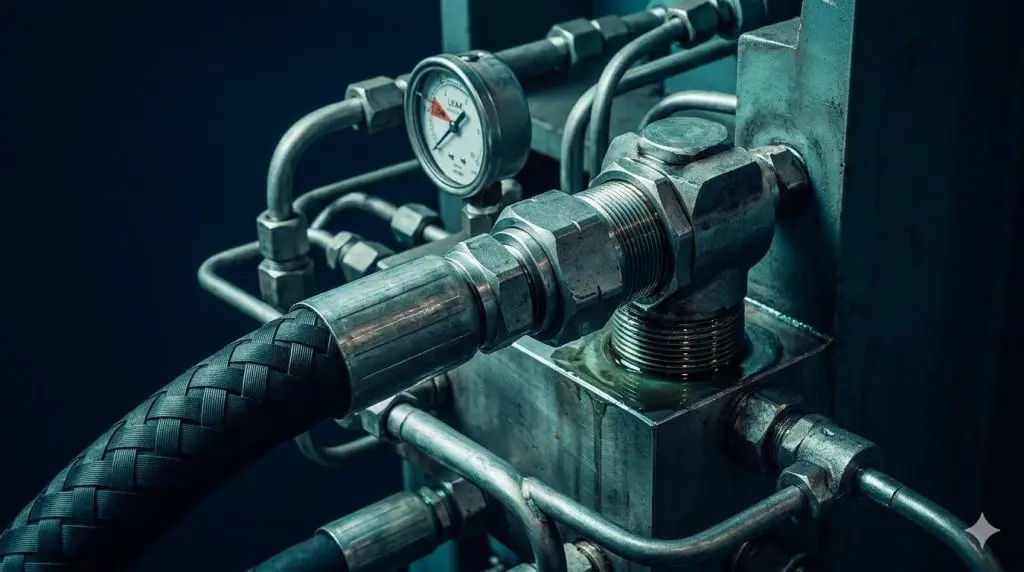
Hydraulic failures are responsible for some of the longest filter press outages — and they almost always start small. A slow hydraulic leak or a minor pressure drop is easy to overlook until it becomes a full system shutdown. Contaminated hydraulic fluid, worn seals, and degraded hoses are the primary culprits, and none of them give much warning when left uninspected.
Prevention: Conduct routine inspections for leaks and pressure loss — not reactive checks. Keep spare hydraulic seals and hoses on-site sized to your specific press. Monitor closing pressure and cycle consistency as leading indicators of hydraulic wear. Small hydraulic problems tend to escalate quickly.
Filter plates absorb significant mechanical stress during every press cycle. Even minor damage or misalignment — often caused by filter cake deposits forming on the plate seal area during discharge — reduces filtration efficiency and accelerates wear across the entire system. Once misalignment begins, the closing cycle makes it worse with each pass.
Warning signs:
Prevention: Inspect plates for cracks, warping, and seal deposits regularly. Address alignment issues early — before they affect adjacent plates and cloths. Replace damaged plates before the damage compounds. Early plate maintenance is one of the most cost-effective things a facility can do to extend overall press life.
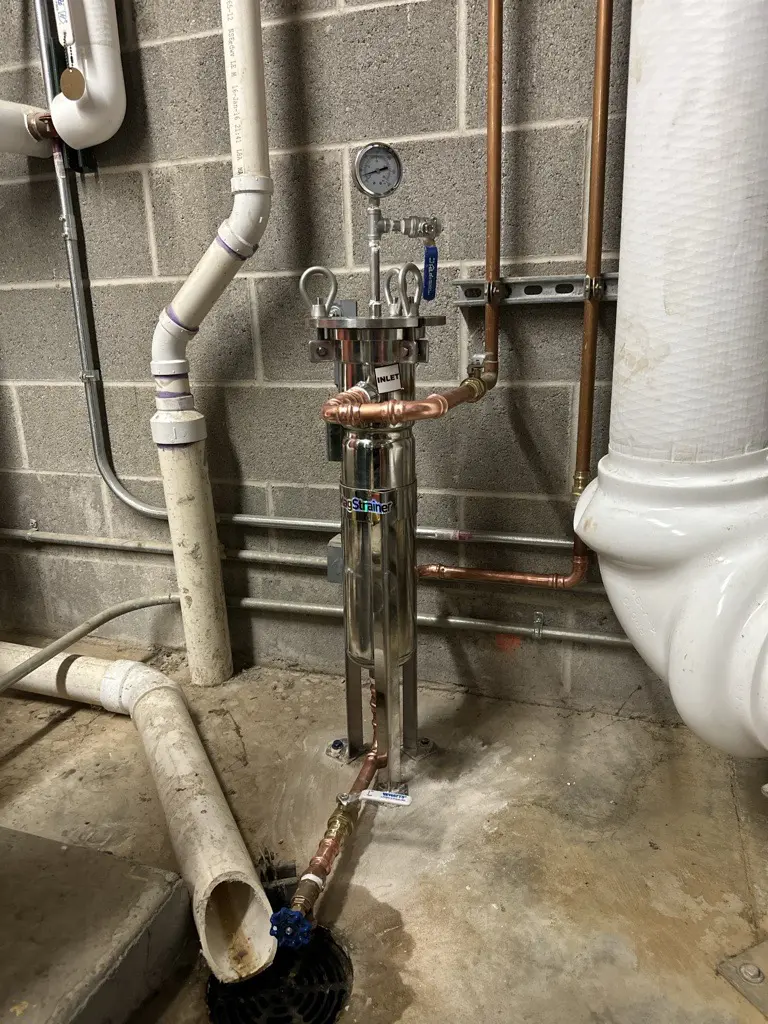
Not all filter press problems start in the press itself. Feed system issues are among the most common hidden causes of declining performance — and they’re frequently missed because operators focus troubleshooting on the press rather than the upstream system.
Common feed-related failure modes include solids buildup in feed lines, inconsistent sludge characteristics caused by upstream process changes, and improper pump sizing or operation. When feed issues go unresolved, operators compensate by pushing the press harder — placing unnecessary stress on plates, cloths, and hydraulics and accelerating wear across all three.
Prevention: Flush and inspect feed lines on a regular schedule. Monitor sludge consistency and solids content. Verify pump operation and sizing against your actual process conditions — not your original design spec. Consider adding backflush capability if solids buildup is a recurring issue.
If your current vendor tests some of these but doesn’t share the results in plain English — or if you’ve never seen a trend report showing how these parameters move over time — you’re flying blind on your own system.
Download the Checklist: What Should Be On-Site Right Now?
Reactive maintenance is the root cause behind most filter press downtime. It’s not a single failure mode — it’s the organizational pattern that allows every other failure mode on this list to go undetected until it causes a shutdown. Waiting for components to fail consistently results in longer outages, higher emergency repair costs, rush-ordered parts, and unplanned production interruptions.
The cost difference between preventive and reactive maintenance is significant: facilities that run reactive programs typically spend 3–5 times more per failure event than those with structured preventive programs — not counting the operational losses during downtime.
Prevention: Schedule routine inspections with defined intervals. Identify wear items before they fail. Keep critical spare parts stocked on-site. Partner with a maintenance team that knows your equipment and your process — not a vendor that only shows up when something breaks.
Filter press inspection frequency depends on operating volume and sludge characteristics, but most industrial dewatering facilities should conduct visual inspections weekly, component-level inspections monthly, and comprehensive system evaluations quarterly. High-volume operations or facilities with aggressive sludge chemistry may require more frequent intervention. The goal is to catch wear indicators — pressure inconsistency, cloth performance changes, visible leaks — before they become failures.
ChemREADY provides filter press maintenance and support services to help wastewater treatment and dewatering facilities identify early warning signs of failure, evaluate overall equipment condition, and plan maintenance proactively. Our team works directly with operators to support reliable, efficient, and compliant dewatering operations — not just when something breaks, but on a planned schedule that prevents the break from happening.
Explore our dewatering wastewater services and filter press maintenance programs to learn how ChemREADY supports facilities like yours.
A Free Water Analysis from ChemREADY evaluates your dewatering operation and identifies risk before it becomes downtime.
When a filter press goes down, the failure is rarely the most expensive part of the problem. The most expensive part is waiting — waiting for replacement components that should have been on-site before the press ever stopped running. In dewatering operations, every hour of unplanned downtime raises disposal costs, halts production, and creates compliance exposure. Having the right spare parts on hand converts a potential multi-day shutdown into a same-day fix.
ChemREADY’s filter press maintenance and support team can evaluate your equipment and help you build the right emergency inventory for your process.
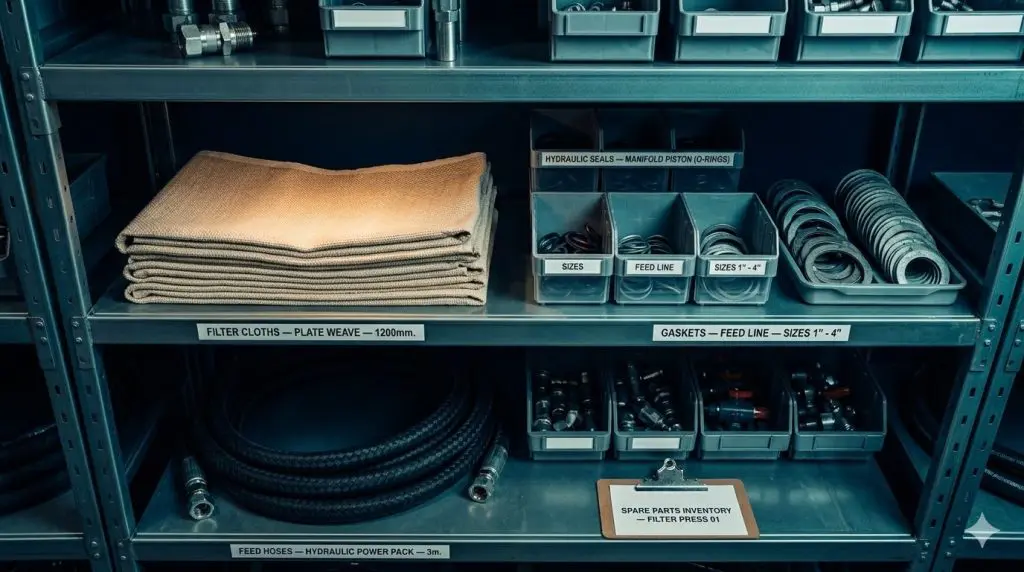
The critical filter press spare parts to keep on-site are filter cloths, hydraulic seals and hoses, gaskets and plate seals, feed hoses and piping components, and mechanical wear items such as wear plates and guides. These five categories account for the majority of unplanned filter press shutdowns — and they are all replaceable quickly when stocked on-site. The specific quantities depend on your press size, operating volume, and historical wear rates.
| Component | Failure Risk | Downtime Impact | Why Stock It |
|---|---|---|---|
| Filter Cloths | High — wear-driven | High — stops filtration | Long lead times; wear rate predictable; cloth failure halts operations entirely |
| Hydraulic Seals & Hoses | Medium-High — pressure stress | Very High — longest outages | Equipment-specific; small leaks escalate fast; hard to source urgently |
| Gaskets & Plate Seals | Medium — chemical wear | Medium — causes leaks & uneven pressing | Inexpensive; failure accelerates plate and cloth damage if left unaddressed |
| Feed Hoses & Piping | Medium — abrasion wear | Medium-High — halts feed system | Often overlooked until failure; abrasion under pressure can be sudden |
| Wear Plates & Guides | Lower — friction wear | Medium — causes misalignment cascade | Small components; cheap to stock; cascading damage if missed |
Filter cloths are among the highest-frequency replacement components in any filter press system. Their condition directly determines cake dryness, cycle time, and filtrate quality — and cloth failure stops dewatering operations entirely. Lead times for replacement cloths can range from several days to several weeks depending on the cloth material, weave pattern, and press manufacturer — which is exactly why waiting until failure is the wrong approach.
On-site inventory guidance: Stock spare cloths sized to your specific plates based on historical wear rates. Match material and weave to your sludge characteristics — a cloth that works for municipal biosolids may fail quickly in an industrial high-solids application. Facilities experiencing frequent cloth issues should review their dewatering chemical conditioning program, as poor polymer performance dramatically accelerates cloth blinding.
ChemREADY evaluates your full dewatering system — polymer chemistry, sludge conditioning, and equipment — to find what’s actually driving cloth wear.
Hydraulic system failures are responsible for the longest unplanned filter press outages. A slow seal leak can become a complete loss of closing pressure over hours or days — and if replacement components aren’t immediately available, the repair wait time compounds the downtime. Hydraulic components are frequently manufacturer-specific, which makes emergency sourcing particularly difficult.
On-site inventory guidance: Stock hydraulic seals, hoses, and fittings matched to your press make and model. Keep spare hydraulic fluid on-site as well — contaminated fluid is a leading cause of seal degradation and is often the underlying cause of recurring hydraulic problems. If your press uses a specific hydraulic unit or cylinder design, work with your maintenance partner to identify the exact components that carry the highest failure risk for your operating pressure.
Gaskets and plate seals maintain the pressure integrity required for effective dewatering. When they fail — from chemical exposure, repeated compression cycles, or misalignment — the result is leaks during the press cycle and uneven pressing that accelerates wear on both the plates and the cloths. The cascading damage makes a small, inexpensive gasket into a large, expensive repair if not addressed quickly.
On-site inventory guidance: Keep replacement gaskets for every plate size in your press. Gasket material should be matched to your sludge’s chemical profile — aggressive pH or solvent content can destroy standard gaskets prematurely. Stocking gaskets is low cost relative to the damage a failed seal can cause.
Feed system failures are frequently overlooked in emergency preparedness planning because the press itself appears to be the focus of maintenance attention. In reality, feed hose failure under pressure is sudden and can be caused by abrasion, UV degradation, or solids buildup creating flow restriction. A failed feed hose stops the press as effectively as any internal component failure.
On-site inventory: Stock feed hoses, couplings, clamps, and valves exposed to solids at minimum. If your process involves high-abrasion sludge, prioritize heavy-duty hose stock with appropriate pressure ratings. Facilities experiencing recurring feed reliability issues should also evaluate their chemical conditioning and pump performance as part of a broader dewatering wastewater services review.
Mechanical wear items — wear plates, guides, and other friction components — are easy to overlook because they fail gradually rather than suddenly. But when they wear beyond tolerance, they cause misalignment, which in turn accelerates damage to the plate pack, filter cloths, and frame. Small worn components create large system problems if they go untracked.
On-site inventory: Identify the specific wear items for your press model and maintain a spare set. These are typically inexpensive components with long lead times from OEM sources — stocking them is low cost and high value. Routine filter press maintenance inspections should assess wear items at every visit.
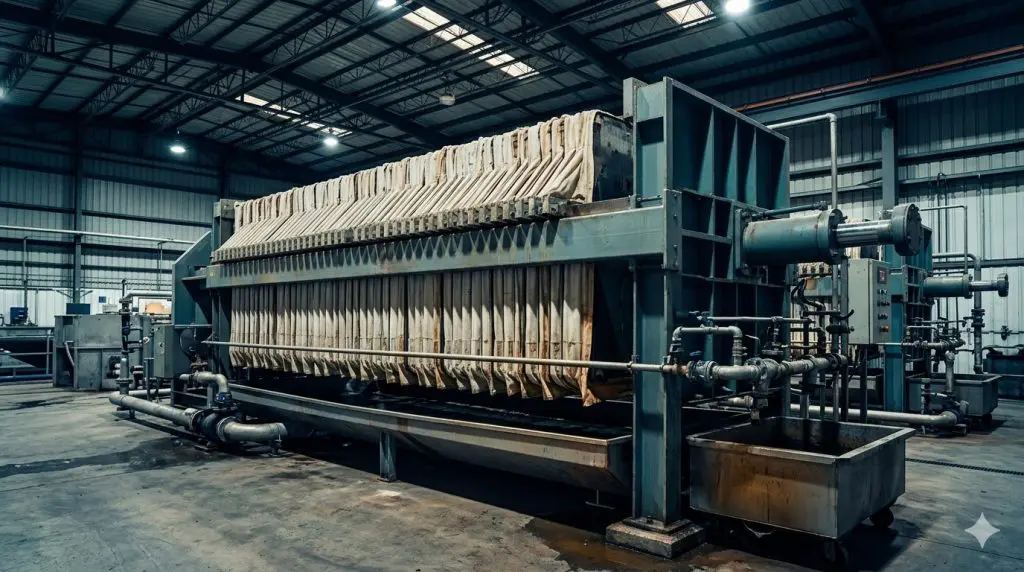
Effective emergency preparedness for filter press operations requires three things: correctly identified components matched to your specific press and process, proper on-site storage with organized inventory, and a service partner who can respond quickly when a failure occurs despite your best preparation. Many facilities don’t identify which components are truly critical until after an extended shutdown — at which point the cost of being unprepared is already realized.
Building an emergency parts inventory is most effective when done as part of a broader dewatering equipment maintenance program that includes regular inspections and defined wear item tracking. ChemREADY’s filter press maintenance and support services include equipment evaluations that identify exactly which components carry the highest risk for your operation.