Reading Time | 6 Minutes
The Legionella window is the 3-to-21-day period following cooling tower spring startup when biofilm reactivation, rising water temperature, and the absence of established chemical residuals create the highest Legionella amplification risk of the cooling season. Per ASHRAE Standard 188, facility Water Management Plans must specifically address this startup period with documented testing, shock treatment, and escalation protocols.
Most cooling tower Legionella problems don’t happen in July when systems are running hard and programs are active. They happen in April, in the first days and weeks after startup, when the biology is ahead of the chemistry and nobody is watching yet.
Spring startup gets treated as a mechanical checklist: drain the basin, inspect the fill, lubricate the bearings, call the chemical vendor. But there’s a biological sequence happening inside your system that the mechanical checklist doesn’t capture. If your Water Management Plan doesn’t explicitly address the startup period, you have a gap that opens every April — and closes only when verified chemistry and confirmed test results give you a defensible baseline.
The Legionella window is the high-risk period between cooling tower startup and the point when chemistry is established and verified test results are in hand — typically 3 to 21 days. During this window, Legionella bacteria can amplify rapidly in reactivated biofilm at temperatures between 77°F and 108°F, while aerosolization is already occurring and testing results are not yet available.
Your cooling tower didn’t sit idle over winter. It incubated. Water remaining in the basin, fill media, and piping during shutdown gave biofilm communities time to mature without chemical pressure. Legionella doesn’t die in cold water. It goes dormant, sheltered inside biofilm and sediment, waiting for conditions to improve. Spring provides exactly that: rising temperatures, fresh makeup water, and the return of aeration.
77°–108°F | Legionella’s optimal amplification range — and the exact temperature band most cooling towers pass through during spring startup. Towers don’t snap to full operating temperature. They climb gradually, spending hours or days in the danger zone. Under ideal biofilm conditions, Legionella can double in population every few hours during that climb. |
Download ChemREADY’s Spring Startup Legionella Risk Checklist and close it before cooling season is fully underway.
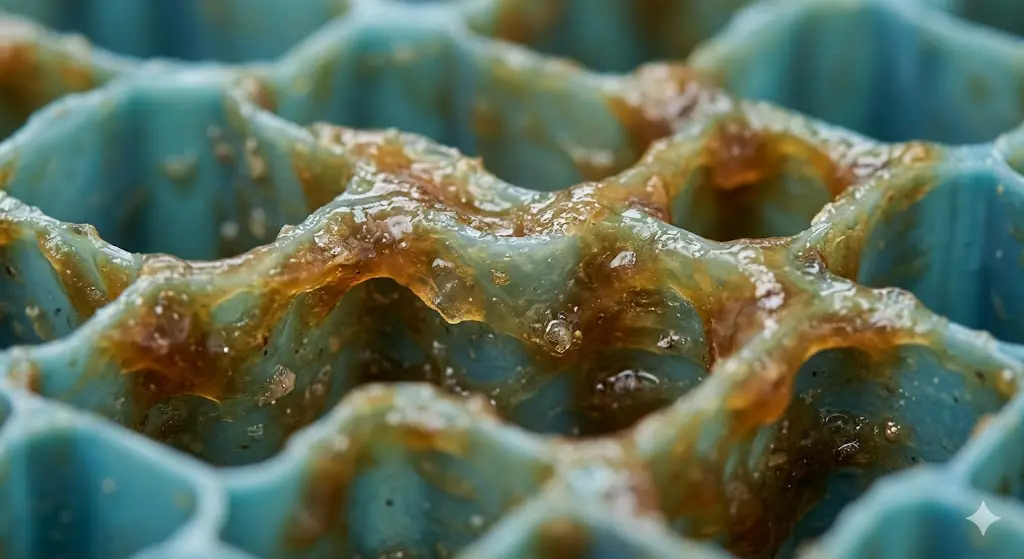
Three conditions converge at startup that don’t occur together at any other point in the cooling season:
Mature Biofilm, No Chemical History
Biofilm is a Legionella amplification platform is a structured community of microorganisms embedded in a protective matrix that dramatically reduces biocide effectiveness compared to planktonic bacteria. A tower that carried biological load into winter rehydrates and becomes metabolically active when you fill the basin in April — before treatment chemicals have established effective residuals. There is a gap, sometimes hours, sometimes days, where biology is ahead of chemistry. Standard biocide programs work on an established bacterial equilibrium; at startup, you’re reintroducing chemistry to a system where biofilm has had months to mature without pressure.
Extended Time in the Danger Zone
Most facilities start cooling towers when outdoor temperatures are still moderate, keeping tower water in the 77°F to 108°F amplification range for extended periods. A tower starting up in April may spend days in that window while cooling load is low and system conditions aren’t yet stable. A tower reaching steady-state in July moves through it quickly. The combination of low load, slow temperature rise, and immature chemical residuals creates an extended amplification window that mid-season operation doesn’t replicate.
Aerosolization Before Verification
The moment your cooling tower starts, it produces aerosol drift. Standard Legionella culture testing takes 7 to 14 days to return results. PCR-based testing returns results in 24 to 48 hours. If your Water Management Plan doesn’t specify testing method and turnaround time for startup, your tower may be running and aerosolizing for two full weeks before you have any confirmation of what’s in the water. This is where liability lives.
Critical Timing Gap
If your WMP specifies standard culture testing at startup, you are operating blind for 7–14 days during the highest-risk period of the year. PCR testing at startup isn’t a premium option — it’s the only method that returns results within the risk window.
The Spring Startup Legionella Risk Checklist gives your team a documented protocol for the riskiest 21 days of the cooling season.
A practical buyer's guide for evaluating boiler water treatment programs — covering chemistry, service levels, and total cost of ownership before you sign anything.
Fill out the form for instant access.
Testing turnaround time is the most consequential variable in startup Legionella management — and the one most often left unspecified in Water Management Plans.
| PCR vs. Culture Legionella Testing: Which Does Your WMP Require? | ||
|---|---|---|
| Factor | Culture Testing | PCR Testing |
| Turnaround Time | 7–14 days | 24–48 hours |
| What It Detects | Culturable, viable Legionella only | DNA — live and recently dead cells |
| Startup Utility | Low — results arrive after risk window | High — results within risk window |
| Regulatory Standing | CDC/ASHRAE 188 accepted standard | Increasingly accepted; specify in WMP |
| Cost | Lower per test | Higher per test — lower risk exposure |
| WMP Specification | Must specify if used at startup | Must specify method and action threshold |
The practical implication: a WMP that requires culture testing at startup — without specifying PCR as an option — leaves your facility operating without actionable data for up to two weeks. During that window, your system is aerosolizing, your occupants are exposed, and your program has no verified status. Specify PCR at startup in your WMP, define the action threshold (typically >10 CFU/mL or a positive PCR result with cycle threshold guidance), and document what operational response a positive result triggers.
ASHRAE Standard 188 requires Water Management Plans to address all phases of system operation, including startup after extended shutdown. Most WMPs have a general seasonal startup section. Fewer include the specific verification triggers, test timing, and escalation criteria that actually close the Legionella window. A startup-ready WMP includes these five elements:
ASHRAE 188 Compliance Note
Facilities without startup-specific WMP protocols face regulatory and legal exposure if an outbreak is traced to their system. When litigation follows a Legionella event, investigators ask two questions: did a program exist, and was it followed? A WMP written two years ago, never audited, and missing startup protocols is a document — not a program.
Download the Spring Startup Checklist and know exactly what your program needs to have in place before your tower goes online.

Legionella pneumophila amplifies most rapidly between 77°F and 108°F (25°C–42°C), with peak growth occurring around 95°F (35°C). Below 68°F (20°C), the bacteria become dormant but do not die — a critical distinction for winter shutdown management. Above 131°F (55°C), Legionella is killed within minutes; full disinfection requires sustained temperatures above 158°F (70°C).
The operational implication: a cooling tower that reaches steady-state operation at 85°F basin temperature in July spends relatively little time in the peak amplification zone. The same tower starting in April, when cooling loads are low and water temperatures climb slowly, may spend days at 90–100°F — the worst possible zone — before stabilizing. Startup is when the temperature profile is most dangerous, not peak summer.
If your cooling tower produced an elevated Legionella result this week, would your Water Management Plan give you a clear, documented response path? Facilities that can answer yes are better protected legally and operationally. When outbreaks are traced to cooling towers and litigation follows, investigators ask whether a program existed and whether it was followed.
The window is real. It opens every spring and closes around three weeks after startup when verified chemistry and confirmed test results give you a defensible baseline. Spring startup isn’t a checklist to clear. It’s the moment your Legionella program proves its worth — and the moment most programs reveal their gaps.
If your cakes are starting to stick, you’re already behind the curve. ChemREADY’s maintenance team helps operators get ahead of cloth degradation before it forces a crisis.