Many facilities have “maintenance,” but not a clear, measurable view of Legionella conditions across the system.
You can’t confirm whether control measures are working
You don’t know if risk is isolated or widespread
You’re forced into reactive decisions when a concern arises
ASHRAE Standard 188-2021 emphasizes Water Management Plans (WMPs) and includes a confirmation step—procedures to verify the plan’s effectiveness, often referred to as validation. Routine monitoring supports that validation and highlights where reassessment may be needed.
We coordinate Legionella testing through certified microbiology laboratory partners and help you choose the right method, sampling plan, and cadence for your building and risk profile.
The gold standard for Legionella detection. Ideal for routine validation and detailed investigations, with optional serogrouping.
Fast turnaround results—qPCR in hours, Legiolert in ~7 days—helping you make quicker decisions while maintaining accuracy.
Useful during targeted investigations or hard-to-reach locations. Helps identify issues inside fixtures, dead legs, and problem points.
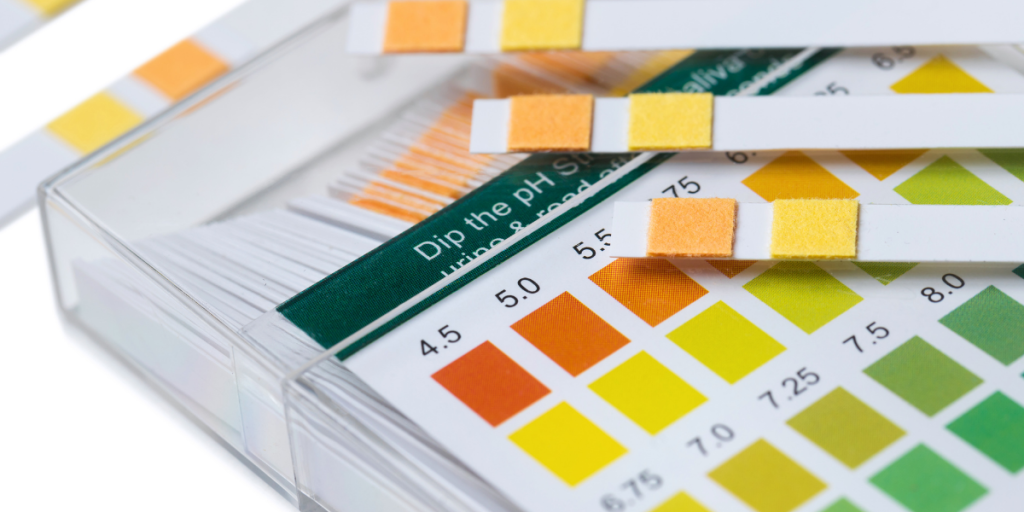
On-site test strips, handheld meters, and monitoring tools that support routine checks on disinfectant, temperature, and system performance.
There isn’t one universal answer. Frequency should be based on a risk assessment and a sampling plan that represents each water system.
Common starting points include:
We’ll help you build a practical plan that fits your building’s realities (usage patterns, maintenance practices, and any prior history).
Sampling technique matters—bad sampling can create misleading results.
Don’t flush before sampling. A first-draw sample reflects real conditions inside the plumbing.
Always use bottles containing sodium thiosulfate. It neutralizes disinfectants like chlorine so results remain accurate.
Record date, time, and sample location. Good documentation is essential for interpreting results.
Collect from the sump, away from chemical injection points, and not immediately after a normal biocide event.
The most important thing: don’t improvise—follow the plan
A positive result is serious, but the next steps should be structured. Your Water Management Plan (WMP) should define exactly what to do when results indicate poorly controlled or uncontrolled growth.
For high-risk settings, interim protective measures (like point-of-use filtration) may be considered while corrective actions are executed.
The CDC recommends the following actions for poorly controlled or uncontrolled Legionella growth:
Historically, the Centers for Disease Control and Prevention (CDC) had no official stance on the results of Legionella testing. 2021 marked the first year they published guidance for the public. The CDC’s graphic “Figure 1. Routine Legionella testing: A multifactorial approach to performance indicator interpretation” highlights four areas of consideration for Legionella testing results. The first section discusses which concentration indicates that Legionella growth appears uncontrolled, poorly controlled, or well controlled. Concentrations expressed as CFU/mL are for test results by traditional plate culture methods. If other test methods are used, consult an expert for interpretation.
The detection of greater than or equal to 10 CFU/mL in potable water or the detection of greater than or equal to 100 CFU/mL in non-potable water indicates that Legionella growth appears uncontrolled.
The detection of 1.0-9.9 CFU/mL in potable water or the detection of 10-99 CFU/mL in non-potable water indicates that Legionella growth appears poorly controlled.
The detection of any to 0.9 CFU/mL in potable water or the detection of any to 9 CFU/mL in non-potable water indicates that Legionella growth appears well controlled.
No Legionella detected also indicates that Legionella growth appears well controlled, and is a stronger indication that Legionella is well controlled than detection of any Legionella.
The second section relates to the way in which concentration change over time indicates that Legionella growth appears uncontrolled, poorly controlled, or well controlled.
A 100-fold or greater increase in concentration (for example, an increase from 0.7 CFU/mL to 70 CFU/mL) indicates that Legionella growth appears uncontrolled.
A 10-fold increase in concentration (for example, an increase from 0.7 CFU/mL to 7 CFU/mL) indicates that Legionella growth appears poorly controlled.
Steady Legionella concentration (for example, 0.7 CFU/mL for two consecutive sampling rounds) indicates that Legionella growth appears well controlled.

Our formulations meet NSF safety standards to protect your people and your equipment.
Backed by decades of industry experience and a proven track record of results.
Serving facilities across the midwest with responsive, local water treatment support.
Closed loops feed your heat exchangers too. Explore our Closed Loop Water Treatment and Glycol Solutions to stop corrosion before it reaches your boiler.
Your steam system isn’t the only one that needs protection. Keep your cooling water clean and balanced with our Cooling Tower Treatment Programs.
For maximum reliability, combine your boiler program with Filtration Solutions to remove rust and debris before they enter your feedwater system