Boiler Layup Done Right: Wet vs. Dry and Why It Matters
March 24, 2026
Adeline Johnston
Reading Time | 12 Minutes
When the heat season ends, the risk season begins. A boiler without a layup plan is a boiler losing tube life.
The Shutdown That Costs More Than It Should
Across manufacturing plants, hospitals, and university campuses, boilers are shutting down for the season right now. Heating demand is dropping. And somewhere, a facility manager is about to make a decision that will either protect a million-dollar asset — or silently destroy it.
That decision is boiler layup. And getting it wrong is one of the most expensive mistakes in industrial water treatment.
Here is what makes boiler layup failures so destructive: the damage is invisible. Oxygen pitting can perforate a boiler tube in as little as two to three weeks during an unprotected idle period, according to industry guidelines from the American Boiler Manufacturers Association (ABMA). Dew point corrosion on the fireside can eat through half an inch of steel per year during shutdown. By the time you discover the damage at fall startup, you are looking at emergency tube replacements running $15,000–$50,000 per incident — plus unplanned downtime and a budget conversation nobody wants to have.
The good news: proper boiler layup is straightforward when you know which method to use and why. This guide covers wet layup, dry layup, the chemical parameters for each, and the decision framework that tells you which one protects your specific boiler through its off-season.
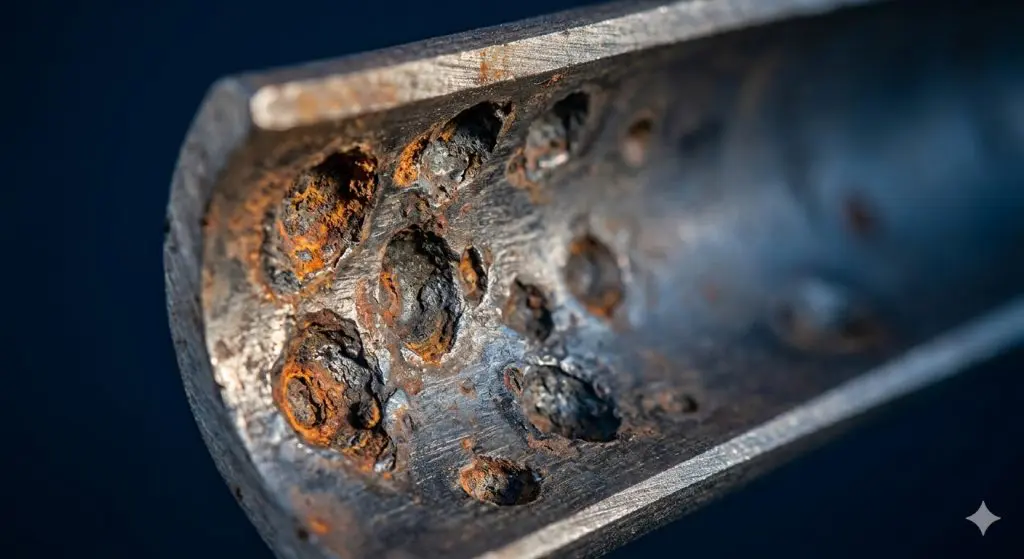
This is what two to three weeks of unprotected idle looks like. Oxygen pitting. Invisible until it is not.
Not Sure If Your Boiler Is Protected During Shutdown?
Most corrosion damage happens when equipment sits idle — not when it’s running. Use ChemREADY’s Boiler Wet Layup Checklist to protect your system from the inside out. No cost. No obligation.
Boiler layup is the process of preserving a steam boiler during periods of inactivity to prevent internal corrosion, oxygen pitting, and tube damage. It involves either maintaining a full system of chemically treated water (wet layup) or draining the boiler completely and keeping internal surfaces dry and inert (dry layup). The goal of both methods is to stop the corrosive chemistry that begins the moment a boiler goes offline.
During normal operation, your boiler water treatment program maintains the chemistry that protects metal surfaces from oxygen attack, acidic corrosion, and scale formation. The moment that boiler shuts down and cools, three things happen simultaneously:
Oxygen solubility in the residual water increases sharply — cold water holds more dissolved oxygen than hot water.
The protective magnetite layer (Fe3O4) on tube surfaces becomes vulnerable to oxidation once treatment chemicals stop circulating.
Residual contaminants concentrate as water chemistry drifts without active monitoring and control.
Without a planned layup procedure, those three factors combine to create conditions for oxygen pitting, under-deposit corrosion, and tube thinning — the failures that account for the majority of boiler tube replacements in industrial facilities.
WARNING: A boiler sitting idle with no layup protection can develop measurable pitting damage in as little as two to three weeks (ABMA). The operational rule: if the boiler will be offline for more than five days, a layup procedure is not optional — it is a maintenance requirement.
Buyer's GuideBoilersFree Download
Don't let scale and corrosion take your boiler system offline.
A practical buyer's guide for evaluating boiler water treatment programs — covering chemistry, service levels, and total cost of ownership before you sign anything.
Get Instant Access — Free Download
Don't let scale and corrosion take your boiler system offline.
Fill out the form for instant access.
Wet layup chemistry is not complicated — but the parameters matter. Sulfite at 200+ ppm. pH above 11.0. No air space.
When Should You Use Wet vs. Dry Boiler Layup?
The decision between wet and dry boiler layup depends on three variables: how long the boiler will be idle, whether it needs to restart quickly, and the ambient conditions at your facility. Neither method is universally superior — the right choice is the one that matches your operational reality.
In practice, the choice is usually driven by operational reality rather than textbook recommendations. A hospital cannot drain its standby boiler because it may be needed at 2 AM during a cold snap. A manufacturing plant shutting down from May to September has no reason to maintain treated water in an idle system for four months. Match the method to your scenario — not to what was done last year without evaluation.
Taking Your Boiler Offline for the Season?
A proper dry layup is the difference between a smooth startup and a costly repair bill. Use ChemREADY’s Boiler Dry Layup Checklist to shut down with confidence. No cost. No obligation.
Wet boiler layup keeps the boiler completely full of chemically treated water, with all internal surfaces submerged and no air space where oxygen can contact metal. The treatment levels are elevated above normal operating targets to provide a chemical barrier throughout the idle period.
Wet layup is the right method for shutdowns lasting anywhere from a few days up to several months, and for any boiler that may need to return to service on short notice. It is the standard approach for hospital standby boilers, campus systems with multiple units, and any facility that cannot afford a multi-day restart delay.
Wet Layup Step-by-Step Procedure
Perform a thorough blowdown before shutdown to remove bottom sediment and suspended sludge while the system is still operating and easy to flush.
For shutdowns longer than 10 days: drain the old boiler water and refill with fresh, softened feedwater. For shorter shutdowns: the existing treated water can remain in place.
Add boiler layup chemicals to achieve elevated preservation targets: alkalinity at or above 400 ppm as CaCO3, sulfite oxygen scavenger at or above 200 ppm as SO3, and pH maintained at 11.0 or above.
Fill the boiler completely to the top of the steam header. The objective is zero air space — any void is a surface where oxygen can concentrate and attack metal.
Seal the system completely. Close all valves and isolate the boiler from the rest of the steam distribution system.
Monitor chemistry on a regular schedule — at minimum every two weeks. Circulate the water periodically to ensure chemicals remain distributed evenly through all boiler passes.
Preventing Oxygen Ingress in Wet Layup
The primary failure mode in wet layup is oxygen ingress — air entering the system and attacking the water surface. Two approaches prevent it:
Hot layup: Maintains the boiler under slight positive steam pressure using residual heat, a heating coil, or cascading blowdown heat from an adjacent operating boiler. Positive pressure keeps air out.
Cold layup with nitrogen blanket: Replaces the steam space above the waterline with nitrogen gas at 3–5 psi to maintain positive pressure and exclude atmospheric air. An oxygen scavenger (sulfite or DEHA) should be present in the water to neutralize any dissolved oxygen that remains.
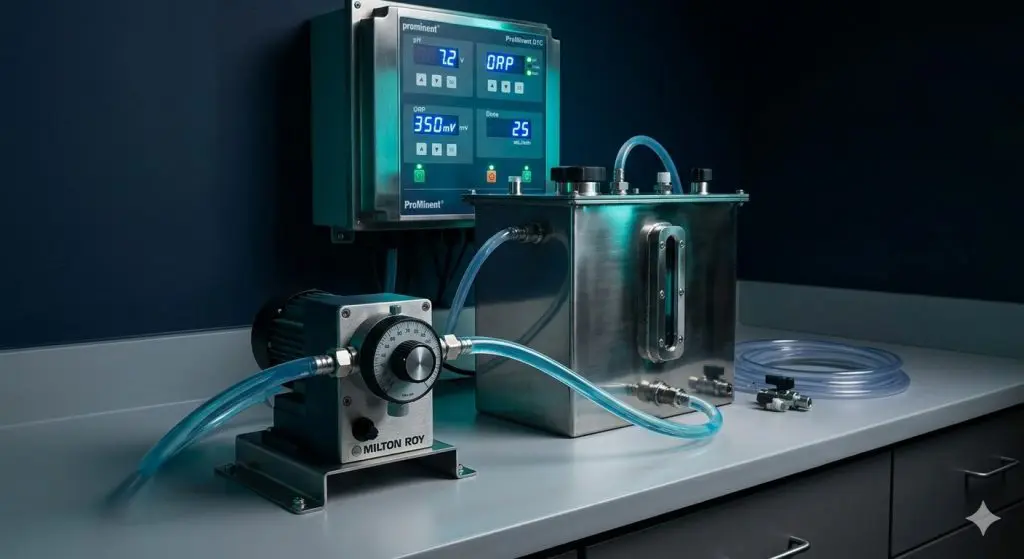
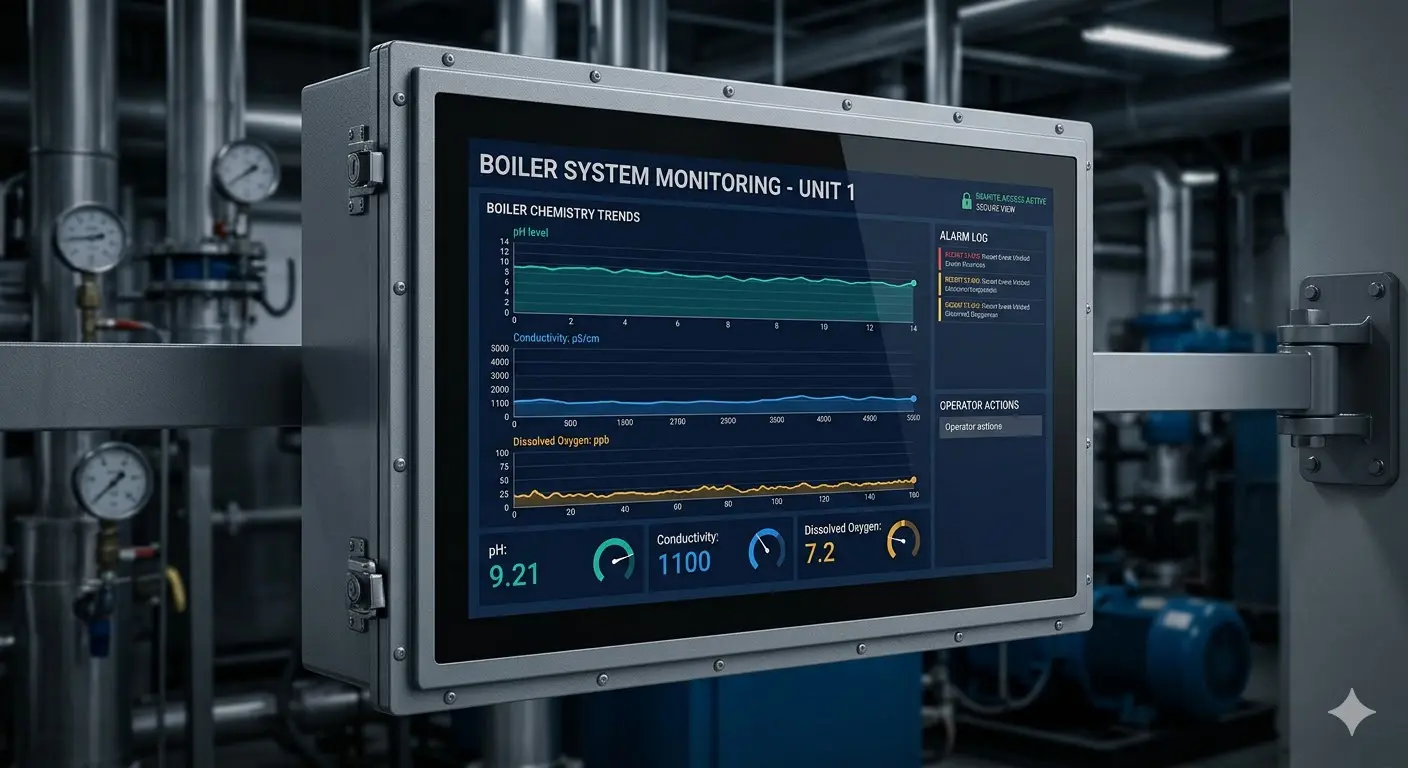
Automated controllers and remote monitoring equipment can track pH, conductivity, and dissolved oxygen in real time during layup — eliminating the risk of chemistry drift going undetected between manual checks.
Idle Boilers Are at Risk — Are You Protected?
Oxygen pitting and corrosion don’t wait for your boiler to run. They start the moment it sits unprotected. Get ChemREADY’s Boiler Wet Layup Checklist and shut down the right way. No cost. No obligation.
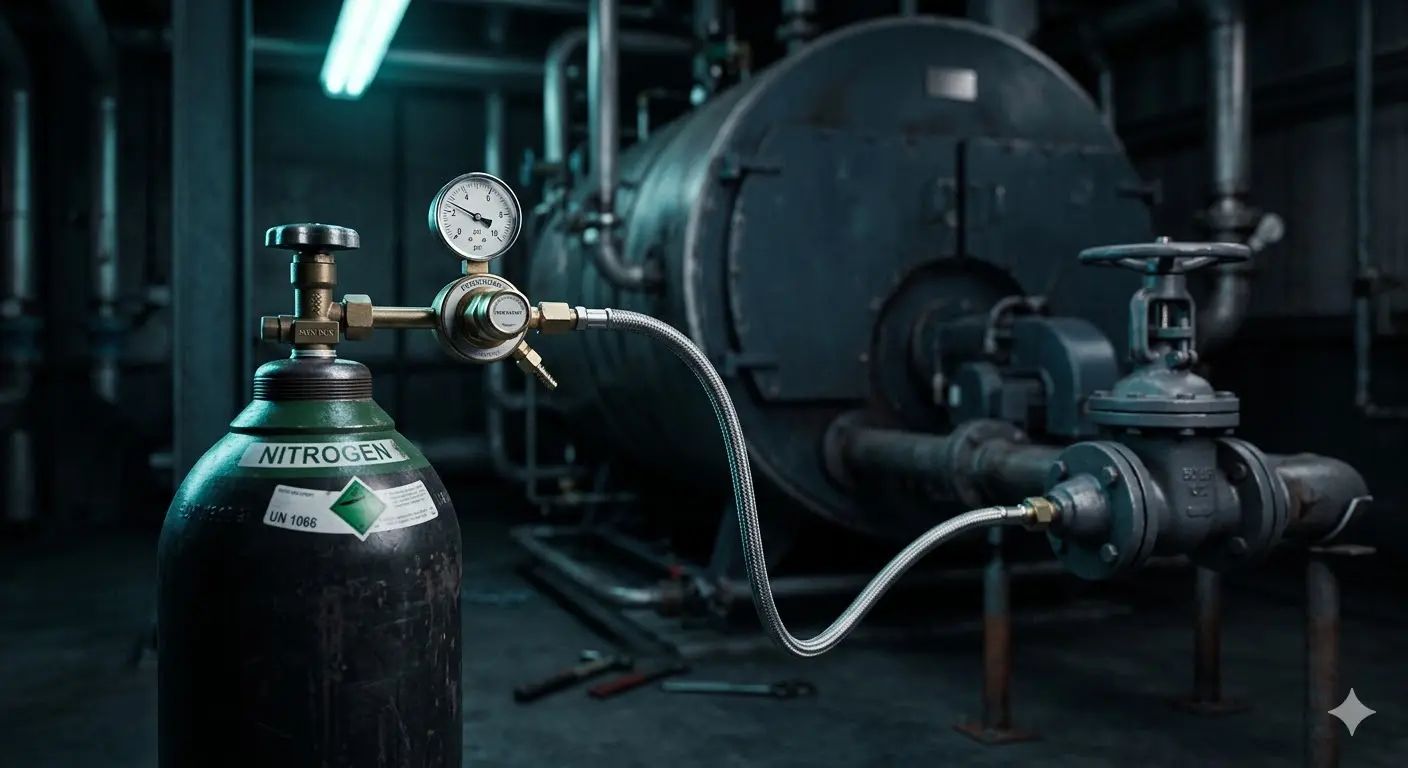
Nitrogen at 10 psi. Oxygen below 3%. That is dry layup done correctly. No moisture. No corrosion. Ready for spring.
How Does Dry Boiler Layup Work?
Dry boiler layup removes all water from the boiler and keeps internal surfaces completely dry and chemically inert. Without water present, oxygen cannot dissolve and attack the metal — which is why dry layup provides superior long-term protection when performed correctly.
Dry layup is the right choice when the boiler will be offline for more than 30 days, when there is no need for rapid restart, or when the facility is located in a climate where freezing temperatures make water-filled systems dangerous.
Dry Layup Step-by-Step Procedure
Perform a blowdown and test low-water cutoff safety devices while draining. Do not waste a full drain event without verifying that level safety controls function correctly.
Once the boiler reaches zero pressure and water temperature drops below 140°F, open an air vent and drain the system completely.
Open handholes and manholes for access. Clean the fireside thoroughly while residual soot is still warm — it is significantly easier to remove than cold, hardened soot. Wash down the waterside and remove all scale, sediment, and deposits.
Dry the boiler thoroughly using fans or electric air heaters. Avoid fuel-fired heaters — they can introduce moisture or petroleum residue. The interior must be completely dry before sealing.
Apply a nitrogen blanket: fill the pressure vessel with dry nitrogen gas until oxygen content drops below 3%, then pressurize to approximately 10 psi. Seal all openings and valve connections.
If nitrogen is not available: place moisture-absorbing desiccant trays (silica gel or quicklime) inside the boiler to scavenge residual humidity. Seal the system tightly to minimize atmospheric exchange
WARNING: Never cool a boiler rapidly by opening doors or running the combustion air blower. Thermal shock from accelerated cooling causes cracking and weakens tube-to-header integrity. Always isolate the boiler and allow natural cooling to ambient temperature.
A Clean Shutdown Means a Clean Startup
The way you take your boiler offline determines how it comes back online. Follow ChemREADY’s proven dry layup process and start next season with confidence. No cost. No obligation.
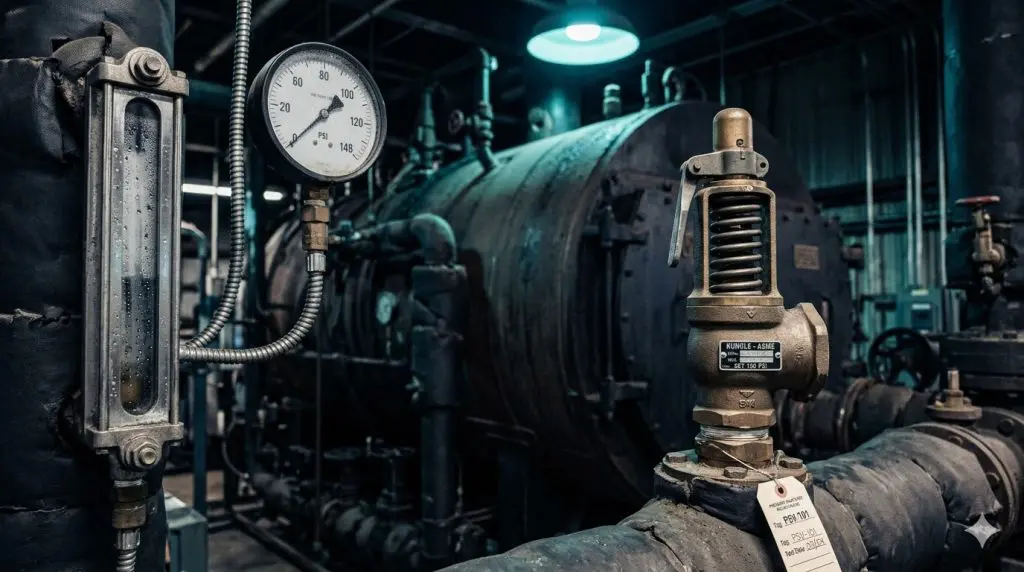
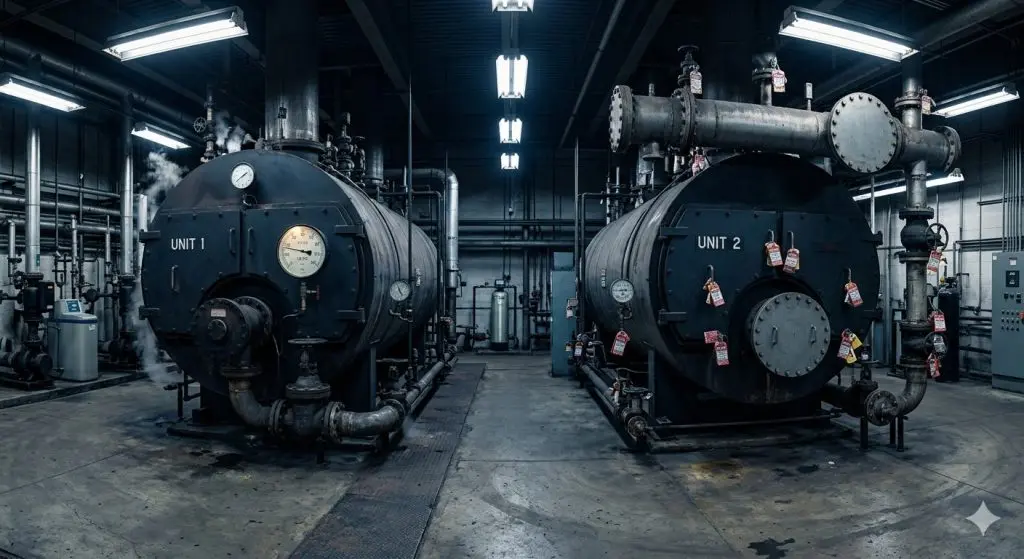
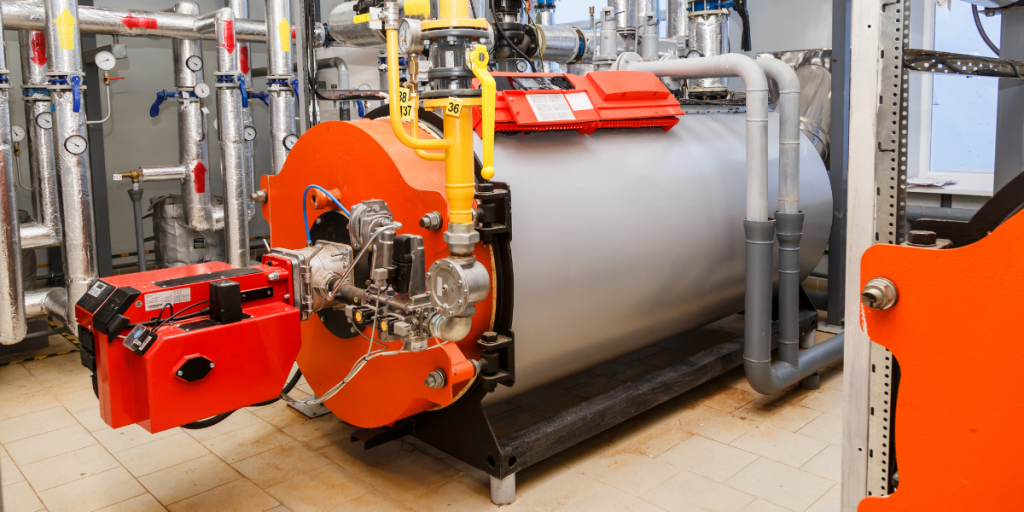
Wet layup or dry? The answer depends on that boiler on the right — and how long it stays that way.
What Can Go Wrong? Common Boiler Layup Failures
Understanding the failure modes is as important as knowing the correct procedure. These are the four most common boiler layup mistakes and what they cost:
Oxygen ingress in wet layup: The most frequent cause of layup-related tube failure. Occurs when the system is not fully filled (air pockets at the waterline) or when nitrogen pressure is not maintained. Result: visible pitting on tube surfaces, often discovered only at startup inspection.
Inadequate drying before dry layup: Sealing a boiler with moisture present traps humidity against the metal — exactly the conditions that accelerate corrosion. A desiccant tray in a damp system is not a substitute for thorough drying.
Chemistry drift in wet layup: Sulfite residual depletes over time as it reacts with trace oxygen. pH can fall if makeup water infiltrates or if alkalinity is not recharged. Systems that are sealed and forgotten — with no monitoring schedule — routinely lose their protective chemistry within 30–45 days.
Thermal shock at dry startup: Returning a dry-laid boiler to service too quickly causes differential expansion between hot gases and cold metal. The correct procedure is a slow, staged warm-up following ABMA guidelines — typically 8–12 hours from cold start to full pressure.
Boiler Layup Documentation and Compliance
A layup procedure is only as good as its documentation. Most facility engineers know what was done — but cannot produce a written layup record when asked by an insurance auditor, equipment manufacturer, or risk management team.
At minimum, your boiler layup documentation should include: the method selected (wet or dry) and the rationale, the date of shutdown and expected return to service, all chemical additions including product names, quantities, and target parameters achieved, the names of personnel who performed and verified the procedure, and a monitoring log for wet layup systems showing chemistry results and dates.
Some boiler insurance policies and equipment warranties specifically require documented layup procedures. An undocumented layup — or the absence of one — can complicate warranty claims and accelerate equipment depreciation on the books.
Don't Let a Shutdown Become a Setback
Wet layup done wrong means corrosion, deposits, and expensive repairs waiting at startup. ChemREADY’s checklist walks you through every step. No cost. No obligation.
Spring Startup: Returning a Laid-Up Boiler to Service
Layup success is ultimately measured at startup. A properly preserved boiler should return to service with clean, clear water, no visible pitting on internal inspections, and chemistry that comes back into spec quickly after the first few blowdowns and treatment additions.
Returning a wet-laid boiler to service requires: a visual internal inspection before closing (if handholes were opened), verification that chemistry is still within layup parameters, a controlled purge of the steam header before pressurizing, and a gradual warm-up following manufacturer recommendations.
Returning a dry-laid boiler to service requires significantly more time: refilling with treated feedwater, allowing the system to stabilize at operating temperature slowly, a series of blowdowns to purge any residual nitrogen and establish normal water chemistry, and a post-startup inspection to verify no corrosion occurred during storage.
Either way, document the startup procedure as thoroughly as you documented the layup itself. That documentation is what separates a managed asset from a liability waiting to surface.
: Chemistry drift does not announce itself. Remote monitoring does.
The Decision Is Now — And It Is Not Complicated
Every boiler that goes offline without a layup plan is a bet. A bet that nothing will corrode, nothing will pit, and nothing will fail at startup. That bet works until it does not. And when it does not, the cost is tubes, downtime, and a conversation with finance that nobody enjoys.
Proper boiler layup is not expensive. It is not complicated. But it does require a plan, the right chemicals, and someone who follows through on the monitoring schedule — which is where most in-house programs fall short. The intention is there. The execution drifts.
A managed program with digital remote monitoring closes that gap by keeping eyes on your system chemistry even when the boiler is not running. The alternative is a layup protocol matched to your equipment, your shutdown duration, and your operational reality — wet or dry, monitored, documented, and ready to restart cleanly when heating season returns.
Shutting Down Your Boiler? Don't Skip This Step.
Dry layup mistakes show up months later — right when you need your boiler most. ChemREADY’s Boiler Dry Layup Checklist keeps your shutdown airtight. No cost. No obligation.