Clarify the risks: Confirm particle size distribution, suspended solids, and biological activity. Check makeup quality and cycles of concentration.
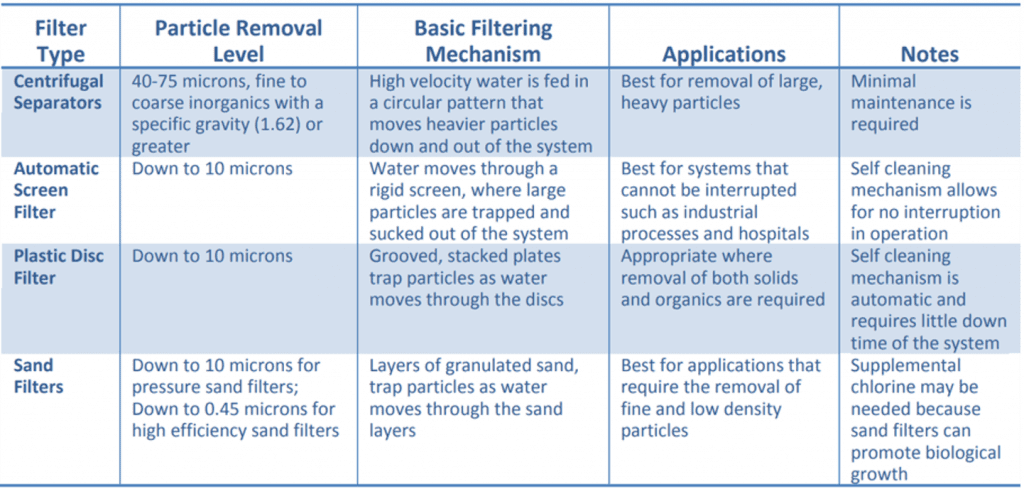
Select the filter: Match media and flow to the contaminant profile and target micron rating. Account for available pad space, hydraulics, and service access.
Integrate with chemistry: Keep pH in the target band for your metallurgy. Alternate biocides, use dispersants to move dead biomass, and trend dip-slide or ATP results.
Operate and trend: Log differential pressure, flow, and particle counts. Review data with dose, temperature, and weather so adjustments stick.
Quick spec checklist
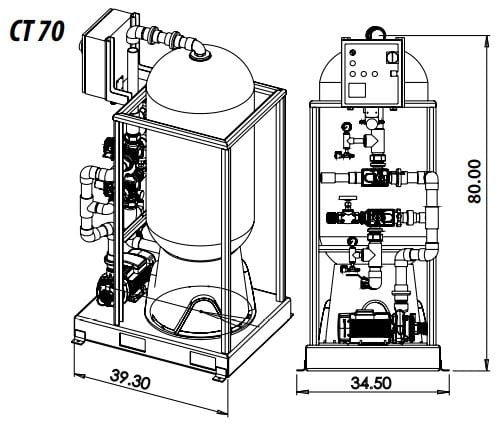
Side stream filters remove suspended solids, silt, organic material, and ultra-fine particulate from recirculating cooling tower water. High-efficiency models can remove particles as small as 0.45 microns, which are often responsible for fouling, corrosion, and biofilm growth.
Side stream filtration treats only a portion of the system water at a time—typically 5–15%—continuously during operation. In contrast, full-flow filtration treats all the circulating water, which often requires more complex infrastructure and higher operating costs.
Ultra-fine particulate (0.5–2 microns) accumulates over time in cooling tower systems and can:
No. Most high-efficiency side stream filtration units, like ChemREADY’s modular systems, are designed for crane-free installation and operate independently without requiring system shutdowns or interruptions.
Particle analysis should be conducted regularly—ideally quarterly or bi-annually—to ensure your filtration system is removing contaminants effectively. Testing helps determine if adjustments or upgrades are needed.
While chemical treatment (like biocides and scale inhibitors) is essential, it’s not enough on its own. Without filtration, fine particulates can still accumulate, reducing chemical efficiency and requiring more frequent mechanical cleaning.
You should first perform a particle analysis to understand your water’s specific contaminant profile. This data will help you select a filter with the appropriate micron rating and flow capacity for your system size and operational goals.
