

COD in Wastewater: What It Means for Your Permit

Reading Time | 10 Minutes

Industrial wastewater discharge outfall releasing treated water at a manufacturing facility
Every number on your discharge permit starts here. The question is whether you know what's in the water before it leaves.

BOD tells you what your POTW can break down. COD tells you what it can’t — and that gap is the number your regulator is watching.

If BOD is on your permit, COD almost certainly is too. The two show up side by side on every lab report, they both measure oxygen demand, and operators routinely treat them as two names for the same thing. They are not the same thing — and the difference between them is often the difference between a clean inspection and a surcharge letter.

Here is what COD actually measures, what your COD:BOD ratio is telling you, and what to do when the number climbs.

What Is COD in Wastewater?

COD, or chemical oxygen demand, is a measure of the total oxygen required to chemically oxidize every organic and inorganic compound in a water sample. Unlike BOD, it captures compounds that are chemically oxidizable but biologically resistant — the material a treatment plant’s microbes cannot break down. That word total is what makes COD matter.

Biological treatment at your POTW handles biodegradable organic material well. But not everything in industrial wastewater is biodegradable. Solvents, complexing agents, certain surfactants, and process byproducts can pass through biological treatment chemically unchanged. COD sees them. BOD does not.

The COD test works fast. A strong chemical oxidant — usually potassium dichromate — is added to the sample under heat and acidic conditions. Everything oxidizable is oxidized, and the oxygen equivalence is measured. Per Standard Methods 5220, a COD result is available in roughly 2–3 hours, against the five-day minimum for a BOD5 test.

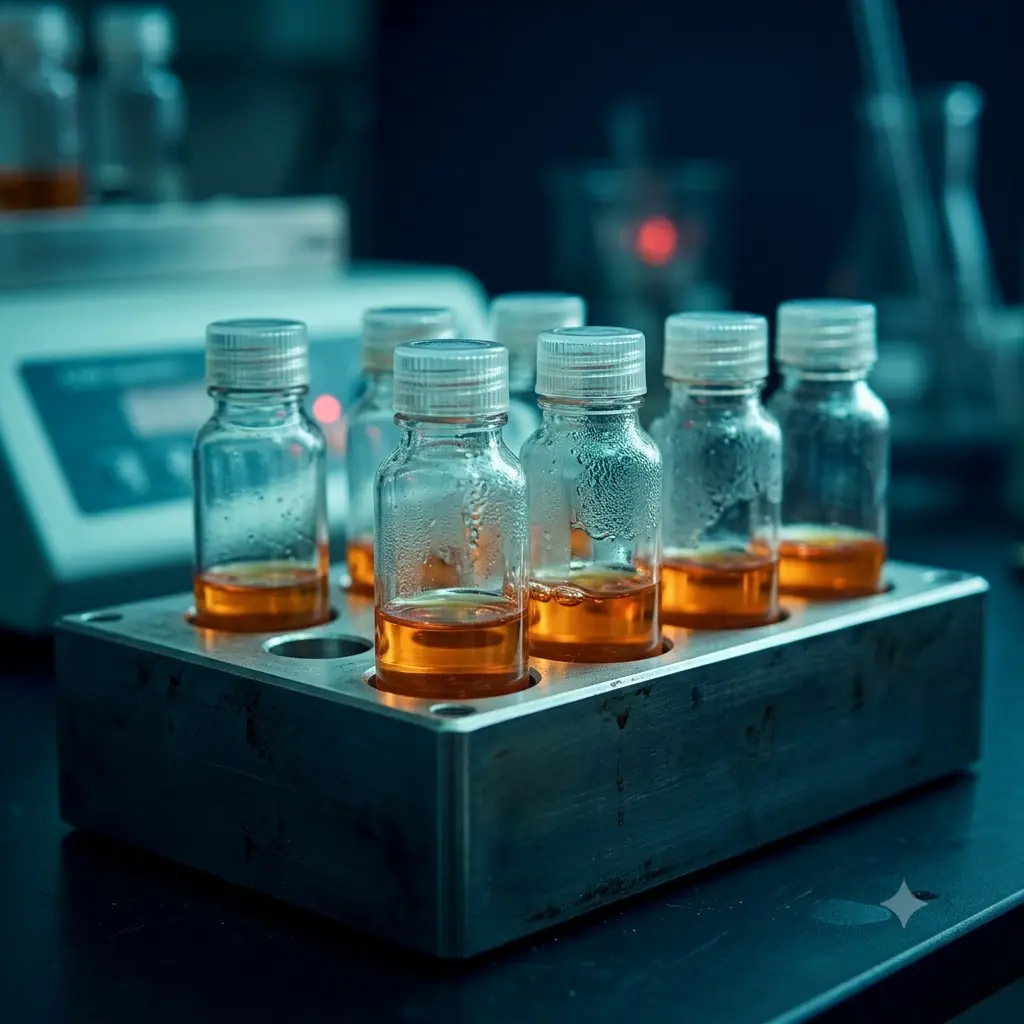
What is BOD in wastewater?

Biochemical oxygen demand (BOD) is a measure of the amount of dissolved oxygen that microorganisms consume as they break down organic matter in wastewater over a five-day period at 20°C. The standard test — called BOD5 — is expressed in milligrams per liter (mg/L) and is used by regulators to assess the organic contamination level of effluent before it enters a waterway or publicly owned treatment works (POTW).

Think of it as a proxy for how much biological stress your discharge will place on the receiving environment. When bacteria in a waterway decompose high-BOD effluent, they consume oxygen. Below approximately 5 mg/L of dissolved oxygen, fish and other aquatic life begin to die. At zero dissolved oxygen — a condition called anoxia — ecosystems collapse. The BOD5 test predicts that risk before it happens.

High BOD = heavy organic load = high oxygen depletion risk. Your permit sets the ceiling. Exceeding it means you have crossed the line from treatment management into regulatory liability.

Quick reference

BOD5 = oxygen consumed by bacteria over 5 days at 20°C  ·  Units: mg/L  ·  Higher number = more organic contamination  ·  Your permit limit is the ceiling you cannot legally exceed.

Wastewater treatment clarifier
Free Service No Lab Fees

What's really in your wastewater?

Send us a sample — we'll run the analysis and translate it into plain-language recommendations for your treatment program.

24–48 hrs
Turnaround
$0
Cost to you
Full report
With recommendations

What Is the Difference Between BOD and COD?

The difference comes down to what each test can see. BOD measures only the oxygen demand microbes will exert on biodegradable material over five days. COD measures the oxygen demand of everything chemically oxidizable — biodegradable or not — in a few hours. BOD is a biological screening number; COD is a total-load number.

COD BOD
What it measures Total chemical oxygen demand, including non-biodegradable compounds Oxygen demand from biodegradable organics only
Test method Chemical oxidation (dichromate, heat, acid) Biological activity over 5 days (BOD5)
Turnaround 2–3 hours 5 days minimum
What it misses Effectively nothing measurable by oxidation Compounds microbes cannot break down
Primary users Industrial pretreatment, process control, POTW compliance Municipal wastewater, permit baseline, organic load screening
Process-control value High — same-day results enable real-time response Low — five-day window limits real-time control

For an industrial facility, that turnaround gap is the practical headline. A BOD5 result tells you what your wastewater looked like last week. A COD result tells you what it looks like today — in time to act before the next discharge.

What Is a Good COD to BOD Ratio?

A COD:BOD ratio around 2:1 generally indicates readily biodegradable wastewater that a POTW’s biological process can handle. As the ratio rises toward 3:1 and beyond, a growing share of the organic load is non-biodegradable or biologically inhibitory — material biological treatment cannot remove.

2:1
COD:BOD Ratio Benchmark

A ratio near 2:1 suggests biodegradable wastewater your POTW can largely process. Ratios of 3:1, 4:1, or higher signal an expanding fraction of non-biodegradable or inhibitory compounds that biological treatment will not touch.

The COD:BOD ratio is one of the most useful diagnostic numbers in industrial pretreatment because it quantifies biodegradability directly. When the ratio climbs, it is telling you that part of your organic load will pass through your POTW untreated, land in the plant’s effluent, and put pressure on the permit that governs that effluent. Many POTWs surcharge or restrict on COD load alone — independent of BOD.

Why COD Matters to Your POTW

Municipal POTWs are engineered around biological treatment. When an industrial discharge carries a high concentration of non-biodegradable organics, that material passes through the plant and into its effluent stream — which carries its own NPDES permit. If your load contributes to a POTW permit exceedance, you will be the first call the plant makes.

Wastewater treatment clarifier
Free Service No Lab Fees

What's really in your wastewater?

Send us a sample — we'll run the analysis and translate it into plain-language recommendations for your treatment program.

24–48 hrs
Turnaround
$0
Cost to you
Full report
With recommendations
COD test vials with dichromate reagent in a heated digestion reactor block
This is why COD comes back in hours, not days. The chemistry doesn't wait for microbes.

Why Does COD Appear on a Discharge Permit?

COD appears on industrial pretreatment permits because it gives the POTW a fast, total measure of the oxygen-demanding load a facility contributes. A permit’s local limits are set so the combined discharge from all industrial users stays within what the plant can treat without violating its own NPDES permit. COD is the parameter that lets the POTW track that load in hours rather than days.

When a facility exceeds its COD limit, the consequences are rarely a single dramatic event. They are cumulative and financial:

01 Surcharges. Many POTWs bill industrial users for organic load above a threshold. A rising COD concentration can quietly inflate the monthly sewer bill long before any formal violation is issued.
02 Local limit violations. Exceed the COD limit written into your permit and you are out of compliance — with notices of violation, mandatory corrective-action plans, and escalating penalties for repeat exceedances.
03 Increased monitoring. A facility that trips a limit often gets moved to more frequent sampling and reporting, which raises ongoing compliance cost regardless of whether the next sample passes.

This is the core reason COD deserves equal attention to BOD: a lab report can show acceptable BOD next to elevated COD, and the second number is the one that drives the surcharge. Watching only BOD leaves the expensive parameter unmonitored.

Which Industries See the Highest COD Problems?

COD problems concentrate in industries whose processes generate compounds that resist biological breakdown — food and beverage, metal finishing, chemical manufacturing, and pharmaceutical operations carry the highest risk. The common thread is process chemistry, not facility size.

IndustryCommon COD SourcesRisk Level
Food & BeverageFats, sugars, cleaning chemicals, sanitizers, high organic load from processingHIGH
Metal FinishingComplexing agents, chelators, surfactants, lubricantsHIGH
Chemical ManufacturingProcess byproducts, solvents, inhibitory compounds that suppress biological treatmentHIGH
PharmaceuticalActive pharmaceutical ingredients, solvents, fermentation byproductsHIGH
Plastics & RubberPlasticizers, additives, polymer residuals resistant to biodegradationMEDIUM
Auto ManufacturingCoolants, lubricants, paint booth wastewater, adhesive residualsMEDIUM
Textile / LaundryDyes, surfactants, bleach residuals, high-temperature dischargeMEDIUM
General IndustrialCleaning agents, process chemicals, janitorial dischargeLOWER

If your facility sits in a high-risk row, elevated COD is not a question of whether — it is a question of how much, and whether you are measuring it.


How Do You Reduce COD in Wastewater?

There are four primary ways to reduce COD in wastewater: source reduction, coagulation and flocculation, biological augmentation, and advanced oxidation. The right choice depends on what is driving the COD — a high reading tells you something is non-biodegradable, but not what it is or where in the process it originates.

1
Reduce COD at the source. Address it before it enters the wastewater stream. Changing cleaning chemistry, substituting surfactants, or adjusting process parameters cuts COD load at the point of generation — and is almost always cheaper than end-of-pipe treatment.
2
Remove particulate COD with coagulation and flocculation. Suspended and colloidal COD contributors can be settled out before discharge. This is the first-line response for particulate-driven COD spikes.
3
Improve biodegradation with biological augmentation. Specialized microbial cultures can raise biodegradation of specific compound classes. This works best once you know which compounds you are dealing with.
4
Break down recalcitrant organics with advanced oxidation. Ozone, UV, or Fenton chemistry oxidizes compounds that survive biological treatment. It is typically applied upstream of the POTW discharge point for the hardest-to-treat COD.

None of these decisions should be made without current data. Facilities that discover a COD problem during a regulatory inspection have no time to evaluate options carefully. The facilities that stay ahead of it test first, identify the driver, and match the treatment to the compound.

COD and BOD: Both Belong on Your Radar

Most industrial pretreatment permits set limits on both BOD and COD. A facility can be in compliance on one and in violation on the other. If your permit lists both parameters, you need current data on both — a result showing acceptable BOD beside elevated COD is telling you something specific about your process chemistry, and it is worth acting on before your POTW does.


The Bottom Line on COD in Wastewater

COD is not a secondary permit parameter to check after BOD. It measures a fundamentally different fraction of your wastewater load — the fraction biological treatment cannot reach — and it is the number that drives surcharges, triggers violations, and escalates monitoring when it climbs. Watching only BOD on a permit that lists both is leaving the expensive parameter unmonitored.

If your COD is elevated or trending up, the cause is almost always findable and fixable. ChemREADY provides wastewater testing, chemistry review, and treatment support for industrial facilities navigating pretreatment compliance.

Prefer to schedule a call?

Book a 30-minute conversation directly. We'll discuss your wastewater treatment situation and whether working together makes sense.

Book a 30-minute call →

What to expect from a first conversation

  • We listen first — your situation, your timeline, your goals
  • We're honest about whether we're the right fit
  • If we're not, we'll point you to someone who is
  • No high-pressure close. Ever.
  • 30 minutes. You'll know if it makes sense to continue.

Not ready to talk yet?

Take a look at our wastewater treatment services first. See where you stand across discharge compliance, effluent quality, and chemical treatment programs — then decide if a conversation makes sense.

Find out what a buyer would see →

Want to explore on your own terms?

Browse everything we do in wastewater treatment — chemicals, equipment, and services — at your own pace, no conversation required.

Explore our wastewater solutions →

Are you an M&A advisor or PE firm?

We work with advisors who encounter infrastructure gaps in industrial wastewater client businesses. If you're looking for a referral partner for pre-sale readiness work, let's talk.

Learn about our partner program →