Reading Time | 5 Minutes
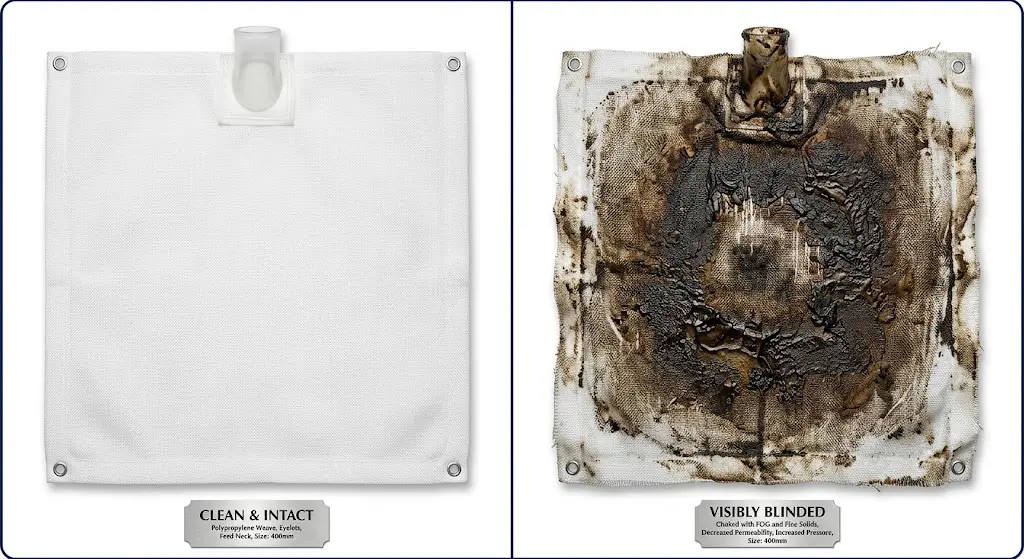
If you’ve asked this question, you’re not alone. It comes up constantly — and the honest answer matters, because replacing cloths too early costs money, and running them too long costs more. The real variables are controllable once you understand them.
Filter cloths in a well-maintained filter press typically last between 6 months and 3 years. The actual lifespan depends almost entirely on sludge characteristics, polymer program quality, and cleaning consistency — not the cloth itself. Abrasive or chemically aggressive sludges reduce lifespan to 90–180 days. Biological sludges in well-maintained systems can push past 2 years. Facilities that treat cloth replacement as a managed process consistently outperform those that react to failures.
These are working benchmarks across common dewatering applications. Your actual range will depend on operating conditions, cleaning protocol, and polymer program quality — but this gives you a baseline to compare against.
| Sludge / Feed Type | Typical Cloth Life | Primary Wear Driver | Key Mitigation |
|---|---|---|---|
| Biological / municipal sludge | 18 months – 3 years | Organic residue blinding over time | Consistent polymer dosing + thorough cloth washing |
| Mixed industrial sludge | 12 – 24 months | Variable chemistry + solids loading | Cloth material match + regular chemical analysis |
| Well-conditioned paper / pulp | 12 – 30 months | Fiber blinding over time | Automated backflush + regular acid wash cycle |
| Heavy metals / plating waste | 6 – 18 months | Chemical + particulate combined | Aggressive post-cycle washing + upstream pH neutralization |
| High-pH or caustic streams | 6 – 12 months | Chemical fiber degradation | Polypropylene or acid/base-resistant weave selection |
| High-sand / grit-laden sludge | 90 – 180 days | Abrasive physical fiber wear | Upstream grit removal + synthetic cloth weave |
Not sure what a proper filter press inspection actually covers? Most operations skip steps they don’t know are critical. Download the checklist — it walks through every inspection point so nothing gets missed.
Five factors drive nearly every cloth lifespan outcome. Get these right and cloth life predictably improves. Ignore them and no cloth spec will save you.
Sludge characteristics are the single biggest determinant of cloth life. Abrasive feeds — high sand, grit, or coarse particulate — physically wear down cloth fibers with every cycle. Chemically aggressive streams, whether high-pH, low-pH, or oxidizing, degrade cloth material from the inside out, often before any visible damage appears on the surface.
The benchmark table above gives starting ranges for common sludge types. If you’re dewatering something more complex, matching cloth material and weave to your specific sludge chemistry is the first review worth doing. This is also where dewatering chemicals play a larger role than most operators realize — proper upstream conditioning directly controls how hard your cloths work each cycle.
Yes — significantly. When sludge is well-conditioned, it releases cleanly from the cloth surface after each cycle. When conditioning is insufficient, you get incomplete cake formation and sticky residue that progressively blinds the cloth over time.
Cloth blinding is one of the most common reasons cloths get replaced prematurely. The symptoms are familiar: longer cycle times, wetter cake, filtrate carrying more solids than it should. The fix is almost always upstream — in the flocculant or coagulant program — not at the cloth itself.
Most of the filter press failures we see were visible weeks before they happened — just not caught. The inspection checklist is what our field team uses on every site visit. Run it yourself before your next cycle and see where you stand
Cloth washing is the highest-leverage maintenance action you have. Cloths that receive regular, thorough cleaning outlast cloths that only receive a rinse between cycles — often by years, not months. Residue accumulates in cloth fibers and restricts flow even when the cloth looks intact from the outside.
Automated cloth washing systems make a measurable difference. Facilities that add automated backflush and cloth washing consistently report better cloth life and more predictable cycle performance. If your press doesn’t have one, it’s worth evaluating as part of a broader dewatering equipment review.
Cloths are engineered for a predictable pressure range and rhythm. Running a press above design spec, cycling too fast for the sludge type, or allowing pressure spikes creates mechanical stress that accumulates over time — often invisibly until the cloth fails or plates begin showing wear.
Monitoring press performance over time makes these patterns visible before they become problems. Inconsistent feed, pressure variation, and erratic cycling are three of the most common causes of unexpectedly short cloth life in otherwise well-maintained operations.
Minor issues compound. A small plate alignment problem causes localized cloth wear that spreads over dozens of cycles. A hydraulic drop mid-cycle creates uneven cake formation that stresses cloth fibers asymmetrically. Catching these early preserves cloth life — and avoids the secondary damage (plate wear, hydraulic strain) that makes the root cause harder to find.
Proactive filter press maintenance pays off not just in fewer emergency shutdowns, but in longer wear item life across the entire system.
You don’t want to run cloths until they fail completely. Watch for these five signals — any two at the same time means it’s time to act.
Running cloths past this point doesn’t just risk the cloth — it risks plate damage, hydraulic strain, and inconsistent output that looks like a bigger system problem when the cloth was the root cause all along. Check the emergency parts list — spare cloths should already be on-site.
If you’re seeing blinding-related symptoms specifically, a review of your dewatering process is usually more useful than an immediate cloth replacement.
You’ve identified the warning signs. The next step is a systematic inspection to find the root cause before it spreads. The checklist walks through every failure point in order of likelihood — start at the top and work down.
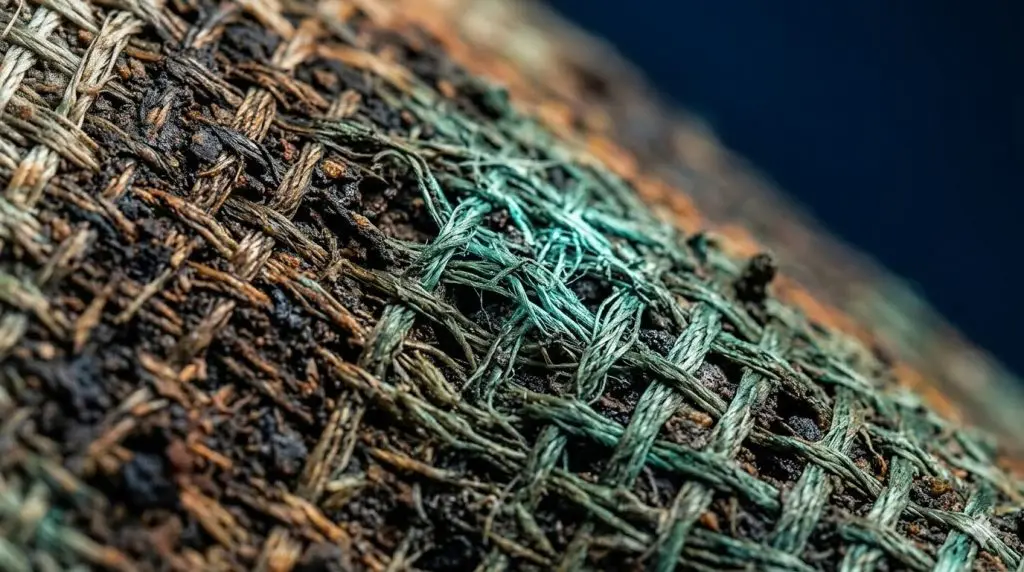
Six practices consistently separate operations that maximize cloth life from those that don’t:
Filter cloth life isn’t a fixed number. It’s an outcome of how the operation is managed. Facilities that treat cloths as a managed wear item — with scheduled inspection, proper cleaning, and consistent upstream conditioning — consistently extract more life from every set and avoid the unplanned downtime that comes with running cloths to failure.
If your cloths aren’t lasting as long as they should, the cause is almost always findable and fixable. ChemREADY provides filter press maintenance and support for dewatering operations, including cloth inspection, process optimization, and ongoing support to keep your press running efficiently.
Book a 30-minute conversation directly. We'll discuss your water treatment situation and whether working together makes sense.
Book a 30-minute call →Take a look at our water treatment services first. See where you stand across chemical programs, system performance, and municipal compliance — then decide if a conversation makes sense.
Find out what a buyer would see →Browse everything we do in water treatment — chemicals, equipment, and services — at your own pace, no conversation required.
Explore our water treatment solutions →We work with advisors who encounter infrastructure gaps in municipal water and drinking water client businesses. If you're looking for a referral partner for pre-sale readiness work, let's talk.
Learn about our partner program →