Reading Time | 10 Minutes
Key Compliance Deadlines
Your written Water Management Plan must be complete and documented.
Testing, monitoring, staff training, and recordkeeping must all be active.
If you run a senior living community, assisted living facility, or continuing care retirement community in New Jersey, NJ S2188 applies to you. The law is real. The deadline is set. And the people living in your building are the exact population most likely to develop severe or fatal Legionnaires’ disease if Legionella is not actively controlled.
We have written about what hotels need to do under S2188. We have written about multifamily buildings. This one is just for you — because the conversation is different when your residents are over 65, immunocompromised, or managing chronic conditions that make a Legionella infection far more dangerous than it would be for anyone else.
Not sure where your facility stands? The NJ S2188 Legionella Water Management Plan Checklist covers all five core requirements — water system inventory, control limits, testing program, staff training, and recordkeeping. Print it. Bring it to your next ops meeting. Check it against what you have right now.
NJ S2188 requires all covered senior living, assisted living, and continuing care retirement facilities in New Jersey to develop a building-specific Legionella Water Management Plan following the ASHRAE Standard 188 framework, with the plan documented by September 10, 2026 and fully implemented — including active testing, monitoring, and staff training — by December 10, 2026.
That is the summary. Here is what it means in practice.
Legionnaires’ disease is a severe form of pneumonia caused by inhaling water droplets containing Legionella bacteria. For a healthy adult, it is serious. For an older adult with a weakened immune system, heart disease, diabetes, or lung conditions, it can be fatal.
The CDC has documented that adults over 50 account for the vast majority of Legionnaires’ disease cases. People who smoke, take immunosuppressant medications, or have underlying health conditions are significantly more likely to become ill after exposure. That description fits most of the people living in your building.
This is not meant to be alarming. It is meant to reframe what NJ S2188 actually is. A Water Management Plan is not a compliance checkbox. It is the active management of a real health risk to real people who depend on your building to keep them safe.
Worth Knowing
Legionella grows best in water between 77 and 108°F and thrives in stagnant conditions. Senior living buildings often have long pipe runs, lower flow in certain wings, and centralized hot water systems serving hundreds of residents from a single source — ideal Legionella conditions if water systems are not actively managed.
See exactly which of the five requirements your facility has — and which it doesn’t. Water system inventory. Control limits. Testing program. Staff training. Five-year recordkeeping. The checklist takes five minutes to run through. Most facilities find at least one gap they didn’t know they had.
Under NJ S2188, your Water Management Plan must be specific to your building. A generic template downloaded from the internet does not qualify. Here is what the plan has to cover:
| Milestone | Deadline | What’s Required |
|---|---|---|
| Water system inventory complete | Aug 2026 | Every Legionella risk system identified and documented |
| Written WMP developed | Sept 10, 2026 | Building-specific, ASHRAE 188-compliant written plan |
| Monitoring protocols active | Sept 10, 2026 | Control limits, check frequencies, and response procedures in place |
| Staff training complete | Dec 10, 2026 | All staff with water system responsibility trained and documented |
| Testing program running | Dec 10, 2026 | Environmental Legionella testing on defined schedule |
| 5-year recordkeeping active | Dec 10, 2026 | Documentation system operational and ready for inspection |
Not every loop needs a MagStrainer on day one. These are the situations where it moves from optional to important:
A full flush removes bulk contamination, but fine magnetite embedded in pipe walls and low-flow zones continues shedding into the water for weeks as the system stabilizes. Magnetic filtration catches that ongoing shed-out before it re-deposits in equipment. Learn more about the full sequence in our water management planning guide.
If water tests show iron rising between service visits — even with a working inhibitor program — circulating particulate is often the cause. Adding filtration frequently resolves this without any chemistry changes.
A strainer that needs cleaning every few weeks is telling you there’s a significant amount of loose material in the loop. That same material is circulating between cleanings. A side-stream MagStrainer reduces main strainer frequency and catches what the strainer misses.
A loop with past corrosion problems has deposits throughout the piping that will continue releasing particles over time. Ongoing magnetic filtration is a practical way to manage background contamination without a full system replacement. Pair with digital remote monitoring for full visibility between service visits.
See exactly which of the five requirements your facility has — and which it doesn’t. Water system inventory. Control limits. Testing program. Staff training. Five-year recordkeeping. The checklist takes five minutes to run through. Most facilities find at least one gap they didn’t know they had.
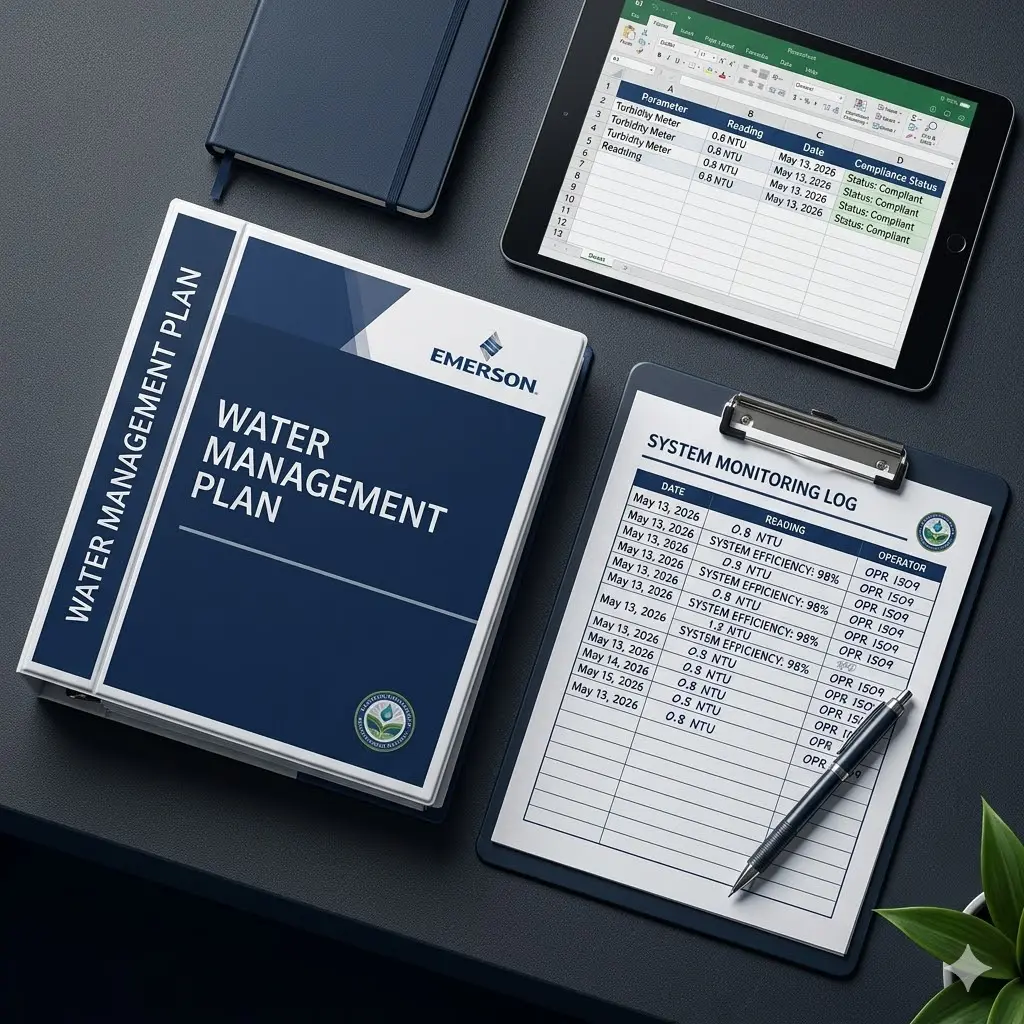
Many facilities believe they are covered because they already do some form of water testing or have a vendor who visits occasionally. That is a reasonable assumption. It is usually wrong.
A compliant Water Management Plan under S2188 is a written, building-specific document that ties every water system to specific control measures, monitoring schedules, and response procedures. It is not a service contract. It is not a quarterly test report in a filing cabinet. It is a living program that your team operates every day.
The Right Question to Ask
Don’t ask your current water vendor “are we compliant?” Ask them to show you your written Water Management Plan and your last three months of monitoring records. If those don’t exist, you have a gap to close before September.
The penalty structure under S2188 starts at $2,000 per violation. If a violation leads to serious injury or death, fines can reach $10,000. Beyond the fines, there is the civil liability exposure that comes with a Legionnaires’ outbreak in a building where compliance was required and not achieved.
For a senior living operator, that is not just a regulatory problem. It is a reputation problem, a licensing problem, and in the worst cases, a legal problem.
The facilities that will struggle in 2026 are the ones that waited until summer to start. Building a real Water Management Plan, getting baseline testing done, and training your team takes time. Three months is tight. Six months is workable. Start now.
Timeline Reality Check
If you start building your Water Management Plan in July, you’ll have a document by September. If you start in January, you’ll have a program. Those are not the same thing — and an inspector will know the difference.
The first step is understanding where your facility actually stands. A lot of senior living communities are further behind than they think. Some are closer than they realize. A quick assessment of your current water systems, existing documentation, and monitoring practices will tell you how much work is ahead.
ChemREADY’s Legionella Water Management Plan development service builds plans around your specific building, your specific systems, and the ASHRAE 188 framework that S2188 requires. We also handle the ongoing Legionella testing and environmental monitoring that keeps the plan active and your records inspection-ready.
You do not need to figure this out alone. You just need to start before the timeline runs out.
Book a 30-minute conversation directly. We'll discuss your building water safety and Legionella risk situation and whether working together makes sense.
Book a 30-minute call →Take a look at our Legionella treatment services first. See where you stand across your water safety plan, risk controls, and regulatory compliance posture — then decide if a conversation makes sense.
Find out what a buyer would see →Browse everything we do in building water safety and Legionella management — chemicals, programs, and compliance support — at your own pace, no conversation required.
Explore our water safety solutions →We work with advisors who encounter water safety and Legionella risk gaps in their client businesses. If you're looking for a referral partner for pre-sale readiness work, let's talk.
Learn about our partner program →