Reading Time | 10 Minutes
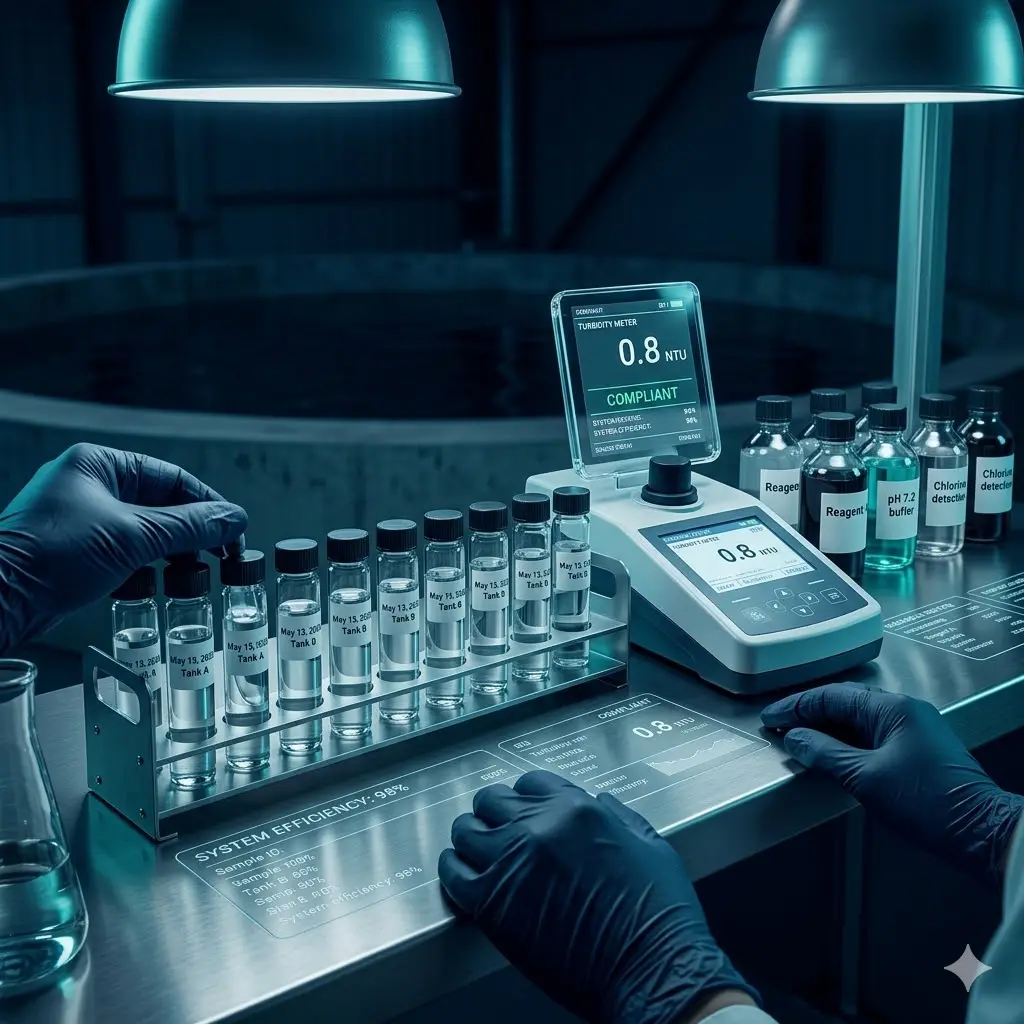
Your NPDES permit has a BOD limit. Your effluent has a number. And somewhere between those two values is your compliance risk, your potential for a notice of violation, and the gap that a bad batch event or an under-tuned treatment system can close faster than your next quarterly sample.
Biochemical oxygen demand — BOD — is not a bureaucratic formality. It is a measure of the organic load your discharge puts on the receiving environment, and regulators enforce it because the downstream consequences of high-BOD discharge are real: oxygen depletion, fish kills, ecosystem damage, and public health risk. Your permit exists because those consequences have happened before.
If your BOD program is anything other than proactive, you are managing a compliance liability you may not fully see. Here is the complete picture.
Biochemical oxygen demand (BOD) is a measure of the amount of dissolved oxygen that microorganisms consume as they break down organic matter in wastewater over a five-day period at 20°C. The standard test — called BOD5 — is expressed in milligrams per liter (mg/L) and is used by regulators to assess the organic contamination level of effluent before it enters a waterway or publicly owned treatment works (POTW).
Think of it as a proxy for how much biological stress your discharge will place on the receiving environment. When bacteria in a waterway decompose high-BOD effluent, they consume oxygen. Below approximately 5 mg/L of dissolved oxygen, fish and other aquatic life begin to die. At zero dissolved oxygen — a condition called anoxia — ecosystems collapse. The BOD5 test predicts that risk before it happens.
High BOD = heavy organic load = high oxygen depletion risk. Your permit sets the ceiling. Exceeding it means you have crossed the line from treatment management into regulatory liability.
Quick reference
BOD5 = oxygen consumed by bacteria over 5 days at 20°C · Units: mg/L · Higher number = more organic contamination · Your permit limit is the ceiling you cannot legally exceed.

Send us a sample — we'll run the analysis and translate it into plain-language recommendations for your treatment program.
High BOD in industrial wastewater is caused by elevated concentrations of biodegradable organic compounds — including sugars, proteins, fats, solvents, and process chemicals — that microbial populations consume when the effluent enters a biological system or waterway. The more organic material present, the more oxygen bacteria will deplete during decomposition.
In industrial settings, BOD sources are often less obvious than in municipal wastewater. Common contributors:
Typical BOD5 by industrial source (mg/L)
Food and beverage operations generate extremely high BOD from sugars, fats, and proteins. A food processing plant can produce wastewater with BOD levels 10 to 50 times higher than typical municipal sewage, per EPA industrial pretreatment program data.
Chemical and manufacturing facilities may see BOD spikes from organic solvents, cleaning agents, or process chemicals containing carbon-based compounds.
Metal finishing and industrial cooling operations can introduce organic corrosion inhibitors, biocides, and treatment chemicals into blowdown and discharge streams — contributing to BOD load in ways that are easy to overlook.
Batch discharge events are the most common trap. A single tank cleanout or production flush can spike BOD dramatically in a narrow window, creating a violation that routine monitoring would never have predicted.
Send us a sample — we'll run the analysis and translate it into plain-language recommendations for your treatment program.
BOD values span several orders of magnitude depending on the source. Here is a reference table for where different wastewater streams typically fall — and how NPDES and pretreatment permit limits compare:
| Source / condition | Typical BOD5 | Permit limit context |
|---|---|---|
| Clean surface water | < 5 mg/L | Below any permit concern — baseline receiving water quality |
| Treated municipal sewage effluent | 10–30 mg/L | Typical NPDES direct-discharge limit range for POTWs |
| Raw municipal sewage | 100–300 mg/L | What a POTW receives and must treat before discharge |
| General industrial wastewater | 200–600 mg/L | Pretreatment often required before POTW acceptance |
| Food & beverage process water | 1,000–5,000 mg/L | Frequently requires on-site biological treatment |
| High-strength industrial (distilleries, rendering) | 10,000+ mg/L | On-site treatment mandatory; POTW surcharges typically apply |
Most NPDES permit limits for direct discharge to waterways sit between 10 and 30 mg/L. Pretreatment limits for discharge to a POTW vary by municipality, but limits in the 250 to 500 mg/L range are common. Many sewer use ordinances also include high-strength surcharge schedules — you may be compliant on concentration but paying a per-pound surcharge that adds up fast.
BOD is reduced in industrial wastewater treatment by removing or degrading the organic compounds that drive oxygen demand before the effluent leaves your facility. These are the primary treatment pathways:
Equalization tanks smooth out peak BOD loads — particularly from batch discharge events — so your treatment system receives a consistent influent rather than a spike it cannot handle. Equalization does not reduce BOD; it prevents the spikes that cause violations.
Physical removal of settleable solids and suspended material can reduce BOD by 25–40% before biological treatment begins (per EPA Wastewater Technology Fact Sheets).
Biological treatment microbes operate within a narrow pH window (typically 6.5–8.5). If your wastewater is acidic or caustic from process chemistry, pH correction is required before biological treatment can function.
A controlled microbial population in an aeration basin or sequencing batch reactor consumes the organic load under managed conditions. A well-operated biological system can reduce BOD by 85–95% (U.S. EPA). The critical variable is maintaining the right microbial balance — which requires consistent monitoring and operator expertise.
After biological treatment, residual suspended solids and BOD contributors are removed through clarification and, in some cases, filtration or chemical polishing. This determines whether your final effluent meets the permit limit or falls just short.
Send us a sample — we'll run the analysis and translate it into plain-language recommendations for your treatment program.
Equalization tanks smooth out peak BOD loads — particularly from batch discharge events — so your treatment system receives a consistent influent rather than a spike it cannot handle. Equalization does not reduce BOD; it prevents the spikes that cause violations.
Physical removal of settleable solids and suspended material can reduce BOD by 25–40% before biological treatment begins (per EPA Wastewater Technology Fact Sheets).
Biological treatment microbes operate within a narrow pH window (typically 6.5–8.5). If your wastewater is acidic or caustic from process chemistry, pH correction is required before biological treatment can function.
A controlled microbial population in an aeration basin or sequencing batch reactor consumes the organic load under managed conditions. A well-operated biological system can reduce BOD by 85–95% (U.S. EPA). The critical variable is maintaining the right microbial balance — which requires consistent monitoring and operator expertise.
After biological treatment, residual suspended solids and BOD contributors are removed through clarification and, in some cases, filtration or chemical polishing. This determines whether your final effluent meets the permit limit or falls just short.
Industrial facilities should test for BOD more frequently than their permit requires — ideally on a monthly or continuous basis — because permit-required sampling gives you a compliance snapshot, not a compliance program. Between required events, your BOD can spike, your treatment can degrade, and you can run out of time to correct before the next regulatory test.
Quarterly or annual required sampling is a regulatory floor, not a management strategy. Here is what a proactive BOD monitoring program looks like:
Tier 1 — minimum
Permit-required sampling
Per permit schedule (often quarterly)
Regulatory compliance snapshot — the minimum required. Does not protect you between tests.
Tier 2 — recommended
Voluntary internal testing
Monthly or after production changes
Early warning before permit limit is at risk. Time to correct before the regulator sees it.
Tier 3 — best practice
Continuous online monitoring
Real-time or near-real-time
Catches batch event spikes, treatment failures, and trends before they become violations.
Tier 4 — reactive
Post-incident testing
After any major surge or system change
Confirmation your treatment recovered to normal performance after a disruption.
Routine, voluntary wastewater sampling is the single most effective risk management tool available to facility managers. It gives you early warning before a violation becomes a notice of violation. It gives you data to demonstrate good faith if a regulator does flag something. And it tells you whether your treatment is actually working the way you believe it is.
ChemREADY offers independent wastewater sample testing for industrial facilities — BOD5, COD, TSS, pH, and full parameter panels. If you have never had your effluent independently tested, or if you are trending toward your limit and want to understand what is driving it, that is the right starting point. No guesswork. No surprises. Data you can act on.
Book a 30-minute conversation directly. We'll discuss your wastewater treatment situation and whether working together makes sense.
Book a 30-minute call →Take a look at our wastewater treatment services first. See where you stand across discharge compliance, effluent quality, and chemical treatment programs — then decide if a conversation makes sense.
Find out what a buyer would see →Browse everything we do in wastewater treatment — chemicals, equipment, and services — at your own pace, no conversation required.
Explore our wastewater solutions →We work with advisors who encounter infrastructure gaps in industrial wastewater client businesses. If you're looking for a referral partner for pre-sale readiness work, let's talk.
Learn about our partner program →