Reading Time | 8 Minutes
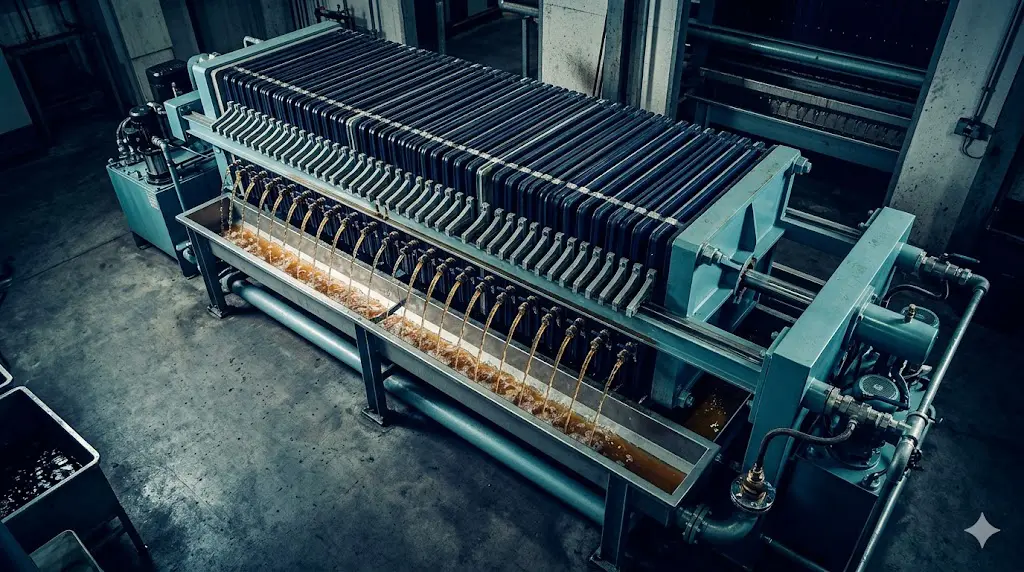
If your filter press is running slow, your cake is wetter than it should be, or your cloths are dying early — the problem may not be mechanical. It may be sitting in your polymer drum. And every cycle you run without fixing it is costing you.
Polymer is the most important and most mismanaged input in dewatering operations. It controls cycle time, cake dryness, cloth life, and hauling costs. When it is right, it quietly makes everything work. When it is wrong, it quietly makes everything worse — and the symptoms look identical to equipment failure.
This guide covers how polymer for filter press dewatering actually works, the three types and how to choose them, the dosing window that separates performance from waste, and the preparation variables that determine whether even the right polymer delivers results.
Polymer conditions sludge before it enters the filter press by neutralizing electrical surface charges on fine particles and bridging them into larger, heavier masses called flocs. Those flocs press faster, release water more completely, and form a drier, more cohesive cake than unconditioned sludge ever can.
Raw sludge contains fine, dispersed particles that carry negative surface charges and naturally repel each other. This dispersion resists mechanical dewatering — the particles stay small and mobile, blocking filter media and holding moisture. Polymer disrupts that resistance. The right polymer and dose create floc structure that is mechanically pressable.
Without proper polymer conditioning, the filter press works against physics instead of with it. Cycles run longer. Filtrate comes through cloudy with carryover solids. Cake holds 5–15% more moisture than a conditioned equivalent — which translates directly into hauling weight and disposal cost.
Key Principle: The filter press does not create dewatering performance. It captures it. If your sludge is not properly conditioned before it enters the press, no amount of pressure compensates.
Download ChemREADY’s free Polymer Quick Reference Card — charge type selector, dosing warning signs, and a prep checklist. One page. Print it and keep it at the press.
There are three primary polymer types: cationic (positive charge), anionic (negative charge), and non-ionic (neutral). Each interacts differently with sludge chemistry, and selecting the wrong charge type means the polymer cannot perform its function regardless of dose.
Cationic — Positive Charge Neutralizes the negative surface charge on most sludge particles. Best for municipal biosolids, industrial wastewater, food and beverage waste, and organic-heavy streams. ChemREADY product: FlocREADY Cationic.
Anionic — Negative Charge Bridges particles after inorganic coagulants have flipped the surface charge to positive. Best for mining tailings, concrete slurry, aggregate wash water, and mineral-heavy streams. ChemREADY product: FlocREADY Anionic.
Non-Ionic — Neutral Charge Bridges particles without charge interaction. Best for variable sludge streams with shifting chemistry, extreme pH applications, or difficult-to-characterize waste. ChemREADY product: FlocREADY Non-Ionic.
Charge density within each type matters as much as the type itself. A high-charge-density cationic polymer behaves differently than a low-charge-density version of the same product. Most facilities running suboptimal polymer programs are using the right type but the wrong density — which can only be determined through jar testing with your specific sludge.
→ ChemREADY’s FlocREADY polymer line covers multiple charge densities and molecular weights across all three types: getchemready.com/dewatering-wastewater/dewatering-wastewater-chemicals/flocculants/
The Polymer Quick Reference Card walks through the exact signals that tell you whether you’re under, over, or dialed in — before the next cycle makes it worse.

Even the right polymer at the right dose will underperform if it is not properly prepared before injection. Dry and emulsion polymers require dilution and activation in an inline dilution system or mix tank — and the settings on that system determine whether the polymer arrives at your sludge stream ready to perform or partially degraded.
Key preparation variables that directly affect performance:
These settings are almost universally left at factory defaults and never revisited. A polymer that performs excellently in jar testing but runs through a misconfigured dilution system will consistently underperform in the field. The preparation system is part of the polymer program.
ChemREADY works directly with operators to run jar testing, dial in dosing, and verify performance in the field. No generic recommendations.
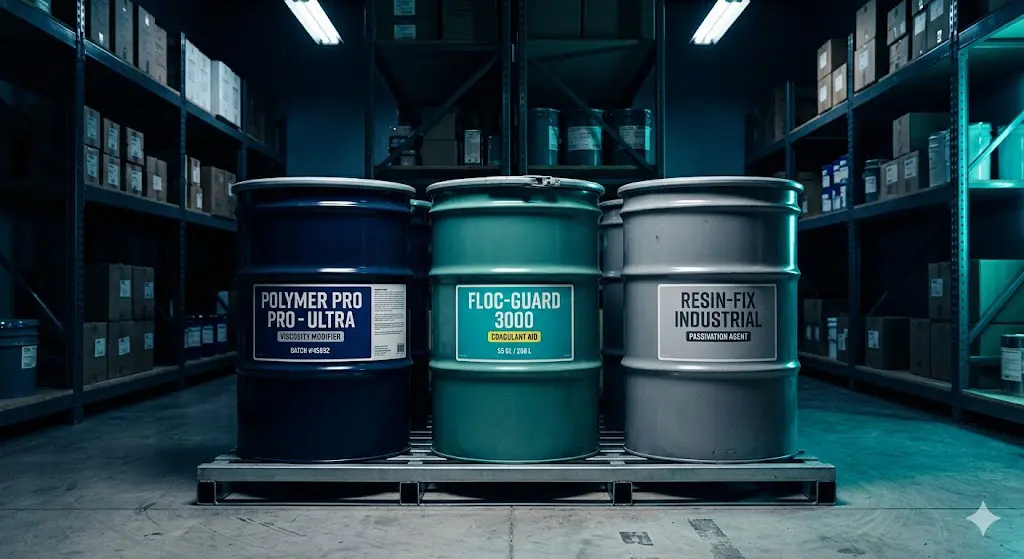
Polymer conditioning is not just a chemistry decision — it has direct mechanical consequences for the press itself. Every press cycle run on poorly conditioned sludge accelerates equipment wear in ways that compound over time.
Poorly conditioned sludge increases hydraulic pressure requirements during the press cycle, stressing pump seals and hydraulic components. Fine particles that are not captured in floc embed directly into cloth fibers instead of releasing cleanly with the cake — accelerating cloth wear by 30–50% in severe cases. Inconsistent cake formation creates asymmetric plate loading, which contributes to the seal failures and plate misalignment issues that cause unplanned downtime.
When cloth life is shorter than expected, cycle times are lengthening without upstream process changes, or cake release is inconsistent, the correct diagnostic step is a polymer program review — not a parts order. In many cases, optimizing the polymer program resolves what looked like a mechanical problem without touching the press hardware.
For a full breakdown of mechanical failure modes and how chemistry upstream contributes to them, see ChemREADY’s guide to common filter press failures: getchemready.com/water-facts/the-most-common-reasons-filter-presses-go-down-and-how-to-prevent-them/
Field Observation: When cloth life is shorter than expected and the press hardware checks out, a polymer program review is the correct next step — not a parts order. In a significant percentage of cases, the root cause is upstream chemistry that was never fully optimized.
Most polymer problems are diagnosed as equipment problems. These are the signs that chemistry, not hardware, is the actual root cause:
Any two of these symptoms in combination is a strong signal that the polymer program needs evaluation before additional maintenance or equipment investment is authorized.
ChemREADY’s dewatering optimization program matches polymer chemistry to your specific sludge stream and press configuration — not generic product recommendations from a catalog. Our process starts with field data, proceeds through jar testing, and concludes with verified field performance. We do not consider optimization complete until the numbers confirm it.
Our FlocREADY polymer line covers cationic, anionic, and non-ionic formulations across a range of charge densities and molecular weights. Every selection is validated against actual sludge samples from your facility. Our dewatering optimization consulting services include polymer audit, jar testing, dilution system review, dosing verification, and ongoing program monitoring.
If your filter press performance has been declining and the equipment checks out, your polymer program is the right next diagnostic step — and ChemREADY can run that evaluation on-site.
Book a 30-minute conversation directly. We'll discuss your dewatering and solids management situation and whether working together makes sense.
Book a 30-minute call →Take a look at our dewatering services first. See where you stand across polymer programs, filter press performance, and solids handling infrastructure — then decide if a conversation makes sense.
Find out what a buyer would see →Browse everything we do in dewatering — chemicals, equipment, and services — at your own pace, no conversation required.
Explore our dewatering solutions →We work with advisors who encounter infrastructure gaps in solids management and dewatering client businesses. If you're looking for a referral partner for pre-sale readiness work, let's talk.
Learn about our partner program →