Is Your Facility One Of Them?
Most Cooling Towers Waste 40% On Treatment Costs
See what optimized treatment could save your facility
40%
Water
Savings
40%
Chemical
Savings
20%
Energy
Savings
Calculate My Savings

Industrial Wastewater Discharge Limits: What Facility Managers Need to Know

Reading Time | 8 Minutes

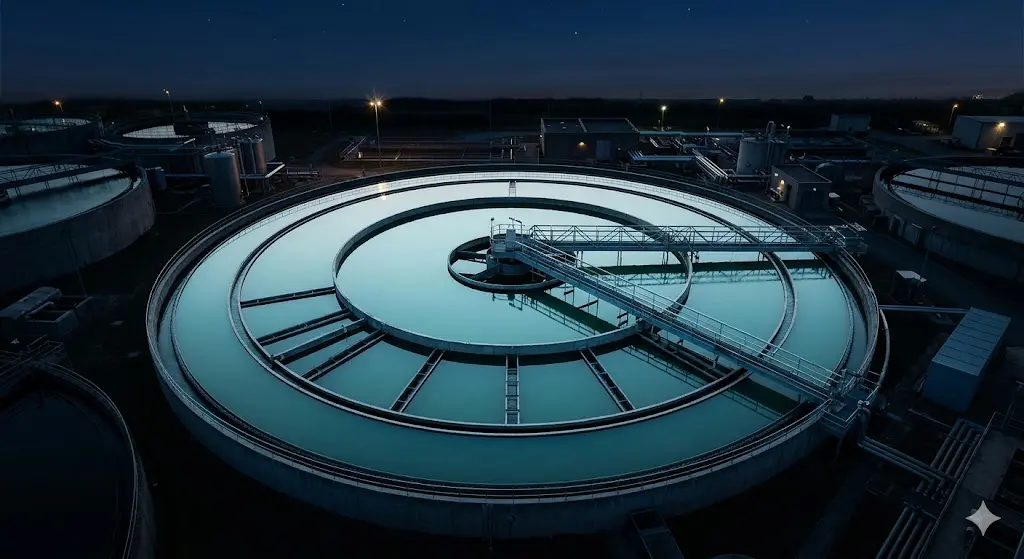
Industrial wastewater clarifier at dusk — discharge permit compliance

Most industrial discharge violations are not caused by rogue spills or equipment failures. They are caused by facility managers who did not know exactly what their permit required — until a sampling report came back out of range. If you manage a facility that discharges process wastewater, this is the compliance framework you need to understand before your next inspection, not after it.

Two Sets of Rules — Federal Floor, Local Ceiling

Industrial wastewater discharge limits are the legally enforceable maximum concentrations of pollutants that a facility is permitted to release into the municipal sewer system or receiving waterway. These limits are set at two levels, and both apply to your facility simultaneously.

At the federal level, the U.S. EPA sets technology-based effluent guidelines under the Clean Water Act. These are industry-specific baseline limits covering parameters like biochemical oxygen demand (BOD), total suspended solids (TSS), pH, oil and grease, and specific metals. The EPA publishes these guidelines by industrial category — metal finishing, food processing, pulp and paper, chemical manufacturing, and dozens more. Your compliance floor is set by whichever category matches your operations.

At the local level, your municipal sewer authority operates the National Pretreatment Program. Under this program, Publicly Owned Treatment Works (POTWs) set their own local limits, which are frequently stricter than the federal baseline. A POTW protects the capacity and performance of its treatment plant by capping what industrial users can send it. Those local limits are what appear in your Industrial User Permit (IUP) or discharge agreement with the city or county.

The practical result: federal guidelines are the minimum. Your local pretreatment authority has the final word on what you are actually allowed to discharge — and those numbers can be significantly tighter than anything on the EPA’s website.

Is your facility ahead of its next compliance deadline?

Download the free Wastewater Discharge Permit Checklist and find out before your POTW does.

The Parameters That Trip Up Industrial Facilities Most Often

Not all discharge parameters carry equal risk. These are the limits most commonly exceeded by industrial facilities, and the ones that draw the fastest regulatory response:

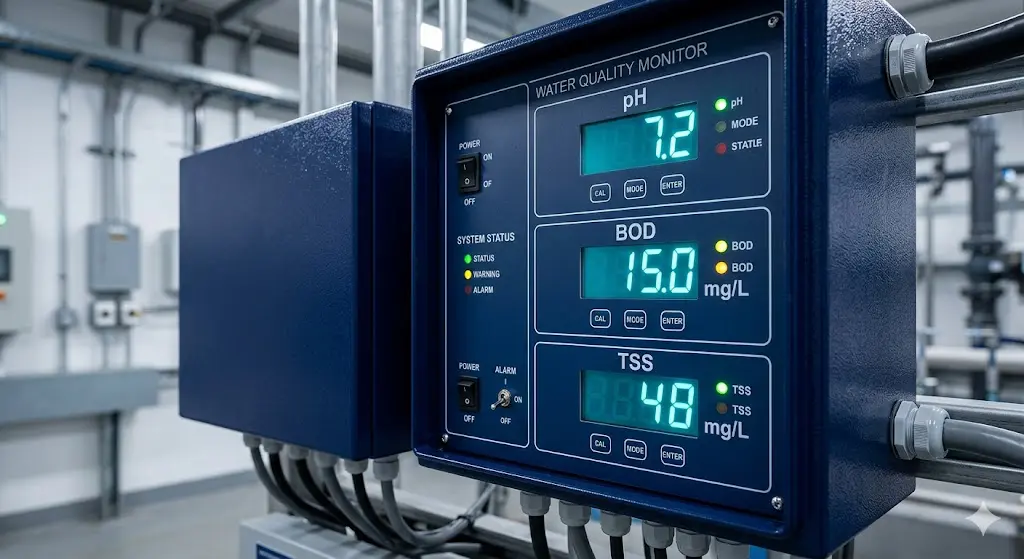
pH | Typical limit: 6.0–9.0 S.U. | Acidic or caustic wastewater damages collection pipes and disrupts POTW biological treatment. pH is monitored continuously at many facilities. | Risk: HIGH

BOD / COD | Typical limit: 200–500 mg/L | High organic load overwhelms the POTW and triggers surcharge fees. Manufacturing and food processing facilities are common violators. | Risk: HIGH

Total Suspended Solids (TSS) | Typical limit: 100–300 mg/L | Solids accumulate in sewers, cause blockages, and contribute to biosolids overload at the POTW. Often tied to surcharge billing. | Risk: HIGH

Fats, Oils & Grease (FOG) | Typical limit: 100–200 mg/L | FOG coats pipe walls, creates blockages, and produces hydrogen sulfide. Food processing, metal fabrication, and automotive facilities are most exposed. | Risk: MEDIUM

Phosphorus | Typical limit: 1–10 mg/L | Limits are tightening in many states as nutrient pollution becomes a regulatory priority. Local limits often far below federal baselines. | Risk: MEDIUM

Heavy Metals (Zinc, Copper, Chromium) | Typical limit: 1–5 mg/L each | Common in metal finishing and manufacturing wastewater. Require chemical treatment and often dedicated pretreatment equipment. | Risk: HIGH

Each parameter above maps directly to a treatment chemistry decision your facility needs to make. Uncontrolled pH is corrected with pH adjusters. High BOD responds to biological augmentation. Elevated TSS and metals require flocculants and coagulants. Phosphorus overages call for targeted phosphorus removal chemistry. The treatment chemistry exists for every problem listed above. What most facilities lack is the monitoring program and dosing discipline to catch the problem before sampling day.
When was the last time you audited your discharge parameters?

One page covers every limit, sample point, and reporting window in your IUP.

What Happens When You Exceed Your Permit Limits

Violations do not trigger just one consequence. They trigger a chain of them — and the chain escalates quickly.

Stage 1 — Notice of Violation: A single out-of-range result typically generates a formal notice of violation from your POTW. This is a legal document, not a courtesy call.

Stage 2 — Compliance Schedule: Repeated violations escalate to a compliance schedule — a binding agreement specifying corrective actions and deadlines. At this stage, increased monitoring frequency and mandatory reporting are standard.

Stage 3 — Significant Non-Compliance (SNC): The EPA defines significant non-compliance as violations exceeding 33% above your permit limit in two or more parameters over a six-month period. SNC status triggers public disclosure — your facility name appears on the POTW’s annual public report.

Stage 4 — Enforcement Action: Consent orders, permit revocation, and civil penalties up to $25,000 per day per violation are the tools available to regulators once a facility reaches this stage. Criminal referrals are possible in cases involving falsified records.

SNC status doesn't happen overnight — it builds one missed requirement at a time.

Limits changing. New parameters. POTW pushing back.
Whatever’s on your plate, we’ve seen it. Let’s talk through it.

Building a Wastewater Program That Stays Ahead of the Permit

The facilities that consistently stay in compliance share one characteristic: they treat their wastewater program as an operating system, not a reaction plan.

An operating system approach means three things: scheduled internal monitoring between official sampling events so you see your own data before the regulators do; a documented chemical treatment program tied to specific permit parameters — not a generic vendor program that gets adjusted whenever a rep is on-site; and a qualified vendor who knows your discharge profile well enough to flag a process change or seasonal shift before it becomes an exceedance.

For most industrial facilities, the gaps are not in equipment or chemistry. The treatment technology exists. The gaps are in program structure. A correct treatment chemical sitting in a drum does nothing if dosing is inconsistent, if the system is unmonitored, or if the staff managing it cannot connect what they are doing to the specific permit parameters they are protecting against.

ChemREADY’s industrial wastewater programs are built around your actual permit — not a standard approach. We work with facilities in manufacturing, food processing, metal fabrication, chemical production, and healthcare to structure programs that hold up under inspection, not just under normal conditions.

Prefer to schedule a call?

Book a 30-minute conversation directly. We'll discuss your wastewater treatment situation and whether working together makes sense.

Book a 30-minute call →

What to expect from a first conversation

  • We listen first — your situation, your timeline, your goals
  • We're honest about whether we're the right fit
  • If we're not, we'll point you to someone who is
  • No high-pressure close. Ever.
  • 30 minutes. You'll know if it makes sense to continue.

Not ready to talk yet?

Take a look at our wastewater treatment services first. See where you stand across discharge compliance, effluent quality, and chemical treatment programs — then decide if a conversation makes sense.

Find out what a buyer would see →

Want to explore on your own terms?

Browse everything we do in wastewater treatment — chemicals, equipment, and services — at your own pace, no conversation required.

Explore our wastewater solutions →

Are you an M&A advisor or PE firm?

We work with advisors who encounter infrastructure gaps in industrial wastewater client businesses. If you're looking for a referral partner for pre-sale readiness work, let's talk.

Learn about our partner program →