Is Your Facility One Of Them?
Most Cooling Towers Waste 40% On Treatment Costs
See what optimized treatment could save your facility
40%
Water
Savings
40%
Chemical
Savings
20%
Energy
Savings
Calculate My Savings

Cooling Tower Water Treatment: Complete Facility Guide

Reading Time | 12 Minutes

Aerial view of industrial cooling towers with steam rising at golden hour — cooling tower water treatment
This is where your water treatment program either earns its cost — or quietly fails it.

Right Now, Something Is Happening Inside Your Cooling Tower

Scale is hardening on your heat exchange surfaces. Corrosion is thinning your pipes from the inside out. Bacteria are colonizing warm, stagnant pockets your last service visit never checked. And every hour this goes unchecked, your facility is bleeding money — in wasted energy, shortened equipment life, and risk you can’t see from the plant floor.

If that sounds dramatic, consider this: the U.S. Department of Energy estimates that scale buildup of just 1/32 of an inch on condenser tubes increases energy consumption by 10–15%. On a facility running cooling 24/7, that’s tens of thousands of dollars per year — quietly disappearing into your utility bill because no one looked at the water.

Most facility managers don’t think about cooling tower water until something breaks. By then, you’re dealing with emergency repairs, unplanned shutdowns, and the kind of urgent phone calls no one wants to make. This guide is designed to change that. By the end, you’ll understand the chemistry, the threats, the program components, and the warning signs that tell you whether your current approach is protecting your facility — or quietly failing it.

Cross-section of condenser tube showing heavy scale buildup on left versus clean copper interior on right — cooling tower scale prevention
This didn't happen overnight. It happened slowly, invisibly, over months — while someone assumed the program was working.

What a Cooling Tower Actually Does (And Why the Water Matters)

ASHRAE 188 Compliance Requirement

ASHRAE Standard 188 requires building owners and operators to develop and implement water management plans for systems at risk of Legionella amplification — including all open recirculating cooling towers. Many states and municipalities have adopted additional mandatory requirements beyond the federal standard. Facilities without documented, actively maintained plans face significant regulatory and legal exposure in the event of an outbreak.

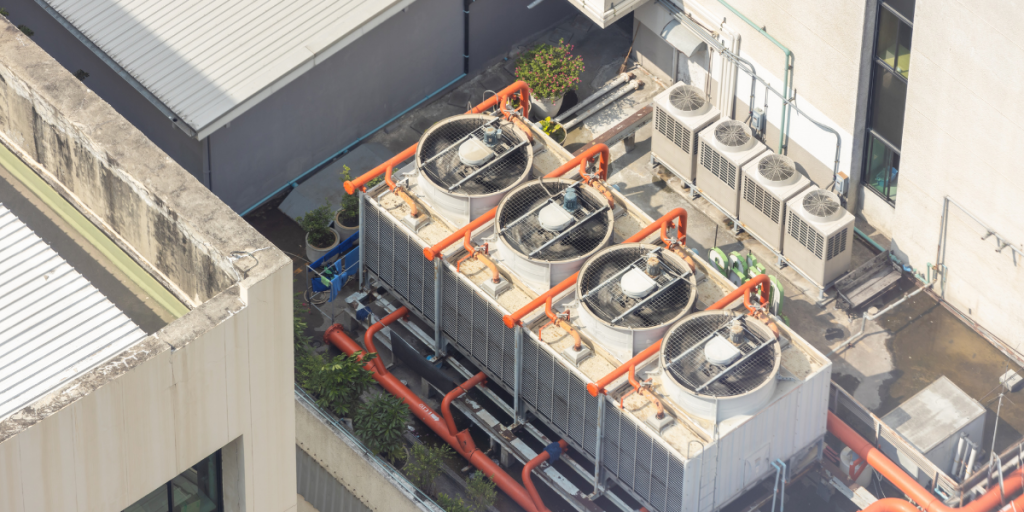
Cooling towers are heat rejection systems that absorb heat generated by industrial processes, HVAC systems, chillers, or manufacturing equipment and release it into the atmosphere through water evaporation. That evaporation process is remarkably efficient — which is exactly why cooling towers show up everywhere from manufacturing plants and hospitals to data centers and food processing facilities.

Here’s the critical detail most people miss: when water evaporates, it leaves behind everything it was carrying — minerals, dissolved solids, biological material, and airborne contaminants. The remaining water gets progressively more concentrated. Without active management, that concentrated water becomes a corrosive, scale-forming, bacteria-hosting environment that attacks your system from the inside out.

That’s why cooling tower water treatment exists — not as an optional add-on, but as a foundational operating requirement for any facility running a cooling system.

Close-up of cooling tower fill media showing green biofilm growth — Legionella risk in cooling tower water treatment
This is where Legionella grows. Not in theory — in real systems, managed by real vendors, right now.

The Four Threats Every Cooling Tower Faces

Regardless of your tower’s size, age, or application, four challenges are working against your system right now. Understanding them is the difference between proactive management and reactive emergency spending.

1. Scale: The Silent Energy Thief

As water evaporates and minerals concentrate, calcium and magnesium crystallize onto heat transfer surfaces. This hard, insulating layer — scale — forces your system to work progressively harder to move the same amount of heat. Even a thin deposit reduces heat transfer efficiency enough to spike utility costs by double digits. Once scale is established, it creates rough surfaces that accelerate biological attachment and under-deposit corrosion.
Effective scale control requires antiscalant chemistry, proper cycles of concentration management, and consistent monitoring. ChemREADY’s corrosion and scale inhibitor programs are designed to prevent mineral deposits from forming — not clean up the damage after it happens.

2. Corrosion: The Invisible Equipment Killer

When water chemistry drifts out of balance — pH too low, dissolved oxygen too high, or inhibitor levels insufficient — metal components start degrading. Pipes thin. Heat exchangers pit. Pump housings weaken. The damage is happening right now in systems across the country, and most facility teams won’t know about it until a component fails and someone’s explaining a six-figure repair to leadership.
Corrosion management requires continuous chemical treatment, regular coupon testing to measure actual metal loss rates, and real-time monitoring to catch chemistry drift before it causes irreversible damage.

3. Biological Growth: A Compliance and Safety Imperative

Warm, recirculating water is an ideal growth environment for bacteria, algae, and biofilm. The most serious concern is Legionella pneumophila — the bacteria responsible for Legionnaires’ Disease, a severe and potentially fatal pneumonia that has been directly linked to poorly maintained cooling tower systems.

4. Fouling: The Compounding Problem

Cooling towers are open systems that pull massive volumes of air through recirculating water. Everything in that air — dust, pollen, process debris, organic matter — ends up in the basin. Fouling clogs fill media, restricts flow, reduces heat transfer, and creates the warm, stagnant zones where biological problems accelerate.

These four threats don’t operate independently. They compound each other. Scale creates rough surfaces where biofilm anchors. Biofilm accelerates under-deposit corrosion. Fouling creates stagnant conditions that amplify all three. A program that only addresses one or two is a partial measure waiting to fail.

How Exposed Is Your Facility to Legionella Risk?

Cooling towers are the #1 source of Legionella outbreaks in commercial and industrial facilities. Our 10-question Legionella Risk Scorer gives you a clear risk level and recommended next steps — in under 3 minutes.

The Water Chemistry You Need to Understand

This is where most ‘complete guides’ stop — they name the threats but don’t explain the chemistry that drives them. If you’re going to evaluate whether your current program is actually working, you need to understand these fundamentals.

Cycles of Concentration: The Single Most Important Number

Cycles of concentration (CoC) is the ratio of dissolved solids in your tower water to dissolved solids in your makeup water — and it is the single most important operating parameter in cooling tower chemistry management. If your makeup water has 100 ppm of dissolved solids and your tower water has 400 ppm, you’re running at 4 cycles.

Running at too few cycles wastes water and chemicals — you’re blowing down too aggressively and flushing expensive treatment chemistry down the drain. Running at too many cycles concentrates minerals past the point where your inhibitors can hold them in solution, and scale forms rapidly. Most systems target 4–6 cycles, though the optimal range depends on your specific makeup water chemistry.

If You Remember One Thing

Ask your water treatment vendor: ‘What are our current cycles of concentration, and what’s our target?’ If they can’t answer immediately with a specific number and the reasoning behind it, that tells you something important about the level of attention your program is getting.

ViolationFineContext
First violation$2,000Per violation — multiple deficiencies compound in a single inspection
Second or subsequent$5,000Escalating penalties for repeated noncompliance
Serious injury or death$10,000If noncompliance results in harm to building occupants
Outbreak liabilityUnlimitedLawsuits, remediation, shutdown, reputational damage. CDC: single hospital case costs $34,000+ in treatment alone

If your current vendor tests some of these but doesn’t share the results in plain English — or if you’ve never seen a trend report showing how these parameters move over time — you’re flying blind on your own system.

What Is Your Cooling Tower Program Actually Costing You?

Managing water chemistry this complex takes real expertise — and doing it poorly costs more than doing it right. Our ROI Calculator takes your current chemical spend, downtime frequency, and water usage and shows you the real numbers.

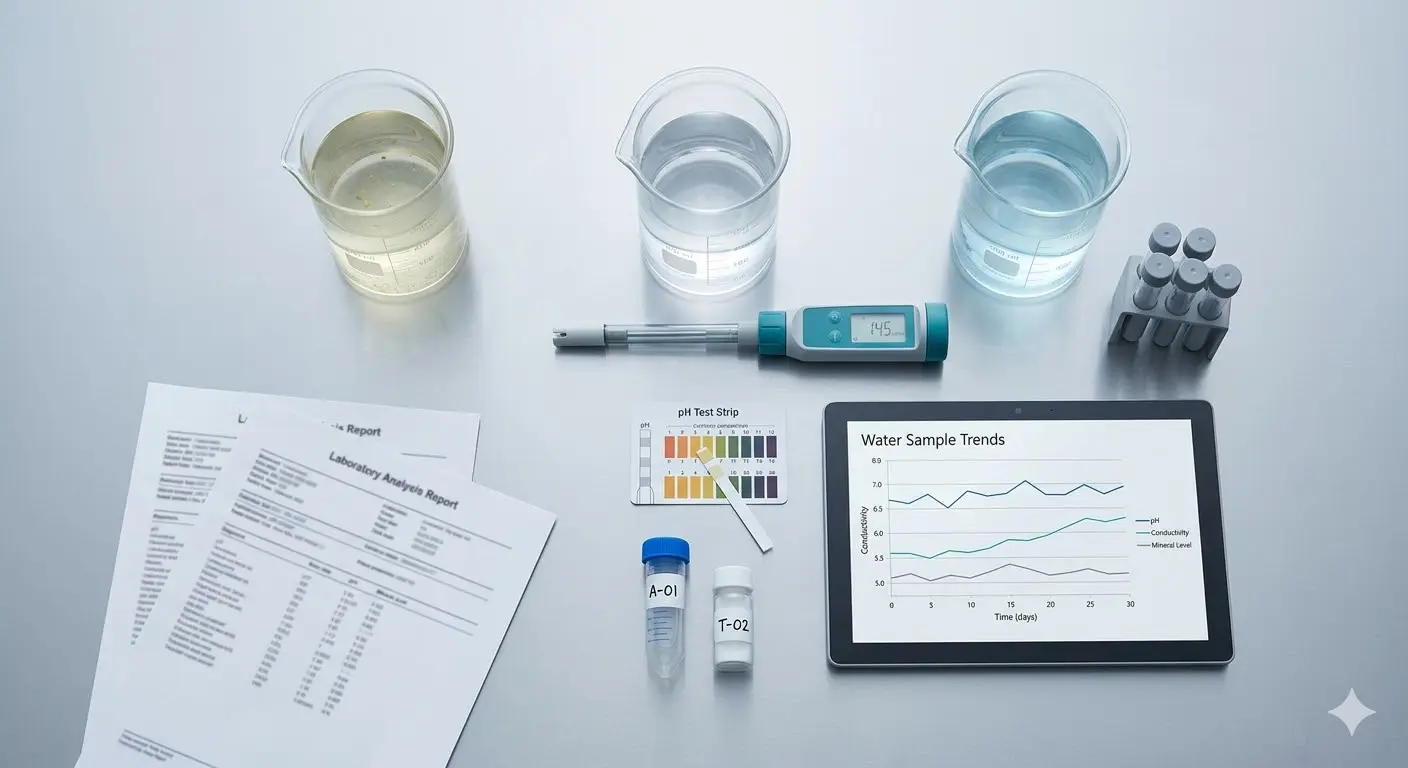
Overhead flat-lay of cooling tower water chemistry testing equipment including beakers, conductivity meter, pH strips, and trend data tablet
Seven parameters. Every service visit. That's what managing cooling tower water chemistry actually looks like.

How Each Type of Chemical Treatment Works

Most guides list ‘scale inhibitors, corrosion inhibitors, biocides’ and move on. Here’s what each category actually does and why it matters:

  • Scale inhibitors (antiscalants) work by interfering with crystal formation. They don’t remove minerals from the water — they keep minerals from crystallizing onto surfaces. Different chemistries target different scale types: phosphonates for calcium carbonate, polymer dispersants for calcium phosphate and silica.
  • Corrosion inhibitors form a protective film on metal surfaces, creating a barrier between the water and the metal. Common chemistries include phosphate-based programs, molybdate programs, and azole-based inhibitors for copper and yellow metals.
  • Oxidizing biocides (bleach, bromine, chlorine dioxide) kill microorganisms on contact through chemical oxidation. They’re the primary line of biological defense. Each has pros and cons: bleach is economical but degrades in sunlight; bromine works across a wider pH range; ClO₂ penetrates biofilm more effectively.
  • Non-oxidizing biocides kill through different mechanisms — disrupting cell membranes or metabolic processes. Used on a rotating schedule (typically weekly or biweekly) to prevent organisms from developing resistance to any single chemistry.
  • Dispersants keep suspended solids, biofilm fragments, and treatment byproducts from settling and depositing on surfaces. They work alongside your other chemistry to keep the system clean.

What a Complete Treatment Program Actually Includes

A real water treatment program isn’t a chemical delivery schedule. It’s a managed system with integrated components:

  • Regular water testing and analysis — you cannot manage what you do not measure. Baseline testing establishes your system’s chemistry profile. Ongoing analysis tracks trends so problems are caught early.
  • Precision chemical treatment — the right chemistry, dosed at the right concentration, for your specific water and system conditions. Not a one-size-fits-all drum drop.
  • Automated blowdown management — conductivity-based controllers that maintain your target cycles of concentration automatically, minimizing water waste while preventing mineral over-concentration.
  • Controller automation and digital remote monitoring — real-time system data, trend analysis, and automated alarms that catch chemistry drift 24/7, not just on service visit days.
  • Documented field service with SOPs — every visit follows a standardized protocol. Findings are documented, not stored in a technician’s head. Your program is transferable, auditable, and transparent.
  • Physical maintenance and cleaning — even the best chemical program needs periodic mechanical attention. ChemREADY’s cooling tower services cover the complete picture.

See Exactly Where Your Water Program Stands

Our Free Water Analysis gives you a clear, unbiased picture of your cooling tower’s current condition. We test your water, evaluate your chemistry, and deliver a plain-English report with specific recommendations. No obligation. No sales pitch on the first call.

Wall-mounted industrial cooling tower chemical feed system and conductivity controller with LED indicators — automated water treatment monitoring
Automation keeps your program running between service visits. Without it, treatment gaps are invisible until they're expensive.

Testing, Monitoring, and Seasonal Management

A common gap in cooling tower programs isn’t the chemistry — it’s the cadence. Here’s what a well-managed program looks like on a calendar:

Testing Frequency

  • Every service visit (weekly or biweekly): pH, conductivity, cycles of concentration, inhibitor residuals, biological activity (ATP or dip slides), visual inspection of tower condition, basin, and fill media.
  • Monthly: Full chemistry panel including alkalinity, hardness, chlorides, iron, copper, and silica. Corrosion coupon pull and analysis on a 60–90 day rotation.
  • Quarterly: Legionella environmental sampling (culture or PCR method). System performance review with trend data.

Seasonal Considerations Most Programs Miss

  • Spring startup: After a winter layup, towers need a thorough cleaning, inspection, and fresh chemical passivation before going online. A proper startup protocol includes mechanical inspection, basin cleaning, fill inspection, fresh biocide treatment, and re-establishing inhibitor residuals before the system goes under load.
  • Summer peak: Highest biological risk. Warmer water temperatures accelerate bacterial growth dramatically. Biocide demand increases. Evaporation rates spike, concentrating minerals faster.
  • Fall shutdown / winterization: Proper layup protects equipment through the off-season. Options include wet layup (treated water left with elevated biocide levels) or dry layup (system drained, cleaned, and protected with vapor-phase inhibitors).

If your current program doesn’t include documented startup and shutdown procedures tailored to your system, that’s a gap worth closing.

Red Flags: How to Know if Your Current Program Is Failing

Not all programs are created equal, and the difference between a good program and an inadequate one isn’t always obvious until something expensive breaks. Here are ten warning signs:

  1. Your vendor can’t tell you your cycles of concentration. This is the most basic operating parameter in cooling tower treatment. If they don’t know it, they’re not managing your water.
  2. You’ve never seen a trend report. Individual test results are snapshots. Trends show whether your system is stable, improving, or heading toward failure.
  3. Service reports are vague or templated. ‘System looks good, chemicals adjusted’ isn’t a service report. You should see specific readings, comparisons to target ranges, and actions taken.
  4. You don’t know what chemicals are being used or why. You should be able to name every product in your program, what it does, and what happens if it runs out.
  5. Biological control is limited to bleach on a timer. Sodium hypochlorite alone, without non-oxidizing biocide rotation, without ATP monitoring, and without a documented WMP, is not a biological control program.
  6. You have no written water management plan. ASHRAE 188 requires one. Many states require one. If you can’t produce it in 15 minutes, you’re exposed.
  7. Your vendor only shows up when you call them. Proactive service means scheduled visits with documented protocols.
  8. Corrosion coupons haven’t been pulled in over 90 days. Corrosion damage could be accelerating undetected.
  9. You’re not sure what your program costs — or what it saves. A good program provides spend-to-outcome visibility.
  10. You couldn’t pass a surprise compliance audit today. Audit-ready means ready right now, not ready after a week of scrambling.

If three or more of these apply to your current situation, it’s worth getting a second opinion. That doesn’t mean switching vendors — it means getting an objective look at where your program stands.

Not Sure Where Your Program Stands?

Get a free water analysis — plain-English results, no obligation.

What Total Water Confidence Looks Like in Practice

At ChemREADY, Total Service. Total Water Confidence. isn’t a tagline — it’s an operating standard. It means we integrate treatment chemistry, equipment, field service, and real-time monitoring into one accountable program so you’re not managing three vendors for one system.

In practice, that looks like: a dedicated technician who walks your system on a documented schedule. Plain-English service reports with trend data you can actually use. NSF-certified chemistry backed by 15+ years of water treatment expertise across 500+ facilities in 28+ states.

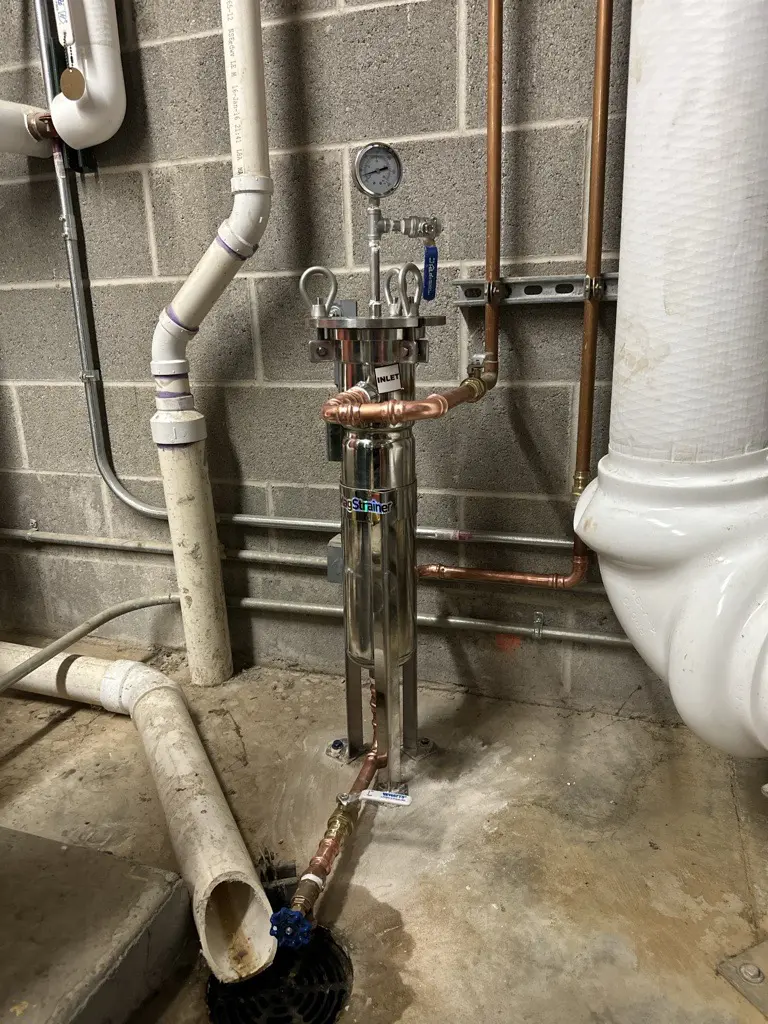
It also means the full toolkit: cooling tower chemicals, controllers and automation, side stream filtration, digital remote monitoring, and proactive field service. One partner. One program. Full accountability.

This is what 'chemicals adjusted, system looks good' looks like on the inside of your pipes.

The Bottom Line

Cooling tower water treatment isn’t glamorous. But it’s one of those foundational programs that, when done right, quietly saves your facility real money, extends equipment life by years, protects your team from a preventable health risk, and keeps you audit-ready at all times.

Scale, corrosion, biological growth, and fouling are working against your cooling tower every single day. The difference between a facility that handles them well and one that doesn’t isn’t luck — it’s whether there’s a real program behind the water, or just a chemical drum and a hope that nothing breaks.

Now you know what the chemistry involves, what a real program looks like, and what warning signs to watch for. If your tower isn’t on a comprehensive treatment program — or if this guide raised questions about your current one — that’s exactly the kind of gap we help facilities close.

Your Cooling Tower Deserves Better Than Guesswork

Three ways to take the next step — pick the one that fits where you are right now.

We're Here To Help

Connect With ChemREADY

Let's Have A Chat