Is Your Facility One Of Them?
Most Cooling Towers Waste 40% On Treatment Costs
See what optimized treatment could save your facility
40%
Water
Savings
40%
Chemical
Savings
20%
Energy
Savings
Calculate My Savings

NJ S2188 Legionella Compliance: What Facilities Must Do by 2026

Reading Time | 15 Minutes

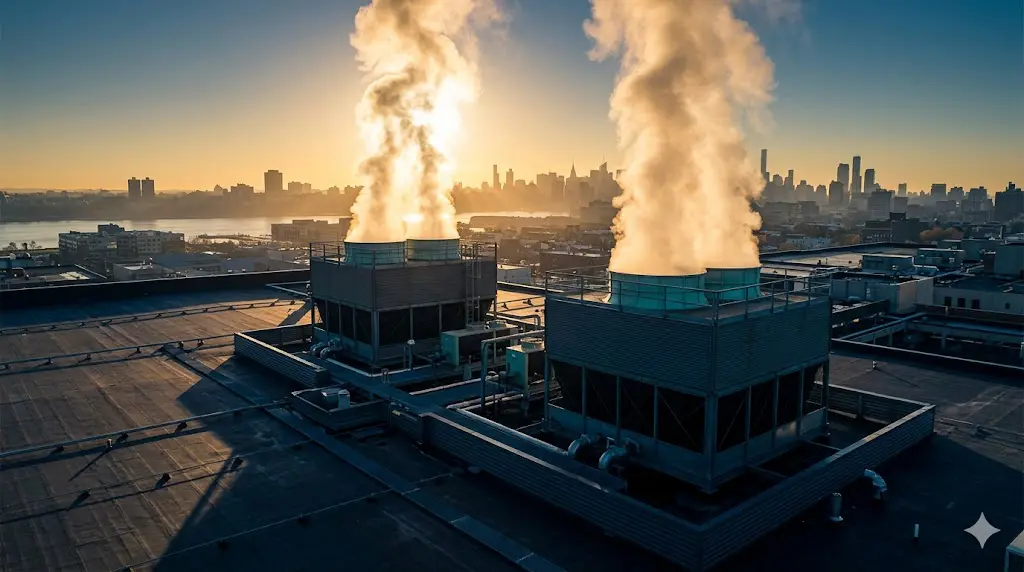
Commercial cooling towers on urban rooftop at golden hour — NJ S2188 Legionella compliance requirement for facilities with cooling systems
New Jersey just set the highest bar in the country for Legionella prevention. If your building has one of these, you are now legally required to manage it — or face the consequences.

10,000 Cases a Year. New Jersey Just Said “Enough.”

Every year, roughly 10,000 Americans are diagnosed with Legionnaires’ disease. Hundreds die. And the CDC estimates the real number could be 2.7 times higher because cases go undiagnosed and unreported. Most of these infections trace back to poorly managed building water systems — .cooling towers, evaporative condensers, whirlpool spas, pools, indoor ornamental fountains, misters, atomizers, humidifiers, air wash systems, or other equipment that releases water aerosols. where Legionella bacteria thrive unchecked.

New Jersey has decided this is no longer acceptable.

On September 12, 2024, Governor Murphy signed Senate Bill S2188 into law — one of the most comprehensive Legionella prevention mandates any state has ever enacted. If you own or operate certain types of facilities in New Jersey, you are now legally required to have a Water Management Plan in place that meets ASHRAE Standard 188 requirements. Not a binder collecting dust on a shelf. A working, documented, enforceable program.

S2188 actually sets two deadlines: the water management program must be developed by September 12, 2026, and fully implemented by December 12, 2026. That 3-month gap between plan and implementation means facilities that wait until September are already behind.

That might sound like plenty of time. It’s not — and this guide will show you exactly why.

Split comparison of clean vs. biofilm-contaminated cooling tower fill media — Legionella risk during tower operation
This is what inadequate water management looks like at the surface level. Legionella lives in the biofilm on the right. NJ S2188 exists because buildings have been managing water like the right half for decades.

What Is NJ S2188 and What Does It Require?

Definition — NJ S2188

NJ S2188 is a New Jersey state law signed in September 2024 that requires certain facilities to implement ASHRAE 188-aligned water management plans to prevent Legionella growth in building water systems. The law applies to hospitals, hotels, senior living facilities, high-rises, and buildings with cooling towers, with a compliance deadline of September 12, 2026.

At its core, S2188 is about one thing: preventing Legionnaires’ disease by ensuring buildings with complex water systems are managing their water actively — not in theory, but in documented, measurable practice.

Here’s what the law demands:

  • ASHRAE 188-aligned Water Management Program: A documented program that identifies risks in your water system, establishes control measures, sets monitoring routines, and outlines corrective actions when parameters go sideways.
  • Public notice: A posted confirmation that your building operates under an active water management program.
  • Five-year record retention: All procedures, testing results, corrective actions, and system documentation must be maintained and available for inspection.
  • New construction/repurposing verification: Buildings brought online or repurposed must verify their WMP before opening to the public.
  • Public water system requirements: Systems with 100+ service connections face additional mandates around disinfectant residuals, disruption notifications, and DEP disruption reporting within 72 hours.

A water management plan (WMP) is a documented program that identifies Legionella risk points in a building’s water system, establishes control measures, sets monitoring routines, and outlines corrective actions when parameters exceed safe limits. S2188 isn’t asking you to check a box. It’s requiring you to prove — on paper, with data — that your building’s water is being actively managed to prevent Legionella growth.

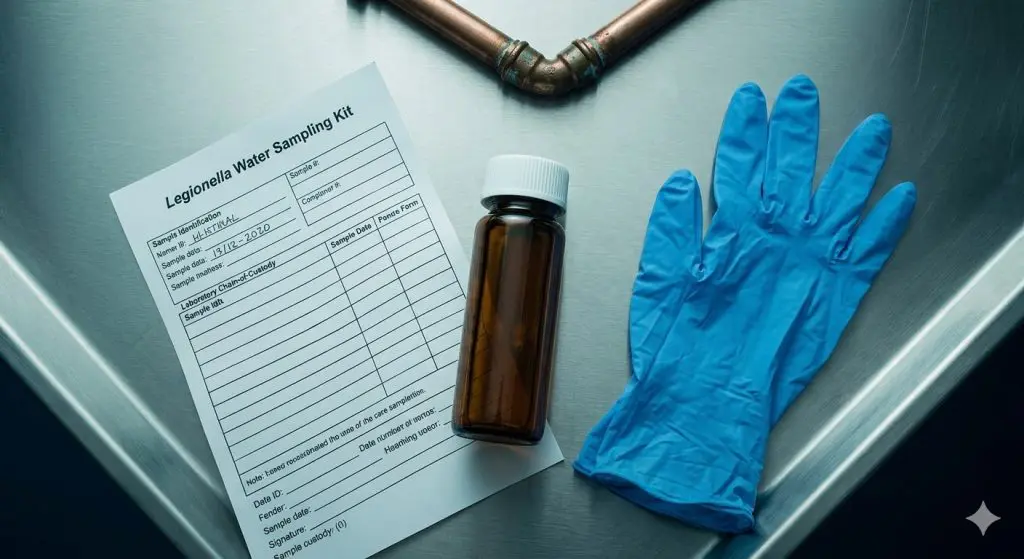
Legionella water sampling kit with sterile vial, chain-of-custody form, and plumbing section — NJ S2188 testing requirements
Legionella testing isn't a precaution. Under NJ S2188, it's a documented program requirement — with certified labs, proper sampling protocols, and a response plan for when results come back positive.

Does NJ S2188 Apply to Your Facility?

If you’re managing one of the following facility types in New Jersey, S2188 applies to you:

  • Hospitals and specialty care facilities with inpatient services
  • Nursing homes, assisted living, and residential care facilities
  • Residential high-rise buildings with six or more floors and centralized hot water systems
  • Hotels and motels with 25 or more rooms and centralized hot water systems.
  • Subsidized residential buildings with 25 or more units designated for individuals 62+ or with disabilities.
  • Any building with cooling towers, evaporative condensers, whirlpool spas, decorative fountains, misters, or aerosol-generating equipment
  • Other commercial and industrial buildings as defined by the law
  • Federal, state, county, and private correctional facilities with centralized hot water systems.

That last category is a wide net. If your building has a cooling tower, you’re almost certainly in scope — regardless of what type of business you operate. Cooling towers are among the most common sources of Legionella exposure, and regulators know it.

Not sure whether your facility falls under S2188? That uncertainty alone is worth resolving.

Am I at Risk? Find Out in 2 Minutes.

Our Legionella Risk Scorer evaluates your building type, water systems, and current safeguards to give you a risk level and a prioritized action list — specific to NJ S2188 requirements.

What Are the Penalties for NJ S2188 Noncompliance?

We’ve seen facility managers shrug off compliance timelines with “we’ll get to it.” With S2188, that’s a gamble with specific, escalating financial consequences:

ViolationMax FineContext
First violationUp to $2,000Per violation — multiple deficiencies compound in a single inspection
Second or subsequentUp to $5,000Escalating penalties for repeated noncompliance
Serious injury or deathUp to $10,000If noncompliance results in harm to building occupants
Outbreak liabilityUnlimitedLawsuits, remediation, shutdown, reputational damage. CDC: single hospital case costs $34,000+ in treatment alone

These are per-violation penalties. A building with multiple deficiencies could face compounding fines in a single inspection. And the financial exposure from a Legionella outbreak — lawsuits, remediation costs, operational shutdown, reputational damage — dwarfs any fine the state could levy.

Where Does Your Water Program Actually Stand?

Most facilities score between 30 and 50 on our Water Confidence Meter — stuck in reactive management. Our 5-minute Assessment tells you exactly where the gaps are, mapped to your compliance risk.

Why a Binder on a Shelf Won’t Cut It Anymore

Here’s where most facilities get tripped up. They think they already have a Water Management Plan because someone assembled something a few years ago. Maybe it’s a document from a previous vendor. A spreadsheet with temperature logs. A generic ASHRAE template that was never customized to their building.

None of that counts under S2188 if it doesn’t reflect your building, your water systems, and your current operations.

ASHRAE Standard 188 is the nationally recognized guideline for managing Legionella risk in building water systems, and NJ S2188 requires compliance with this standard. A compliant Water Management Plan is a living document. It maps your water system from point of entry to every terminal fixture. It identifies every location where Legionella could colonize — dead legs, mixed-temperature zones, low-use fixtures, storage tanks. It defines control limits for temperature and disinfectant levels. And it specifies exactly what your team does when those limits aren’t met.

Score RangeStageWhat It Means for S2188
0–20ReactiveNo documented program. Compliance exposure is immediate and severe. Highest enforcement risk.
21–40StrugglingSome structure, but reactive. Plan exists on paper but doesn’t map to reality. Gaps will surface under inspection.
41–60ManagingProgram in place but not proactive. Testing inconsistent, documentation has holes, corrective actions ad hoc.
61–80ImprovingStructured and documented. Most S2188 requirements met. Needs refinement in monitoring, record-keeping, or training.
81–100ConfidentFully compliant, audit-ready, proactive management with real-time visibility. This is where S2188 expects you to be.

Ask yourself honestly: if a health inspector walked in tomorrow and asked for your Legionella management documentation — testing results, corrective actions taken, flow diagrams of your water systems — could you produce it? If the answer is “I’m not sure,” you have work to do.

Think You Already Have a Plan? Let’s Pressure-Test It.

Our team reviews your existing Water Management Plan against ASHRAE 188 and NJ S2188 requirements — and tells you exactly where the gaps are. No charge. No obligation.

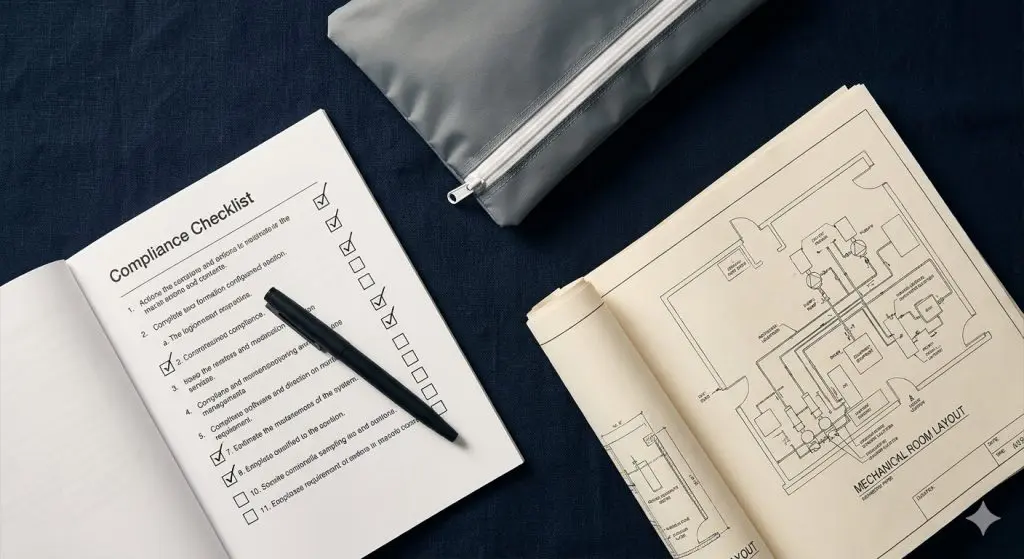
Legionella compliance checklist, building floor plan, and water sampling kit flat-lay — NJ S2188 water management plan documentation requirements
A water management plan is not a document. It's a system — and S2188 requires you to prove it's working. Testing records, corrective actions, and system maps. Five years of audit-ready documentation.

What About Legionella Testing Under NJ S2188?

Legionella testing is the environmental sampling and laboratory analysis of building water to detect and quantify Legionella bacteria, typically conducted using culture-based methods or PCR testing. S2188 ties directly to testing requirements. Your water management program must include routine Legionella testing conducted in accordance with ASHRAE 188 guidelines. That means certified labs, proper sampling protocols, and — this is where most facilities stumble — a documented response plan for when results come back positive.

A positive Legionella result isn’t a fire drill if you’ve planned for it. It’s a programmatic response with defined steps: the right remediation partner, validated treatment protocols, and documentation proving you acted quickly and appropriately. That’s the entire purpose of having a WMP.

If you don’t currently have a testing program in place, that’s step one. Not the plan. Not the paperwork. The testing — because you need to understand what’s actually happening in your water before you can manage it. ChemREADY’s Legionella testing services include sample collection, certified lab analysis, and a response framework — so a positive result triggers a plan, not a panic.

Start With the Data: Build a Testing Program That Holds Up

ChemREADY’s Legionella testing services include sample collection, certified lab analysis, and a documented response framework for positive results.

How to Comply with NJ S2188: A Realistic Timeline

A compliant Water Management Plan doesn’t happen overnight. Between the initial risk assessment, system mapping, plan development, monitoring protocol implementation, staff training, and first-round validation testing — you’re looking at 3–6 months of focused work. Here’s the realistic timeline if you start today:

  1. Get a risk assessment (Right now) — Understand your systems, your vulnerabilities, and your gaps. This is the foundation for everything that follows.
  2. Develop your Water Management Plan (Months 1–2) — Map your water systems from entry to every terminal fixture. Define control limits. Build corrective action protocols. This is where an experienced partner saves you months of trial and error.
  3. Implement monitoring and testing (Months 3–4) — Establish baseline Legionella testing. Get initial results. Train staff on plan requirements. Start documenting everything.
  4. Validate and refine (Months 5–6) — Run first-round validation testing. Adjust the plan based on real-world data from your facility. Close any remaining gaps.
  5. Run the program continuously (Ongoing) — Document. Adjust. Maintain five years of audit-ready records. This is not a one-time project — it’s an operating standard.

Waiting until summer 2026 puts you in the worst possible position: rushed implementation, stressed staff, and a plan that checks a box but crumbles under inspection. The facilities that start now are the ones that will be ready.

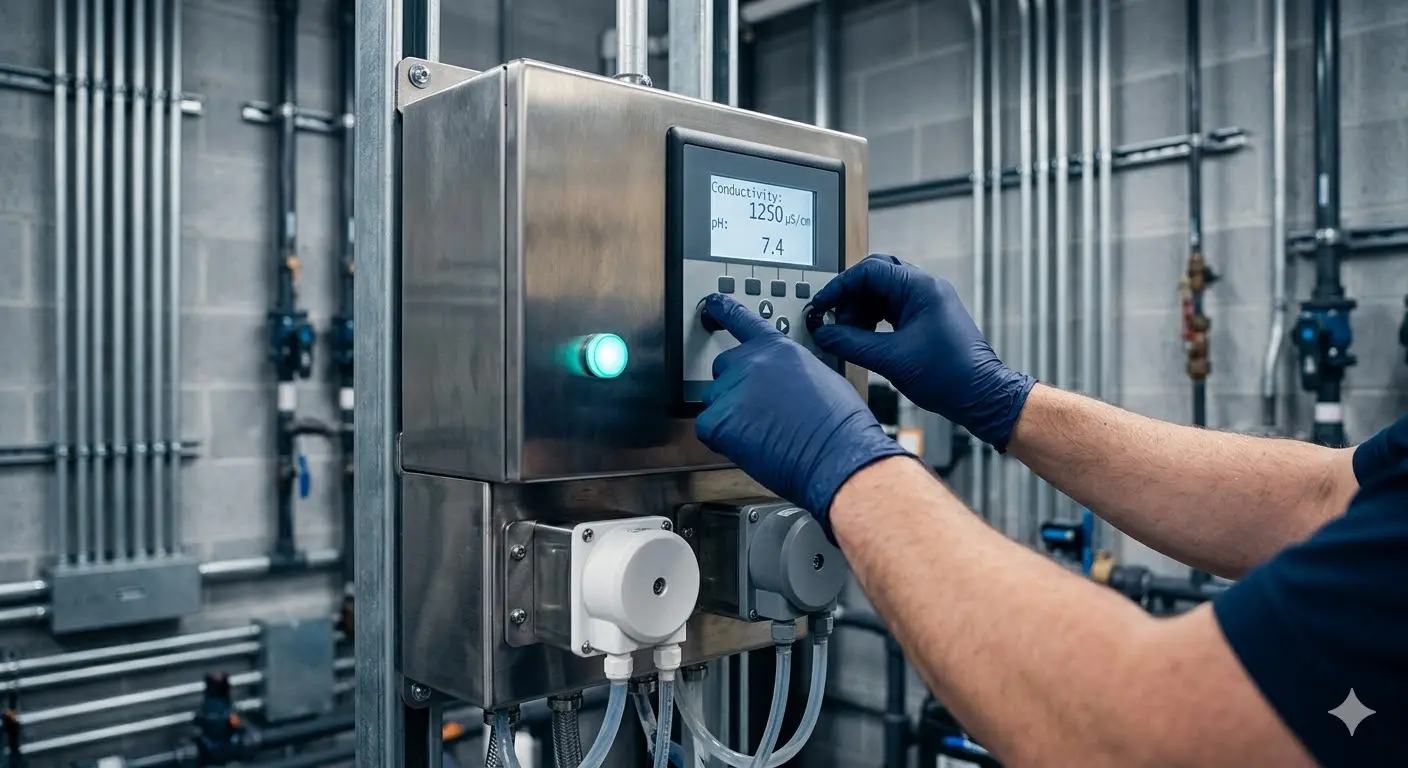
Technician hands operating water treatment controller panel monitoring pH and conductivity — Legionella water management program under NJ S2188
A working water management program has data behind it. Real readings, real timestamps, real corrective actions. This is what S2188 inspectors will ask to see.

Why Facilities Choose ChemREADY for Legionella Compliance

There’s no shortage of water treatment companies telling you they can “help you comply.” The difference is what that help actually looks like.

ChemREADY doesn’t hand you a template and wish you luck. We’ve been building Legionella compliance programs across hospitals, hotels, senior living facilities, and commercial buildings with complex water systems for over 15 years. Our team includes ASSE 12080 certified Legionella Water Safety and Management specialists who work directly with your facility team to build a program that fits your building, your operations, and your budget. We handle risk assessment and system mapping, full Water Management Plan development (ASHRAE 188-aligned), Legionella testing coordination and lab partnerships, supplemental disinfection design, ongoing monitoring and annual plan updates, and staff training and compliance documentation management.

We also bring digital remote monitoring for real-time system visibility, and our supplemental disinfection systems (ClO₂, UV, copper-silver) provide proven remediation pathways when Legionella is detected.

And we service New Jersey directly. This isn’t a remote engagement. We show up, walk your systems, and give you straight answers.

What Happens After You’re Compliant

Compliance isn’t a one-time event. S2188 requires ongoing maintenance of your water management program. Records must be retained for five years. Testing continues at regular intervals. And if there’s a system disruption — a water main break, a pressure drop, construction tie-ins — you may need to act immediately and notify the appropriate authorities.

This is why the plan itself is just the beginning. The real value is having a partner who helps you run the program — not just write it. Whether through ongoing Legionella services, scheduled testing programs, or remediation support when issues surface, ChemREADY is built for the long haul.

Now that’s confidence.
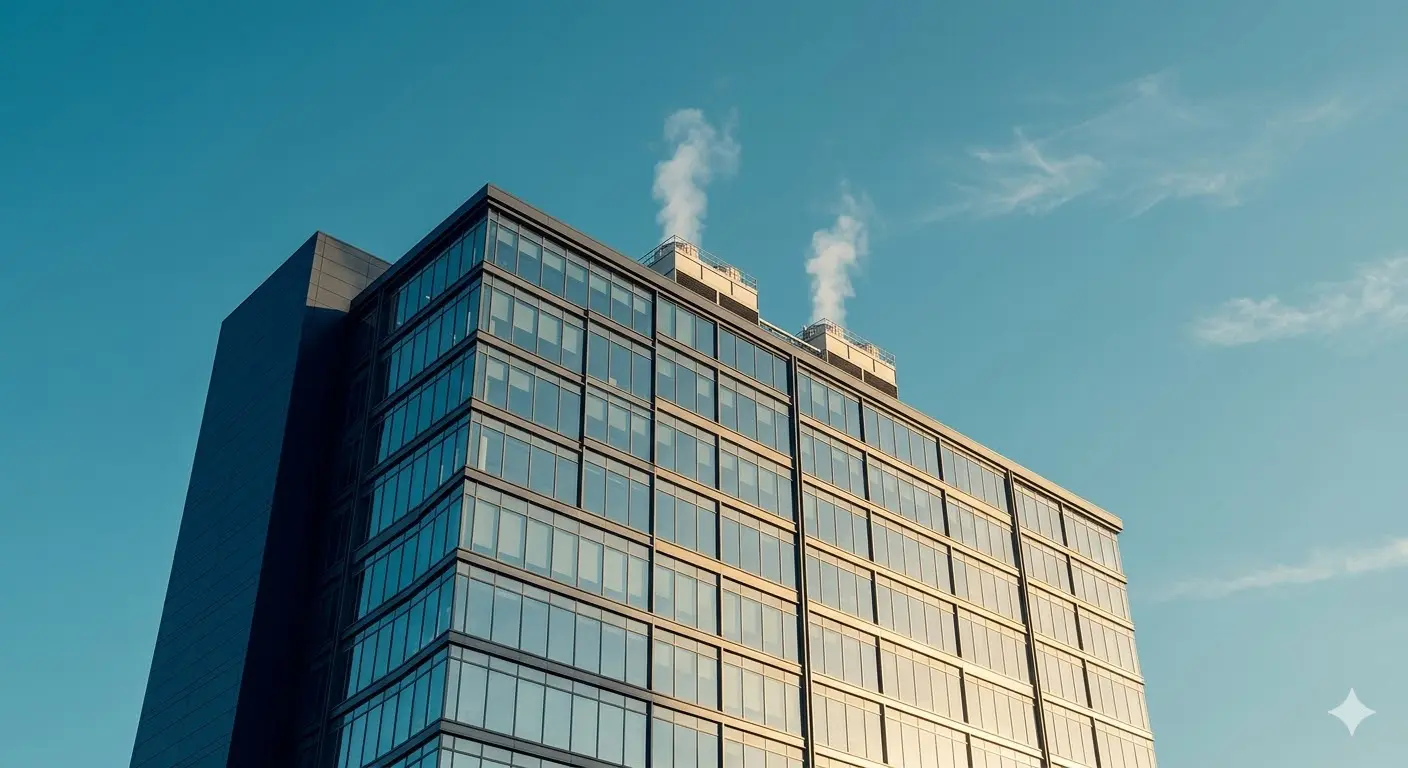
Clean modern commercial building with cooling towers on rooftop against blue sky — NJ S2188 Legionella compliant facility
Compliance isn't the goal. Confidence is. A building with an active, documented, verified water management program is one where the people inside it don't get sick. That's what S2188 is asking for.

The Clock Is Ticking. Let’s Get You Ready.

NJ S2188 is not a suggestion. It’s the law. And it applies to more facilities than most people realize.

If you operate a hospital, hotel, senior living facility, high-rise, or any building with cooling towers or complex water systems in New Jersey — this is your heads-up. September 2026 will arrive faster than any compliance timeline you’ve managed, and the facilities that start now will be the ones that are ready.

Your Water System Deserves Better Than Hope

NJ S2188 compliance starts with knowing where you stand. Pick the next step that fits.

We're Here To Help

Connect With ChemREADY

Let's Have A Chat