Reading Time | 12 Minutes

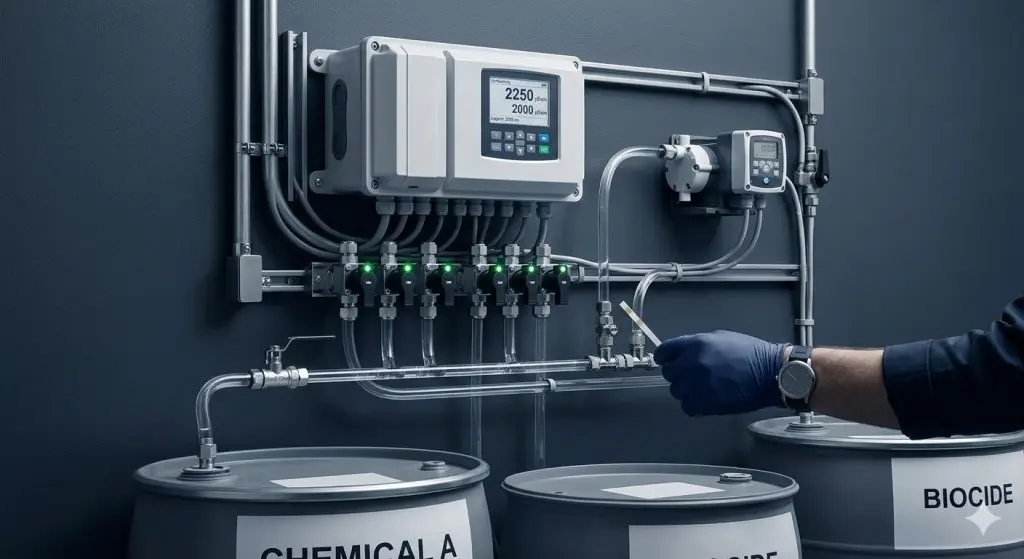
Scale inhibitors, corrosion inhibitors, and biocides all need to be spec’d against your actual makeup water chemistry and system metallurgy. ChemREADY builds programs around your specific tower — not a generic starting point.
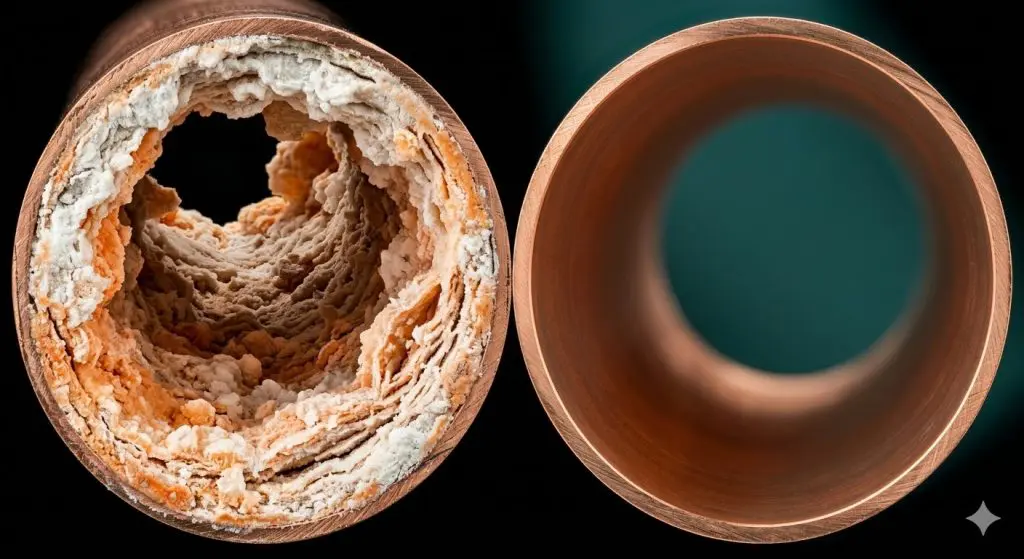
ASHRAE Standard 188 requires building owners and operators to develop and implement water management plans for systems at risk of Legionella amplification — including all open recirculating cooling towers. Many states and municipalities have adopted additional mandatory requirements beyond the federal standard. Facilities without documented, actively maintained plans face significant regulatory and legal exposure in the event of an outbreak.
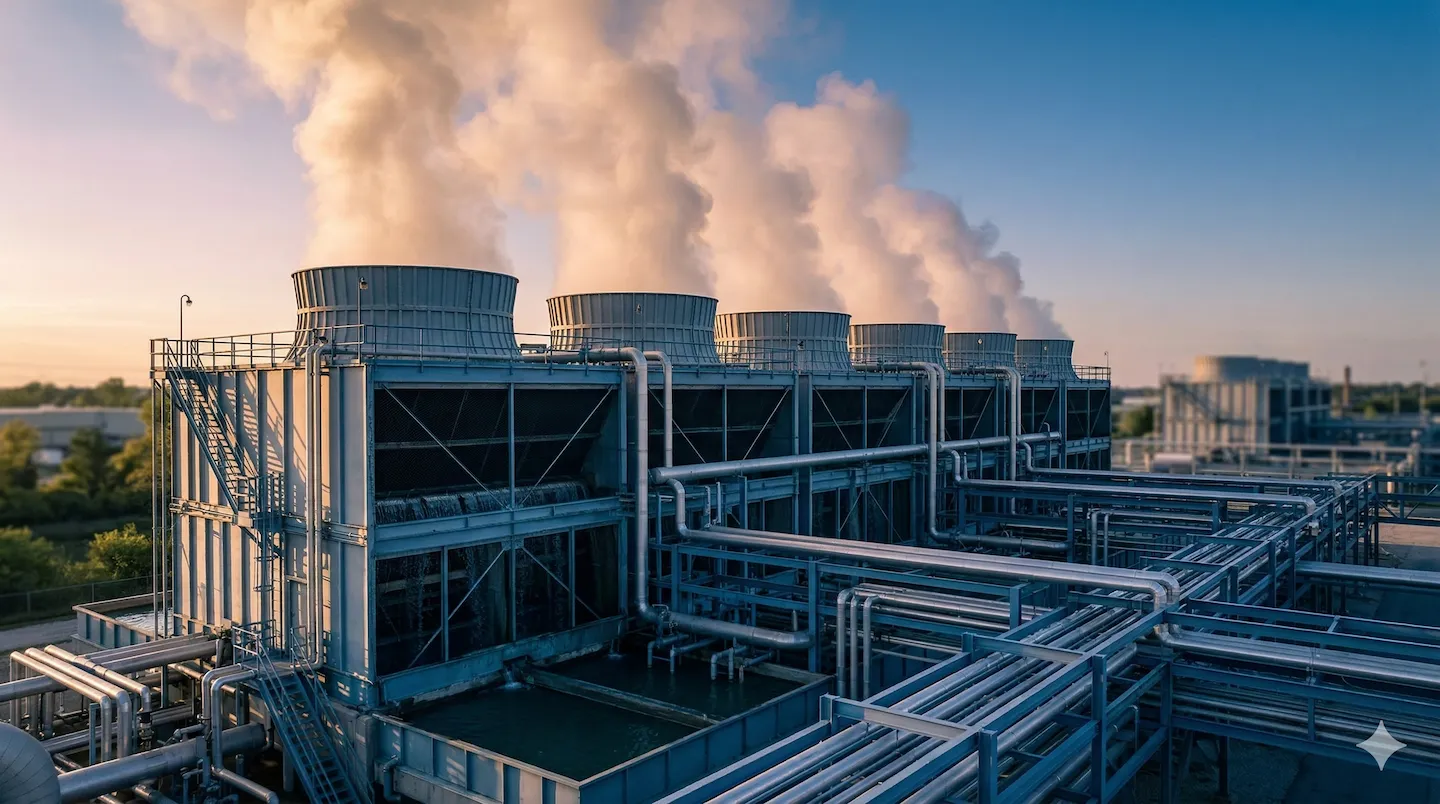
Cooling towers are heat rejection systems that absorb heat generated by industrial processes, HVAC systems, chillers, or manufacturing equipment and release it into the atmosphere through water evaporation. That evaporation process is remarkably efficient — which is exactly why cooling towers show up everywhere from manufacturing plants and hospitals to data centers and food processing facilities.
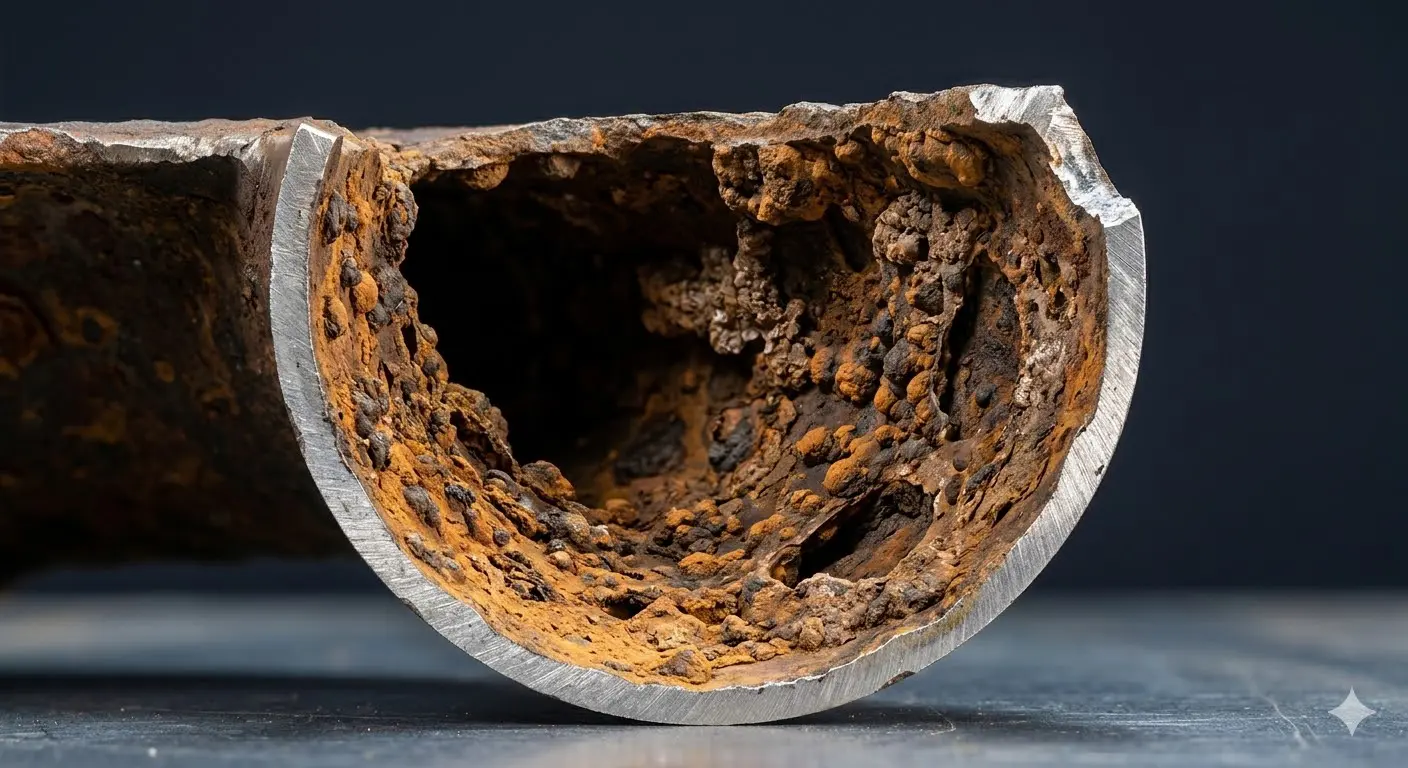
Here’s the critical detail most people miss: when water evaporates, it leaves behind everything it was carrying — minerals, dissolved solids, biological material, and airborne contaminants. The remaining water gets progressively more concentrated. Without active management, that concentrated water becomes a corrosive, scale-forming, bacteria-hosting environment that attacks your system from the inside out.
That’s why cooling tower water treatment exists — not as an optional add-on, but as a foundational operating requirement for any facility running a cooling system.
Everything facility managers need to compare programs, avoid common pitfalls, and choose the right treatment partner.
Fill out the form for instant access.

A rotating biocide program and a documented water management plan aren’t optional — they’re the difference between a healthy system and a liability. ChemREADY handles both the chemistry and the paperwork.
Scale, corrosion, and biological growth don’t announce themselves — they just quietly drive up energy costs and cut equipment life. Download ChemREADY’s free Cooling Tower Checklist to see exactly where your system stands.
This is where most ‘complete guides’ stop — they name the threats but don’t explain the chemistry that drives them. If you’re going to evaluate whether your current program is actually working, you need to understand these fundamentals.
Cycles of concentration (CoC) is the ratio of dissolved solids in your tower water to dissolved solids in your makeup water — and it is the single most important operating parameter in cooling tower chemistry management. If your makeup water has 100 ppm of dissolved solids and your tower water has 400 ppm, you’re running at 4 cycles.
Running at too few cycles wastes water and chemicals — you’re blowing down too aggressively and flushing expensive treatment chemistry down the drain. Running at too many cycles concentrates minerals past the point where your inhibitors can hold them in solution, and scale forms rapidly. Most systems target 4–6 cycles, though the optimal range depends on your specific makeup water chemistry.
Everything facility managers need to compare programs, avoid common pitfalls, and choose the right treatment partner.
Fill out the form for instant access.
Ask your water treatment vendor: ‘What are our current cycles of concentration, and what’s our target?’ If they can’t answer immediately with a specific number and the reasoning behind it, that tells you something important about the level of attention your program is getting.
| Violation | Fine | Context |
|---|---|---|
| First violation | $2,000 | Per violation — multiple deficiencies compound in a single inspection |
| Second or subsequent | $5,000 | Escalating penalties for repeated noncompliance |
| Serious injury or death | $10,000 | If noncompliance results in harm to building occupants |
| Outbreak liability | Unlimited | Lawsuits, remediation, shutdown, reputational damage. CDC: single hospital case costs $34,000+ in treatment alone |
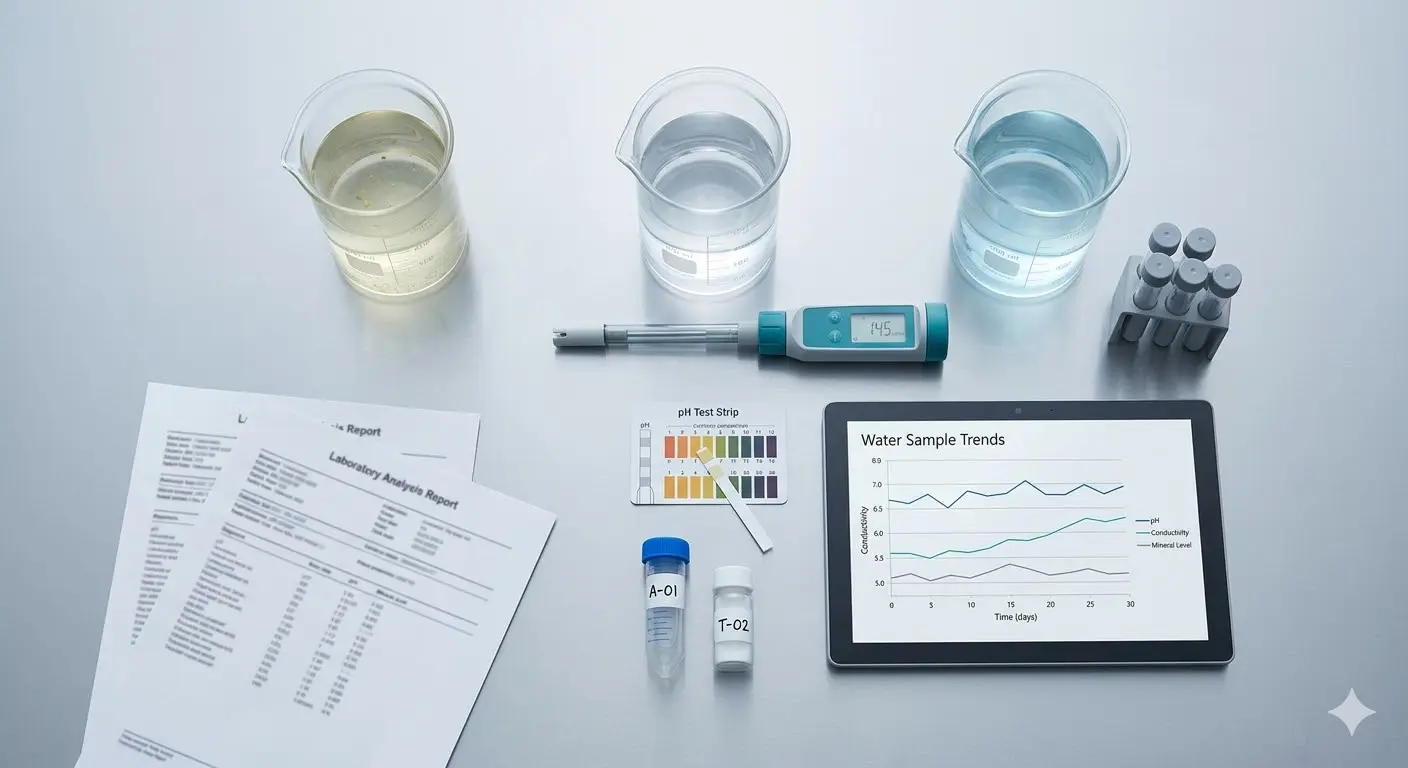
If your current vendor tests some of these but doesn’t share the results in plain English — or if you’ve never seen a trend report showing how these parameters move over time — you’re flying blind on your own system.
It Just Costs You More Every Day. Fouling, scaling, and undertreated water quietly eat into efficiency and equipment life. ChemREADY’s free Cooling Tower Checklist gives your team a quick-reference for every critical inspection and treatment checkpoint.
ChemREADY’s cooling tower specialists assess your system, your water, and your risk profile — then build a complete program covering chemistry, monitoring, Legionella control, and documentation. One partner, full coverage.
Most Facilities Find Out After the Fact.
ChemREADY’s free Cooling Tower Checklist walks you through water quality, blowdown, biological control, and inspection points — everything your team needs to stay ahead of the problems that shut systems down.
A common gap in cooling tower programs isn’t the chemistry — it’s the cadence. Here’s what a well-managed program looks like on a calendar:
If your current program doesn’t include documented startup and shutdown procedures tailored to your system, that’s a gap worth closing.
Not all programs are created equal, and the difference between a good program and an inadequate one isn’t always obvious until something expensive breaks. Here are ten warning signs:
If three or more of these apply to your current situation, it’s worth getting a second opinion. That doesn’t mean switching vendors — it means getting an objective look at where your program stands.
At ChemREADY, Total Service. Total Water Confidence. isn’t a tagline — it’s an operating standard. It means we integrate treatment chemistry, equipment, field service, and real-time monitoring into one accountable program so you’re not managing three vendors for one system.
In practice, that looks like: a dedicated technician who walks your system on a documented schedule. Plain-English service reports with trend data you can actually use. NSF-certified chemistry backed by 15+ years of water treatment expertise across 500+ facilities in 28+ states.
It also means the full toolkit: cooling tower chemicals, controllers and automation, side stream filtration, digital remote monitoring, and proactive field service. One partner. One program. Full accountability.
Everything facility managers need to compare programs, avoid common pitfalls, and choose the right treatment partner.
Fill out the form for instant access.
Cooling tower water treatment isn’t glamorous. But it’s one of those foundational programs that, when done right, quietly saves your facility real money, extends equipment life by years, protects your team from a preventable health risk, and keeps you audit-ready at all times.
Scale, corrosion, biological growth, and fouling are working against your cooling tower every single day. The difference between a facility that handles them well and one that doesn’t isn’t luck — it’s whether there’s a real program behind the water, or just a chemical drum and a hope that nothing breaks.
Now you know what the chemistry involves, what a real program looks like, and what warning signs to watch for. If your tower isn’t on a comprehensive treatment program — or if this guide raised questions about your current one — that’s exactly the kind of gap we help facilities close.
Three ways to take the next step — pick the one that fits where you are right now.
Book a 30-minute conversation directly. We'll discuss your water treatment situation and whether working together makes sense.
Book a 30-minute call →Take a look at our water treatment services first. See where you stand across chemical programs, system performance, and municipal compliance — then decide if a conversation makes sense.
Find out what a buyer would see →Browse everything we do in water treatment — chemicals, equipment, and services — at your own pace, no conversation required.
Explore our water treatment solutions →We work with advisors who encounter infrastructure gaps in municipal water and drinking water client businesses. If you're looking for a referral partner for pre-sale readiness work, let's talk.
Learn about our partner program →