
Reading Time | 10 Minutes
High hardness forces more blowdown, wastes water, and accelerates heat exchanger fouling. Softening your makeup water before it enters the tower changes the economics of your entire treatment program. ChemREADY can show you the math.
High hardness levels quietly drive scale, energy loss, and maintenance costs. ChemREADY can review your make-up water quality and identify whether softening makes sense for your system.
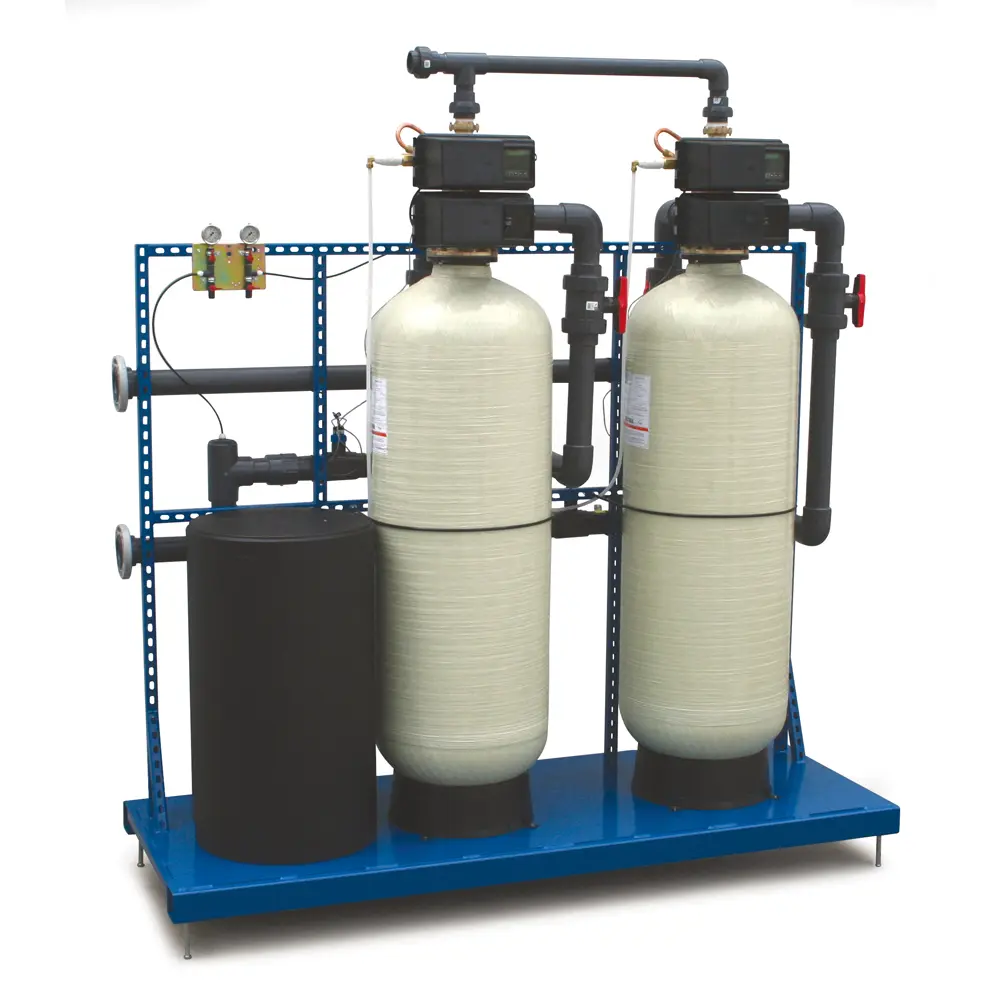
A water softener removes calcium and magnesium from make-up water before it ever enters the cooling tower. Instead of allowing hardness minerals to circulate, concentrate, and deposit as scale, they’re exchanged for sodium ions—dramatically reducing scaling potential.
The result is water that’s simply easier to manage.
With softened make-up water, cooling towers can typically operate at higher cycles of concentration without pushing scale limits. That means:
In other words, the entire water treatment program becomes more efficient and more predictable.
Makeup water pretreatment
Pretreatment — softening, filtration, or side stream polishing — reduces the load on your chemical program and lets you run higher cycles without scaling. ChemREADY evaluates your makeup water source and recommends the right pretreatment approach for your system.
One of the biggest benefits of installing a water softener isn’t just what it removes, but what it allows you to control more effectively.
When hardness is taken out of the equation, treatment programs become less reactive and more proactive. Corrosion inhibitors work more consistently. Biocide programs are easier to maintain. Operators spend less time chasing problems and more time running their systems confidently.
For facilities trying to balance performance, sustainability goals, and operating costs, this added control makes a measurable difference.
While many cooling towers can benefit from softened make-up water, it’s especially impactful in systems that:
In these situations, a water softener isn’t a “nice to have”—it’s a strategic investment.
It’s easy to look at a water softener as an added piece of equipment. But when you zoom out, the financial picture tells a different story.
By reducing scale formation and stabilizing system chemistry, water softeners help lower:
Over time, many facilities find that the softener pays for itself—not through one dramatic savings moment, but through steady, ongoing operational improvements.
Next steps
ChemREADY tests your makeup water, calculates the scaling potential at your operating cycles, and builds a pretreatment and chemical program that maximizes efficiency without sacrificing equipment life. One analysis, full picture.
At ChemREADY, we don’t view water softeners as standalone equipment. We see them as part of a larger, integrated cooling tower water management strategy.
When we evaluate a system, we look at incoming water quality, system design, operating conditions, and treatment goals. From there, we determine whether a water softener makes sense—and if so, how it should be sized, installed, and maintained to support long-term performance.
Because the goal isn’t just softer water.
It’s better system reliability, efficiency, and peace of mind.
From water softeners to chemical programs, ChemREADY designs integrated cooling tower solutions that improve efficiency, reduce costs, and extend equipment life.
Book a 30-minute conversation directly. We'll discuss your water treatment situation and whether working together makes sense.
Book a 30-minute call →Take a look at our water treatment services first. See where you stand across chemical programs, system performance, and municipal compliance — then decide if a conversation makes sense.
Find out what a buyer would see →Browse everything we do in water treatment — chemicals, equipment, and services — at your own pace, no conversation required.
Explore our water treatment solutions →We work with advisors who encounter infrastructure gaps in municipal water and drinking water client businesses. If you're looking for a referral partner for pre-sale readiness work, let's talk.
Learn about our partner program →